Thesis/Dissertation: Bc. Diana Jandová: The relationship between developmental anomalies of the human dentition and EDA gene
Master's thesis
The relationship between developmental anomalies of the human dentition and EDA gene
Vztah mezi poruchami vývoje lidské dentice a genem pro EDA
Abstract
Odontogeneze je poměrně složitý a dlouhodobý proces. Základem molekulárního řízení a kontroly procesu jsou reciproční interakce mezi epiteliální a mezenchymální tkání. Vše je dokonale geneticky naplánováno, včetně počtu, tvaru a uložení jednotlivých zubů. V dnešní době je známo přes 350 genů, které se podílí na vzniku a vývoji dentice u savců. Jedním z těchto genů je gen pro ectodysplasin A (EDA) …more
Abstract
Odontogenesis is quite complex and long-term process. The basis of molecular management and control mechanisms of the process is reciprocal interactions between epithelial and mesenchymal tissues. Everything is perfectly genetically planned, including the number, shape and position of each individual tooth. Nowadays, it is known over 350 genes involved in the genesis and development of dentition in …more
Thesis description
6/1/2017 10:46, prof. RNDr. Omar Šerý, Ph.D., UČO 18120
 Czech
Czech
Theses on a related topic
List of theses with an identical keyword.
-
The relationship between developmental anomalies of the human dentition and EDA gene
Mgr. Diana Jandová -
Molecular causes of oligodontia: the role of PAX9 and MSX1 genes
RNDr. Ing. Ondřej Bonczek, Ph.D., UČO 211856 -
Molecular basis of hypodontia
RNDr. Ing. Ondřej Bonczek, Ph.D., UČO 211856 -
Molecular basis and diagnostics of hypodontia
Mgr. Monika Molíková -
Molecular characterization of dental and peridental mesenchymal cell populations
Mgr. Monika Molíková -
Cellular and molecular mechanisms during tooth and bone development with focus on caspase functions
Mgr. Eva Švandová, Ph.D., UČO 184576 -
Molecular, cellular, and morphological aspects of odontogenesis in selected model species
Mgr. Marie Šulcová, Ph.D., UČO 112348 -
Mutations in the AXIN2 gene and their relationship to the hypodontia in the Czech population
Mgr. Tereza Omelková
Folders
Files
-
Přidání souboru
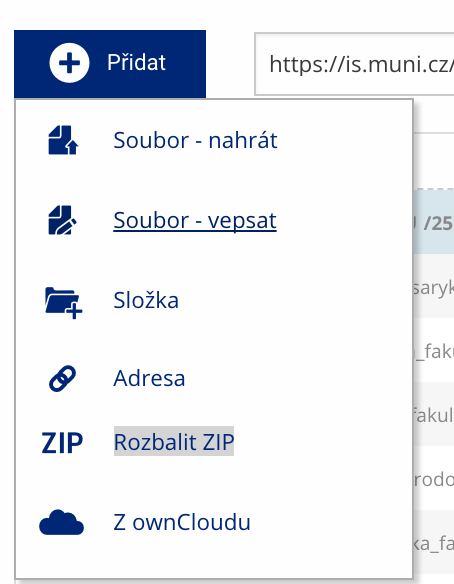 Soubor nebo složku lze nahrát pomocí tlačítka Přidat.
 -
Další operace se soubory
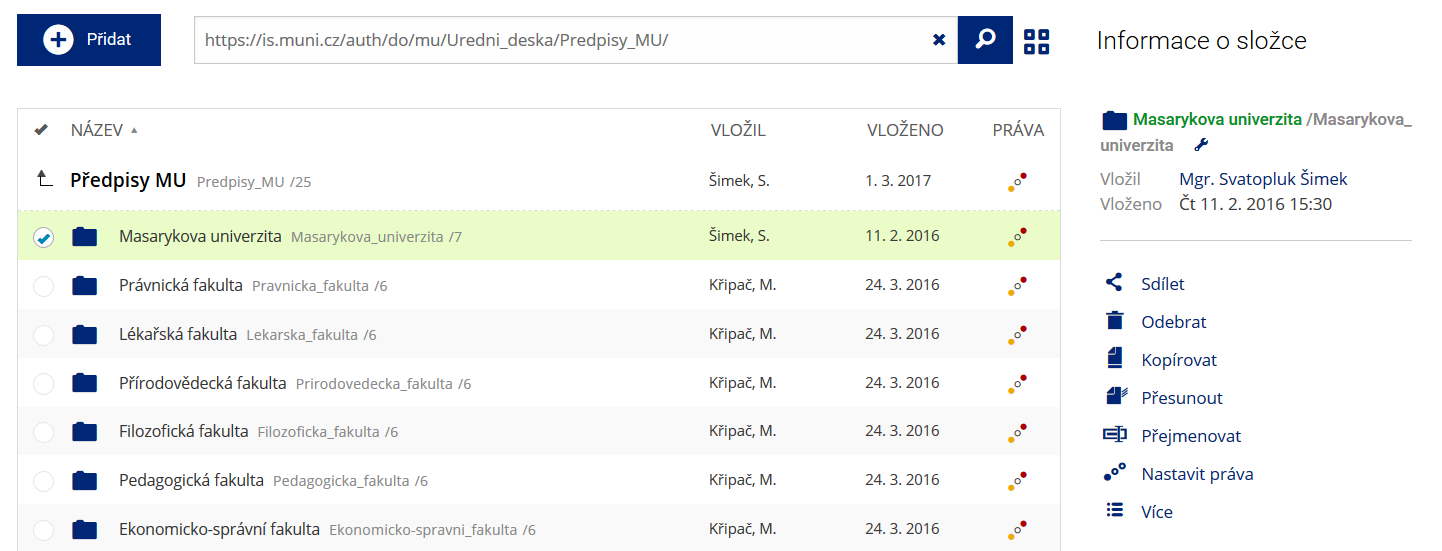 Podrobnosti lze zjistit označením příslušného řádku.
 -
Pohled pro experty
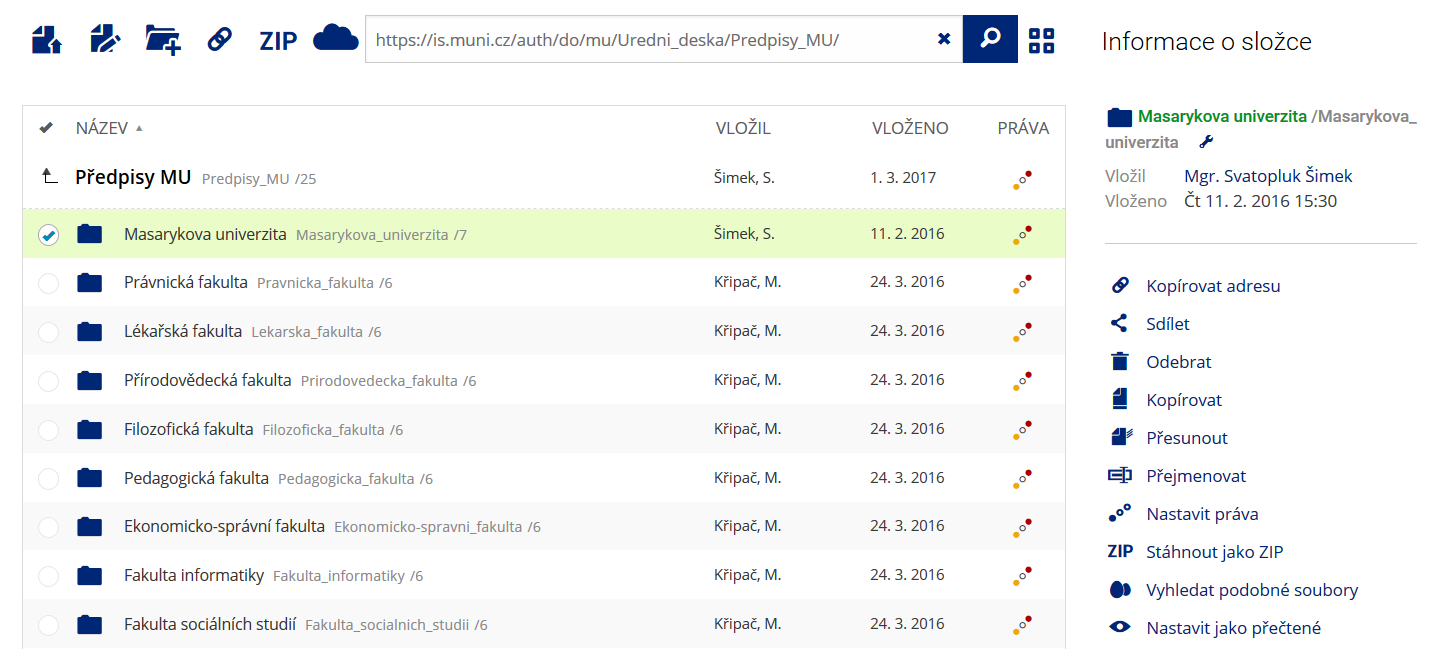 Pro častou práci je možné zvolit režim Více možností.
 -
Vyhledávání souborů
 Vyhledávaný výraz můžete zadat přímo do adresního řádku.
 -
Rychlý přístup k souborům
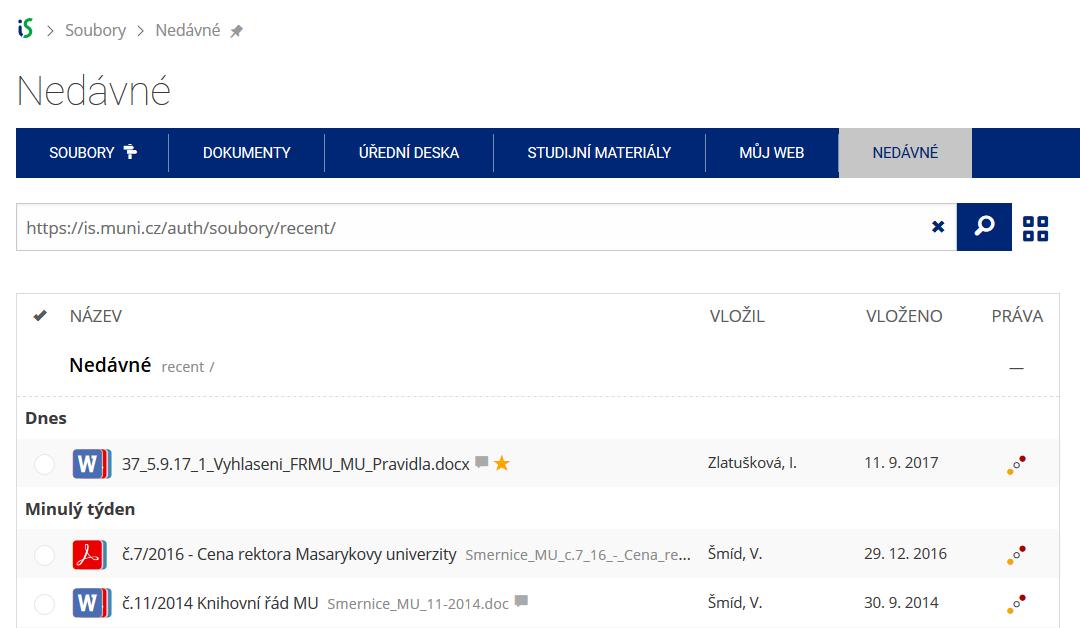 Pomocí funkce Nedávné je možné se rychle vrátit k právě prohlíženým souborům. Oblíbené soubory je také možné označit Hvězdičkou.