Anotace
Ekonomické nástroje představují významnou skupinu prostředků
využívaných nebo využitelných k ochraně životního prostředí.
Často
jsou (snad i kvůli svému názvu) považovány za instituty
ekonomické, v určité kontrapozici k nástrojům právním. To je
však
zásadní omyl. Daně, poplatky, dotace a další druhy ekonomických
nástrojů ochrany životního prostedí, o nichž je v práci
podrobně
pojednáno, jsou stejně tak právními instituty, jako například
povolení správního orgánu. V každém pípad musí mít v právním
stát veškerá innost veejné moci a zejména pak její ingerence do
právní sféry fyzických a právnických osob svou právem
stanovenou formu, zpsob a pípady užití.
Cílem práce je pispt k poznání problematiky tzv. ekonomických
nástroj ochrany životního prostedí, zejména pak jejich právních
aspekt. Autor se pokouší nalézt a popsat základní prvky právní
konstrukce alespo vybraných druh ekonomických nástroj a vymezit
další požadavky na jejich právní úpravu.
Práce je lenna do tí základních ástí. První, obecná ást práce,
nazvaná Ekonomické nástroje ochrany životního prostedí, se
zabývá zejména problematikou samotného pojmu ekonomických
nástroj. Tmi jsou pro úely práce chápána všechna opatení k
ochran životního prostedí, které splují tyto základní pojmové
znaky:
jde o opatení ekonomické (pesnji finanní) povahy, tedy
o opatení, pi nichž dochází k alokaci, redistribuci a/nebo
užití penžní masy,
jejich cílem je pispt k ochran životního prostedí,
k jejich realizaci mže docházet jak ve veejné sfée, tak
i ve sfée soukromé,
jejich primárním úelem je bu ovlivování chování
regulovaného subjektu, nebo zajištní disponibilních finanních
prostedk k provádní opatení na ochranu životního prostedí,
pípadn obojí,
realizují se samostatn nebo ve spojení s jiným (nap.
administrativním) nástrojem,
váží se zásadn k právem dovolenému (a mlky i výslovn)
zpsobu chování.
Podrobn je zkoumána též otázka funkcí této kategorie nástroj
ochrany životního prostedí. Za primární autor považuje funkce
motivaní a akumulaní, dalšími funkcemi jsou internalizaní,
kompenzaní, zajišovací a fiskální funkce. Nejrozsáhlejší
kapitola je vnována klasifikaci a základní obecné
charakteristice jednotlivých druh ekonomických nástroj. Tyto
jsou popsány jak z hlediska své právní formy, tak i konkrétních
funkcí, které jsou schopny plnit. Ke každé kategorii jsou
uvedeny i píklady konkrétních aplikací, a to jak eské, tak (u
vtšiny druh) i zahraniní. Popsány jsou:
o platební nástroje, zejména dan, poplatky a obdobné
platby),
o fondy (a to jak fondy státní, tak i soukromá sdružení
finanních prostedk),
o povinné environmentální pojištní,
o trhy s obchodovatelnými kvótami a limity,
o zálohové systémy,
o výdaje z veejných rozpot (a to jak pímé výdaje na
opatení k ochran životního prostedí tak i finanní podpory ve
form subvencí, dotací a píspvk),
o nepímé finanní podpory (tedy nap. úvry, záruky za
komerní úvry, cenové garance).
Poslední kapitola obecné ásti práce se zabývá hodnocením
využitelnosti ekonomických nástroj v ochran životního prostedí,
tedy zejména jejich výhodami a nevýhodami, ale upozoruje též
alespo na nejvýznamnjší rizikové faktory jejich využití.
Druhá ást práce zachycuje souasnou právní úpravu ekonomických
nástroj v eském právním ádu. Na základ zevrubného przkumu celé
výsee právního ádu eské republiky, chápané jako právo životního
prostedí, jsou podrobn analyzovány vybrané oblasti. Jejich výbr
byl pitom proveden jak s pihlédnutím k požadavku
reprezentativního zastoupení jednotlivých druh ekonomických
nástroj, tak s respektem ke struktue práva životního prostedí.
Krom Státního fondu životního prostředí České republiky jako
obecného institutu jsou analyzovány oblasti ochrany vod a
ovzduší, nakládání s odpady a obaly a
hospodaení s energiemi. U jednotlivých aplikací je proveden
podrobný popis jejich právní úpravy, souasn je poukázáno na
nejvýznamnjší teoretické i praktické problémy nkterých z nich.
Tetí ást práce se pak zamuje nejúžeji na jádro tématu práce,
když jsou podrobn zkoumány základní prvky právní konstrukce
vybraných druh ekonomických nástroj ochrany životního prostedí.
Tato syntetická ást práce pitom tží z poznatk obou pedchozích
ástí. Jejím cílem je vymezit pro vybrané druhy ekonomických
nástroj základní prvky jejich právní úpravy, má-li tato
zajistit reálné a efektivní psobení aplikací tchto nástroj v
souladu s jejich obecným úelem. Pro tento úel byly vybrány:
o platby k ochran životního prostedí,
o finanní podpory,
o povinné finanní rezervy a jistiny,
o povinné environmentální pojištní,
o trhy s obchodovatelnými kvótami a limity. …víceméně
Abstract
The dissertation thesis bears the title Legal Design of
Economic Instruments of Environmental Policy, which fully
corresponds with its contents objective.
Economic instruments represent a very important group of means
used or usable in environmental protection. They are often
considered (maybe due to their title) economic institutes in a
certain contraposition to legal instruments. However, this is a
crucial mistake. Taxes, charges, subsidies and other kinds of
economic instruments of environmental protection, described in
detail in this work, are legal institutes of the same quality
as for example permit certificate of an administration body.
Either way, all performance of the public authority in a rule
of law, namely its ingerence into the legal sphere of natural
and legal persons, must have its form, way and usage defined by
law.
The objective of this work is to contribute to exploration of
the issue of so-called economic instruments of environmental
protection and namely of their legal aspects. The author tries
to find and describe the basic elements of legal construction
of at least selected kinds of economic instruments and to
define further requirements for their legislative form.
The work is divided into three basic parts. First, the general
part, titled Economic instruments of environmental protection,
is focused on the issue of the notion of economic instruments.
For the purpose of the work, these cover all measures for
environmental protection that satisfy the following conceptual
features:
- measures of an economic (rather financial) nature, i.e.
measures that control allocation, redistribution and/or use of
financial mass,
- their objective is to contribute to environmental
protection,
- their implementation may be performed both in public
and private sector,
- their primary objective is to either influence
behaviour of the regulated subject or to secure disposable
financial means to perform measures for environmental
protection, or both,
- they are carried out independently or in connection
with another (e.g. administrative) instrument,
- they are in principle bound to legally permitted
(either implicitly or explicitly) behaviour.
Functions of this category of environmental protection
instruments are profoundly explored. In the authors opinion,
primary functions are motivation and accumulation, followed by
internalisation, compensation, securing and fiscal functions.
The largest chapter is devoted to classification and basic
general features of particular kinds of economic instruments.
These are depicted as concerns their legal form and as to
functions they are capable to perform. Each category is
supplemented with examples of specific applications, both Czech
(in most cases) and from abroad. Included are the following:
- payment instruments including especially taxes, charges
and similar payments collected by the regulator from regulated
subjects,
- funds (both state funds and private associations of
financial means,
- compulsory environmental insurance,
- markets with tradable quotas and credits,
- deposit and refund systems,
- expenditures from public budgets (both direct
expenditures to cover environmental protection measures and
financial subsidies in the form of subventions, endowments or
grants,
- indirect financial subventions (like credits,
commercial credit guaranties, price guaranties.
The last chapter of the general part of the work attempts to
evaluate efficiency of economic instruments in environmental
protection, i.e. their odds and drawbacks, and highlights the
most important risk factors of their use.
The second part of the work describes the current legislation
on economic instruments in the Czech legal order. Based on
comprehensive investigation of the whole section of the Czech
legal order that could be understood as environmental law,
selected fields are profoundly analysed. Their selection was
carried out with regard to the requirement of serious
representation of key economic instruments and with respect to
the structure of environmental law. In addition to the State
Environmental Fund of the Czech Republic as a general
institution, analysed are the fields of air and water
protection, waste management, packaging, as well as energies
management. Individual applications are supplied with detailed
description of their legal regulations and underlined are the
most important theoretical and practical problems related to
them.
The third part of the work is most narrowly targeted to the
core of the work since it comprehensively explores fundamental
elements of legal design of selected kinds of economic
instruments of environment protection. This synthetic part
equally benefits from information collected in the previous
parts. Its aim is to define basic elements of legal regulation
for the selected kinds of economic instruments, should the
regulation ensure actual and effective functioning of the
instruments in accordance with their general purpose.
Selected were the following:
- taxes and charges for environmental protection,
- financial subsidies,
- compulsory financial reserves and securities,
- compulsory environmental insurance and
- markets with tradable quotas and credits. …víceméně
 čeština
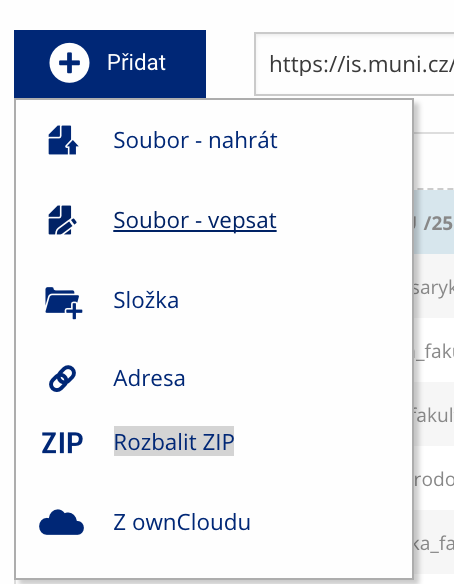 Soubor nebo složku lze nahrát pomocí tlačítka Přidat.
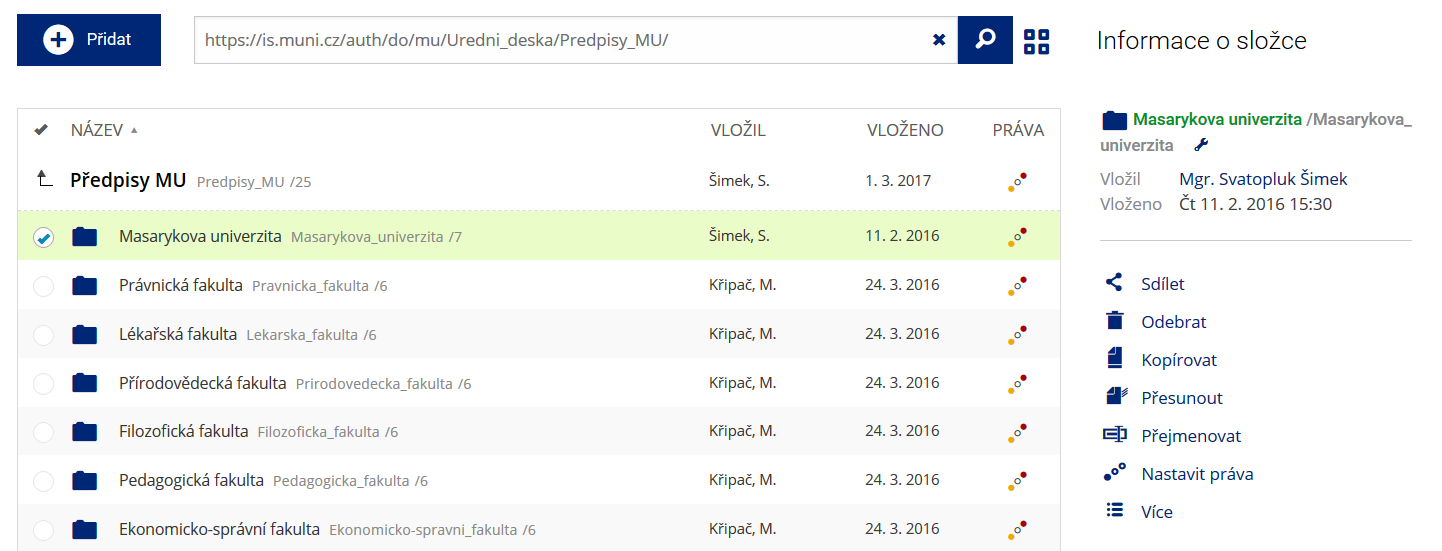 Podrobnosti lze zjistit označením příslušného řádku.
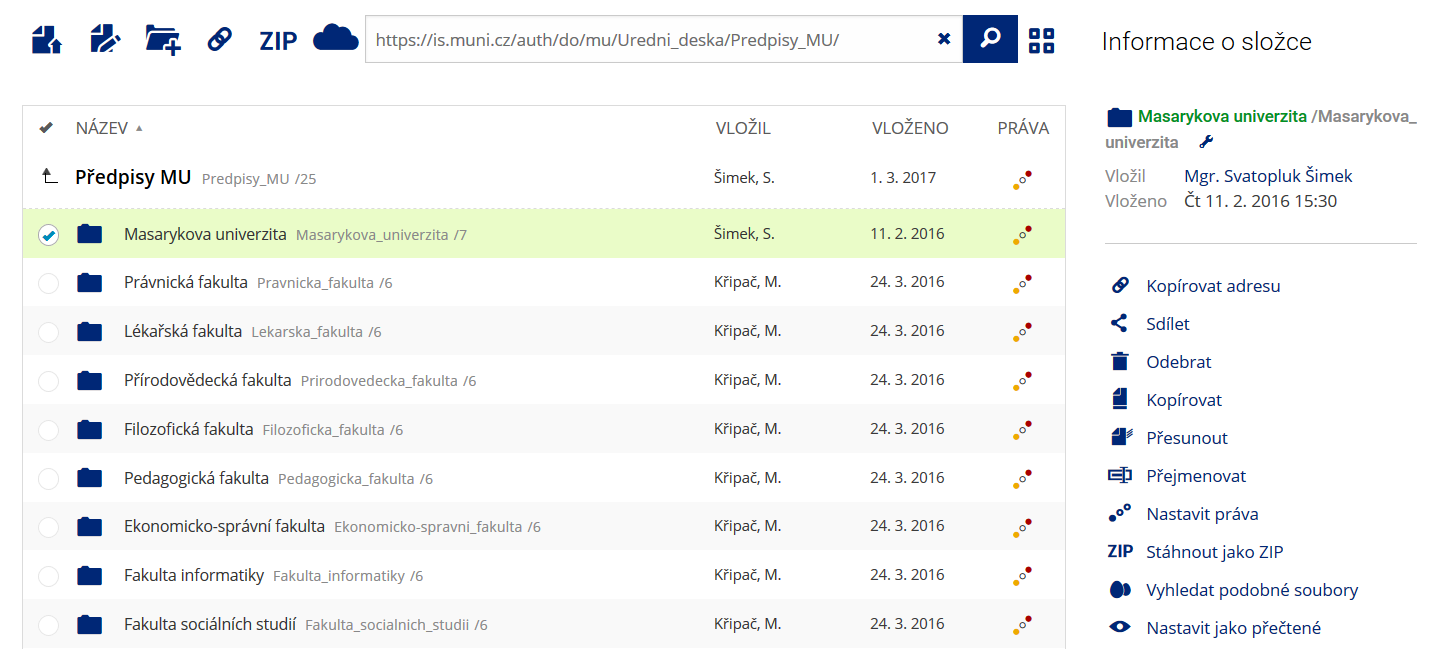 Pro častou práci je možné zvolit režim Více možností.
 Vyhledávaný výraz můžete zadat přímo do adresního řádku.
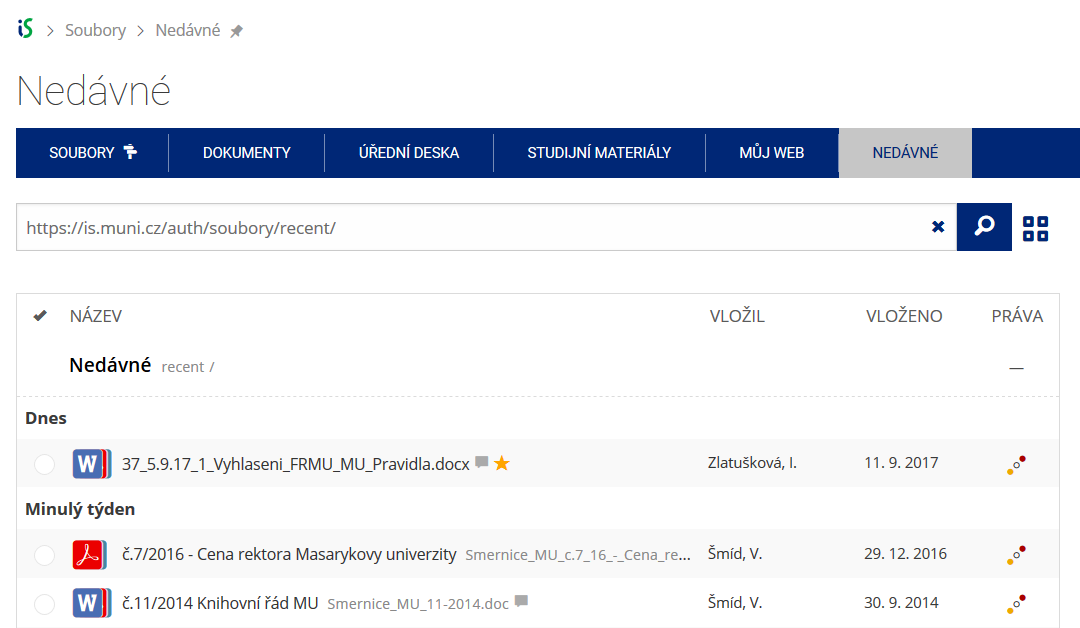 Pomocí funkce Nedávné je možné se rychle vrátit k právě prohlíženým souborům. Oblíbené soubory je také možné označit Hvězdičkou.