Anotace
Diverzita saproxylických organismů v České republice, potažmo
napříč celou střední Evropou, je vázána především na
pralesovité porosty. Tyto lesy jsou v naší krajině jediným
biotopem, ve kterém lze najít dostatečné množství tlejícího
dřeva vhodných vlastností. Jendou z celé řady významných funkcí
tlejícího dřeva v lese je jeho klíčová role z pohledu celkové
biodiverzity na lokalitě. Velké kusy rozkládajících se kmenů
jsou kolonizovány celými zástupy druhů bakterií, hub, rostlin a
živočichů, které jsou alespoň v některé fázi svého životního
cyklu závislé na tlejícím dřevě. Jejich diverzita vzrůstá se
zvyšující se heterogenitou tohoto substrátu. Ta se odvíjí
především od pestrosti druhů dřevin, typů tlejícího dřeva,
stádií rozkladu a různých velikostí tlejícího dřeva. Díky
různým kombinacím těchto vlastností vzniká pestrá škála
mikrostanovišť a nik, které jsou vyhledávány specialisty či
kolonizovány generalisty a oportunistickými druhy. Vznikají tak
specifická společenstva, která se postupně proměňují a vyvíjí s
pokračujícím rozkladem substrátu. Jelikož tlející dřevo je
pouze dočasným substrátem, pro dlouhodobou přítomnost
saproxylických organismů je klíčový jeho dlouhodobý nepřetržitý
výskyt na lokalitě. Mechorosty jsou jednou z významných skupin
obývající tlející dřevo. V počátečních stádiích rozkladu
dominují především epifytické druhy. Postupem času dochází k
rozkladu borky a dalšímu tlení a objevují se epixyličtí
specialisté. Mnoho generalistů a oportunistických druhů se
objevuje napříč všemi fázemi tlení. Specializované epixylické
druhy jsou závislé na specifickém prostředí, které jim dřevo v
pokročilých stádiích rozkladu může nabídnout. Padlý kmen je
většinou vyvýšen nad okolní terén, díky tomu druhy osídlující
jeho povrch nemusí bojovat o prostor s vysoce pokryvnými druhy
lesního podrostu, ani nejsou zakryty opadem. V této fázi je
substrát charakteristický relativně stabilní vlhkostí, která je
klíčová pro přežití řady citlivých druhů. V této práci jsem se
zaměřila na tři skupiny faktorů ovlivňující druhovou bohatost a
složení společenstev mechorostů obývajících tlející dřevo.
Konkrétně jsme studovali:
1) Rozdíly mezi dvěma druhy dřevin a
různými stádii rozkladu na jedné lokalitě. Sledovali jsme
rozdíly ve společenstvech epixylických mechorostů obývajících
tlející kmeny jehličnanu (Abies alba) a listnáče (Fagus
sylvatica).
2) Vliv různé intenzity lidské činnosti v minulosti
na současnou podobu společenstev mechorostů obývajících živé i
tlející kmeny buku (Fagus sylvatica) v sedmi pralesovitých
rezervacích.
3) Vliv mikroklimatu na společenstva epixylických
mechorostů obývajících kmeny podobných fyzických vlastností
(velké kmeny jedle (Abies alba) v pokročilém stádiu rozkladu)
situovaných na topografickém gradientu v rámci studované
lokality.
Článek I. Táborská M, Přívětivý T, Vrška T, Ódor P
(2015) Bryophytes associated with two tree species and
different stages of decay in a natural fir-beech mixed forest
in the Czech Republic. Preslia 87:387–401.
V rámci práce byla
studována druhová bohatost a složení společenstev mechorostů
obývajících kmeny dvou druhů dřevin v různých stádiích
rozkladu. Ve studii byla použita data z 57 kmenů jedle (Abies
alba) a buku (Fagus sylvatica) nacházejících se v Národní
přírodní rezervaci Salajka v České republice, ve které je
předmětem ochrany horský buko-jedlový pralesovitý porost.
Nalezeno bylo celkem 68 druhů mechorostů. Na úrovni celé
lokality bylo více druhů zaznamenáno na kmenech buku. To je
způsobeno především rozmanitějšími podmínkami a větším
množstvím mikrostanovišť, která kmeny buku v porovnání s jedlí
nabízí v počátečních stádiích rozkladu. Na úrovni jednotlivých
kmenů byla vyšší druhová bohatost zaznamenána na jedlích v
pokročilejších stádiích rozkladu, kdy na tomto substrátu
narůstá počet specializovaných epixylických druhů, vázaných na
kyselý substrát se stabilní vlhkostí. Na úrovni lokality i
jednotlivých kmenů byly druhově nejbohatší kmeny ve středním
stádiu rozkladu, které jsou tvořeny mozaikou substrátů různých
vlastností a díky tomu poskytují vhodné podmínky k životu druhů
všech sukcesních stádií, kterých se tak na jednom kmenu může
vyskytovat relativně mnoho. Druhové složení společenstev
epixylických mechorostů bylo výrazně odlišné v závislosti na
druhu kolonizované dřeviny. Naopak jednotlivá stádia rozkladu
nebyla z hlediska druhového složení mechorostů tak výrazně
odlišná. Studované druhy dřevin i jednotlivá stádia rozkladu se
také významně lišila z pohledu pH povrchu kmenů, což může mít
vliv na složení společenstev mechorostů. Závěrem lze shrnout,
že druhová bohatost i složení společenstev epixylických
mechorostů jsou závislé jak na druhu dřeviny, tak i na stádiu
rozkladu kmene. Různorodé vzájemné kombinace těchto dvou
faktorů přispívají ke zvýšení celkové diverzity těchto
společenstev. Z pohledu udržení diverzity epixylických
mechorostů je klíčová ochrana smíšených porostů s nepřetržitým
výskytem tlejícího dřeva.
Článek II. Táborská M, Procházková J,
Lengyel A, Vrška T, Hort L, Ódor P (2017) Wood-inhabiting
bryophyte communities are influenced by different management
intensities in the past. Biodivers Conserv 26:2893–2909. doi:
10.1007/s10531-017-1395-8
Řada studií potvrzuje, že pokud dojde
k narušení kontinuity lesního porostu, společenstva organismů
obývajících dřevo mohou být nenávratně poškozena. Na druhou
stranu pouze několik studií toto tvrzení podkládá daty z
lokalit, které mají v současné době pralesovitou strukturu,
avšak zároveň existují údaje o jich narušení lidskou činností v
minulosti. V této práci se zabýváme druhovou bohatostí,
zahnízděností (nestedness), beta diverzitou a druhovým složením
mechorostů obývajících živé a tlející kmeny buku (Fagus
sylvatica) v sedmi pralesovitých porostech s různou historií
lidské činnosti v České republice. Naše výsledky ukazují, že
tato společenstva jsou vzájemně zahnízděná a jejich beta
diverzita je nižší než náhodná. Existuje zde významný podíl
druhů, které jsou vzájemně sdílené, vzácné druhy se objevují
pouze na lokalitách, které byly v minulosti člověkem nejméně
ovlivněné a jejichž struktura je značně heterogenní.
Společenstva v lesích s intenzivnějším managementem v minulosti
jsou i v dnešní době ochuzená z pohledu celkového počtu druhů i
druhového složení. Beta diverzita není závislá historii
lidských zásahů a odráží současnou heterogenitu porostu.
Druhová bohatost a beta diverzita jsou více ovlivněny
jednotlivými stádii rozkladu než rozdíly mezi lokalitami. Naše
výsledky poukazují na význam ochrany stávajících pralesovitých
porostů s dominancí buku a důležitost zlepšení jejich
vzájemného propojení v krajině. Tyto kroky jsou klíčové pro
přežití a obnovu pestrosti společenstev epixylických
mechorostů.
Článek III. Táborská M, Kovács B, Németh Cs,
Přívětivý T., Ódor P (2018) Microclimate as an important driver
of epixylic bryophyte communities. Manuscript.
Struktura společenstev obývajících tlející dřevo je závislá na
několika
důležitých faktorech. Kromě množství, kvality a kontinuity
výskytu tlejícího dřeva jsou to také externí faktory, které
mají na společenstva nepřímý vliv. Jedním z nejdůležitějších je
mikroklima v bezprostředním okolí tlejícího kmene. Jeho význam
byl již zdůrazněn celou řadou autorů, dosud však žádný z nich
nepřinesl přímý důkaz prostřednictvím měření a zachycení vztahu
mikroklimatu a společenstev epixylických mechorostů v terénu. V
této práci jsme se zaměřili na přímé měření teploty a vzdušné
vlhkosti během tří ročních období. Na základě takto získaných
dat popisujeme vliv mikroklimatu na společenstva mechorostů.
Tento vztah byla zkoumán v pralesovitém smíšeném lese v České
republice na 62 tlejících kmenech jedle v pokročilém stádiu
rozkladu. Naše analýza odhalila přímý vliv mikroklimatického
gradientu na strukturu společenstev mechorostů. Celková
bohatost společenstev a pokryvnost mechorostů stoupala se
snižující se teplotou a rostoucí vzdušnou vlhkostí. Stejně tak
výskyt vzácných specializovaných epixylických druhů (především
játrovek) byl pozitivně korelován s těmito mikroklimatickými
podmínkami. Naopak druhy s vyšší tolerancí vůči suchu, které
můžeme často nalézt i na borce živých stromů, vyhledávali kmeny
se sušším a teplejším mikroklimatem. …víceméně
Abstract
In the Czech Republic, or more generally throughout Central
Europe, the biodiversity of saproxylic organisms is mainly
related to natural old-growth forests. Such forests are the
only biotopes in our landscape where sufficient amounts of the
dead wood of a certain quality can be found. Besides its role
in many functional processes, dead wood plays a crucial part in
the overall biodiversity of a stand. Large pieces of decaying
trunks are colonized by crowds of species of bacteria, fungi,
plants and animals, which are at least at some point in their
life-cycle dependent on dead wood. Their diversity increases
with the heterogeneity of this substrate, represented by the
diversity of tree species, dead wood types, decay stages and
size categories. Various combinations of these factors create
specific conditions and niches sought out by specialists or
colonized by opportunistic species or generalists. The
resulting specific communities show a successional process
following the decay of the substrate. Because dead wood is a
temporary substrate, the long-term stand-scale continuity of
dead wood is crucial for the survival of saproxylic
populations. Among the most significant parts of this system
are
bryophytes colonizing the surface of decaying trunks. At the
beginning of the decay, epiphytic species are still present. As
the bark disappears, epixylic specialists colonize the decayed
wood substrate. There are many generalists (opportunistic
species) that can occur in all decay stages. Epixylic species
take advantage of the specific environment of well-decayed logs
characterized by relatively stable moisture regime, low spatial
competition with forest floor plant species and absence of
litter. In this thesis I have focused on three groups of
factors influencing species richness and composition of
bryophytes inhabiting dead wood. In particular we have
studied:
1) The differences between two tree species and
different decay stages on one site comparing coniferous (Abies
alba) and deciduous (Fagus sylvatica) decaying logs in terms of
epixylic bryophytes.
2) The effect of different histories of
human activities in the past on recent bryophyte communities
inhabiting both living and dead Fagus sylvatica trees in seven
currently protected old-growth forests.
3) The effect of a
topographically-induced microclimatic gradient on epixylic
bryophytes inhabiting logs of similar quality (large Abies alba
logs in advanced decay stage).
Paper I.Táborská M, Přívětivý T, Vrška T, Ódor P (2015)
Bryophytes associated with
two tree species and different stages of decay in a natural
fir-beech mixed forest in the Czech Republic. Preslia
87:387–401.
Species richness and composition of bryophyte
communities on two species of trees in different stages of
decay were studied on 57 logs of Abies alba and Fagus sylvatica
in the natural montane beech-fir forest reserve Salajka (Czech
Republic). There were 68 species of bryophytes. At the stand
level, the species richness recorded on Fagus was higher than
that on Abies. This is due to a higher diversity of epiphytic
species on Fagus in the early stages of decay, when the
conditions of logs are more heterogeneous and there are more
microhabitats than on Abies. The log-level species richness was
higher on Abies in later stages of decay because it is more
favorable for epixylic species occurring on very acid and
constantly moist substrates. Both at stand and log level, the
highest species richness was recorded in intermediate stages of
decay, which constitute a transitional phase in decay
succession, in which species associated with all stages of
decay overlap and therefore the overall number is relatively
high. Species composition differed significantly on the two
trees, with two clearly defined groups of indicator species. In
contrast, the different stages of decay were not so sharply
distinguished in terms of indicator species. We also found
significant differences in pH both between the two trees and
stages of decay, which may also affect compositional patterns
on the logs studied. In conclusion, the species richness and
composition of bryophytes on dead wood is associated with both
stage of decay and species of tree and their various
combinations, which further increase the total diversity.
Therefore, successful bryophyte conservation should focus on
the preservation of mixed stands and the continuity of dead
wood in the montane beech-fir zone of Europe.
Paper II. Táborská M, Procházková J, Lengyel A, Vrška T, Hort
L, Ódor P (2017)
Wood-inhabiting bryophyte communities are influenced by
different management intensities in the past. Biodivers Conserv
26:2893–2909. doi: 10.1007/s10531-017-1395-8
Many studies have
underlined the fact that once forest continuity is broken,
communities of wood-inhabiting organisms may never be restored
to their original status. However, only a few studies have
actually presented results from sites that have current
old-growth structure, and where the history of human
interventions is known. In this study we compared the species
richness, nestedness, beta diversity, and composition of
bryophytes from living trunks and dead logs of beech (Fagus
sylvatica) in seven forest stands in the Czech Republic with
old-growth structure and various histories of past human
impact. Our analysis showed that these communities are nested
and their beta diversity is lower than random. There was a
significant proportion of shared species, and rare species were
present only in the most heterogeneous and the least
anthropogenically affected habitats. We found that bryophyte
communities in forests with more intensive past management were
significantly impoverished in terms of species richness and
composition. Beta diversity was not related to management
history and reflected current habitat heterogeneity. The effect
of decay stage on species richness and beta diversity was
stronger than the site effect. Our results demonstrate that the
protection of current natural beech-dominated forests and
improvements to their connectivity in fragmented landscapes are
crucial for the survival and restoration of the diversity of
wood-inhabiting bryophytes.
Paper III. Táborská M, Kovács B,
Németh Cs, Přívětivý T., Ódor P (2018) Microclimate as an
important driver of epixylic bryophyte communities. Manuscript
Bryophyte communities inhabiting dead wood are formed by
several important factors. Besides the amount, quality and
continuity of the substrate, there are also external factors
indirectly influencing the structure of bryophyte communities.
One of the most important such factors is local microclimate.
This fact has been recognized by many previous authors, yet no
one has directly demonstrated it by microclimate measurements
in situ. Based on directly measured values of local temperature
and air humidity during three seasons, we explored the effects
of microclimate on epixylic bryophyte communities. These
relationships were investigated on 62 silver fir logs in an
advanced stage of decay in an old-growth mixed forest in the
Czech Republic. Our analysis revealed a clear response of the
communities to the microclimatic gradient. Total species
richness and cover increased with decreasing mean temperature
and increasing air humidity. The appearance of sensitive
epixylic red-listed specialists (mainly liverworts) was also
positively correlated with these microclimatic conditions. On
the other hand, species more tolerant to desiccation, which are
often found also on the bark of living trees, preferred logs
with a drier and warmer microclimate. …víceméně
 angličtina
 Soubor nebo složku lze nahrát pomocí tlačítka Přidat.
 Podrobnosti lze zjistit označením příslušného řádku.
 Pro častou práci je možné zvolit režim Více možností.
 Vyhledávaný výraz můžete zadat přímo do adresního řádku.
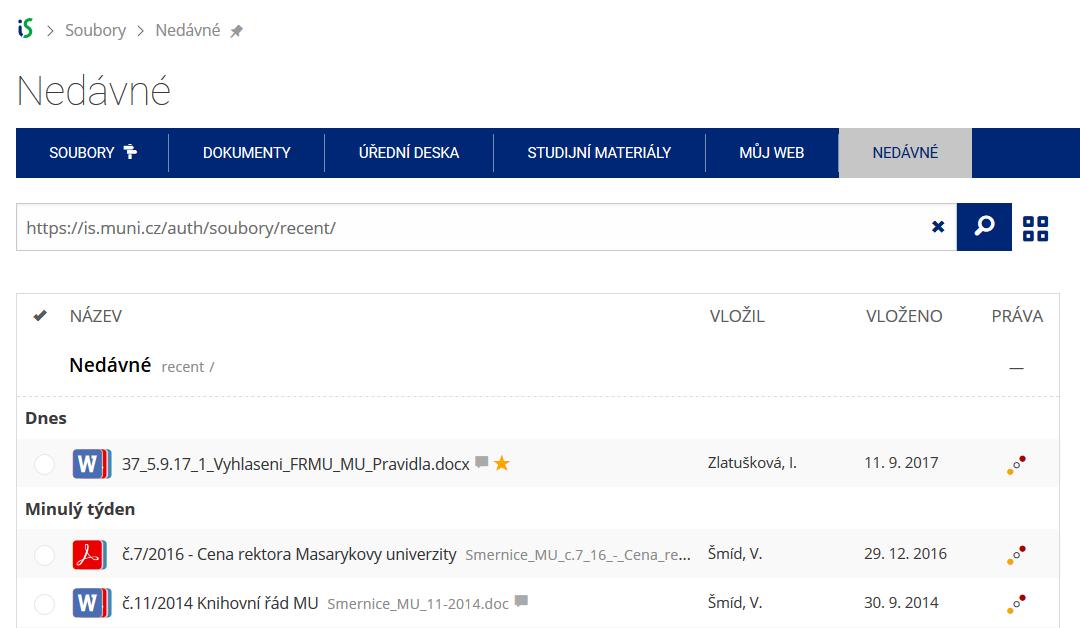 Pomocí funkce Nedávné je možné se rychle vrátit k právě prohlíženým souborům. Oblíbené soubory je také možné označit Hvězdičkou.