Závěrečná práce: Kryštof Matuštík: Computational Workflow for Genome-Scale Metabolic Model Reconstruction of Non-Model Organisms
Bakalářská práce
Computational Workflow for Genome-Scale Metabolic Model Reconstruction of Non-Model Organisms
Anotace
Celogenomové metabolické modely (GEM) nabízejí kolekci znalostí pro pochopení metabolických sítí specifických pro daný organismus, přičemž jejich využití sahá od strain engineering až po předpovídání chování buněk. V posledních dvou desetiletích bylo vytvořeno několik GEM, avšak vytvoření takových modelů pro nemodelové organismy je stále náročné. Tato práce představuje klíčové koncepty rekonstrukce …více
Abstract
Genome-scale metabolic models (GEMs) offer an organism-specific knowledge base for understanding metabolic networks, with applications ranging from strain engineering to predicting cell behaviour. In the last two decades, multiple GEMs were created. However, the creation of such models for non-model organisms is still a challenging endeavour. This thesis introduces GEM reconstruction's key concepts …více
Zadání práce
In the theoretical part, the student will make a brief overview of existing tools for GEM reconstruction and analysis (i.e., pathway tools, Merlin). The main aim is to describe the problems related with the model reconstruction procedure. Next, the methods allowing to assess the predicted reaction network as a graph will be discussed. Finally, tools for computing flux-balance analysis will be described as well at the general level.
In the practical part, the student will design and develop a workflow to employ a selected model reconstruction framework to obtain a draft of the reaction network. The main goal will be to design and implement algorithms assisting the creation, iterative improvement, and analysis of the network and the model. The student will combine graph-based techniques as well as analyses based on stoichiometric matrix (e.g., flux balance analysis). The proposed methods will be evaluated on real-world metabolic networks (e.g., Escherichia Coli, Pseudomonas Putida or potentially other biotechnologically relevant microorganisms).
The workflow will be implemented primarily in Python as an easily extensible and well-documented framework.
24. 5. 2025 09:03, doc. RNDr. David Šafránek, Ph.D., učo 3159
 angličtina
Konzultant
Citace dle normy ČSN ISO 690
Práce na příbuzné téma
Seznam prací, které mají shodná klíčová slova.
-
Construction of Algebraic Abstractions for Systems Biology
RNDr. Mgr. Jana Dražanová, Ph.D., učo 139877 -
Reconstructing Boolean Network Models of Systems with Complex Oscillatory Dynamics
Mgr. Oto Stanko -
Škálovatelná syntéza parametrů pro hypotézy formulované v logice CTL
RNDr. Samuel Pastva, Ph.D., učo 410286 -
Metabolic analysis of human pluripotent stem cells
Anton Salykin, Ph.D. -
Parameter Synthesis of Dynamical Systems via Model Checking
RNDr. Martin Demko, Ph.D., učo 325073 -
Automatisation of biochemical space annotation
Mgr. Lukrécia Mertová -
Formal representation of graphical models of biological systems
Ing. Samuel Kulíšek -
Towards Practical Identification of Asynchronous Boolean Networks
Mgr. Ondřej Lošťák
Složky
Soubory
-
Přidání souboru
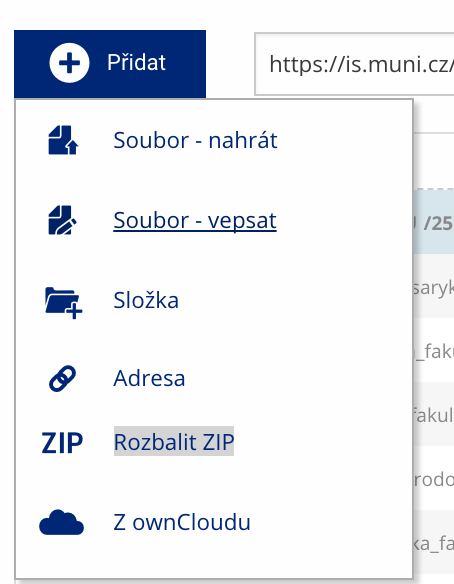 Soubor nebo složku lze nahrát pomocí tlačítka Přidat.
 -
Další operace se soubory
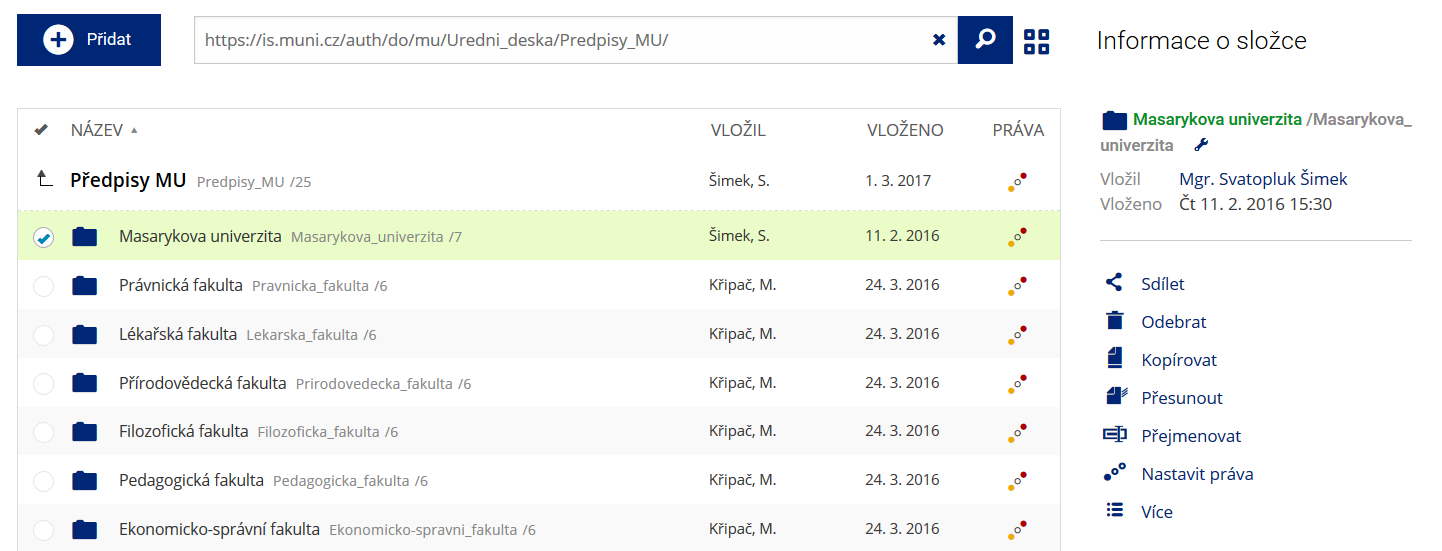 Podrobnosti lze zjistit označením příslušného řádku.
 -
Pohled pro experty
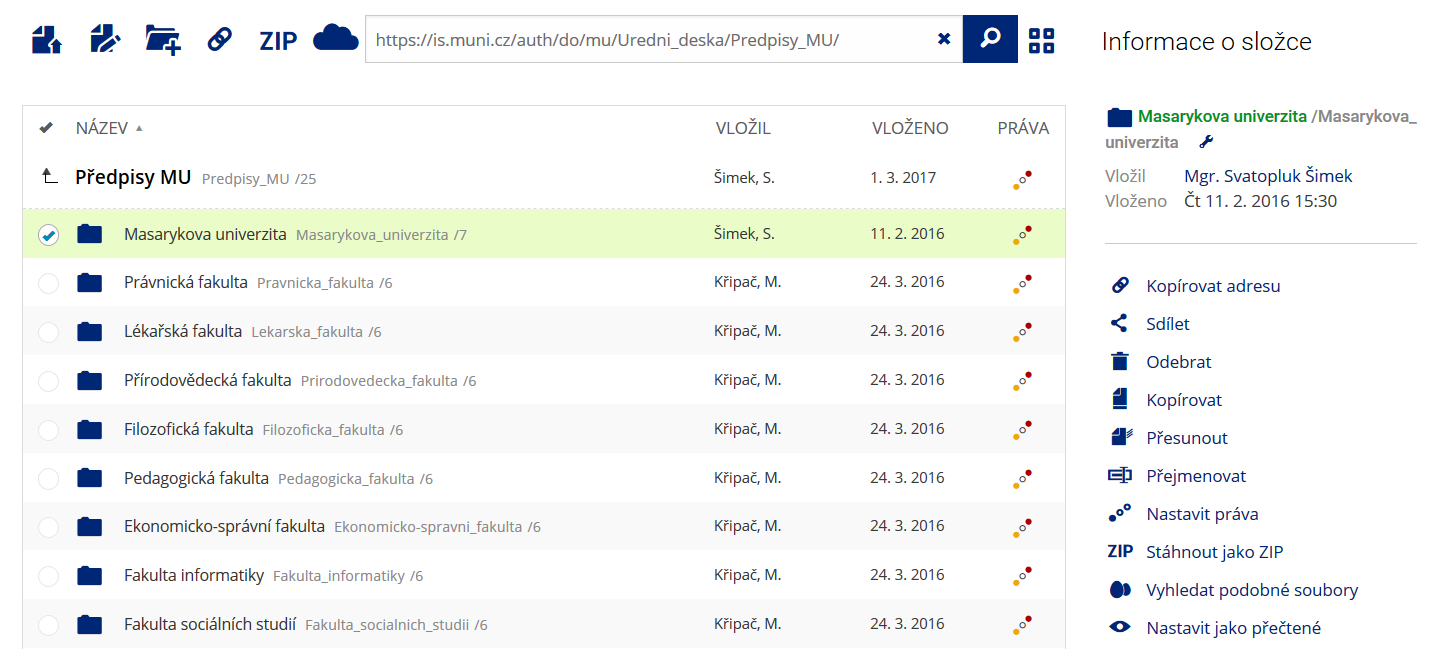 Pro častou práci je možné zvolit režim Více možností.
 -
Vyhledávání souborů
 Vyhledávaný výraz můžete zadat přímo do adresního řádku.
 -
Rychlý přístup k souborům
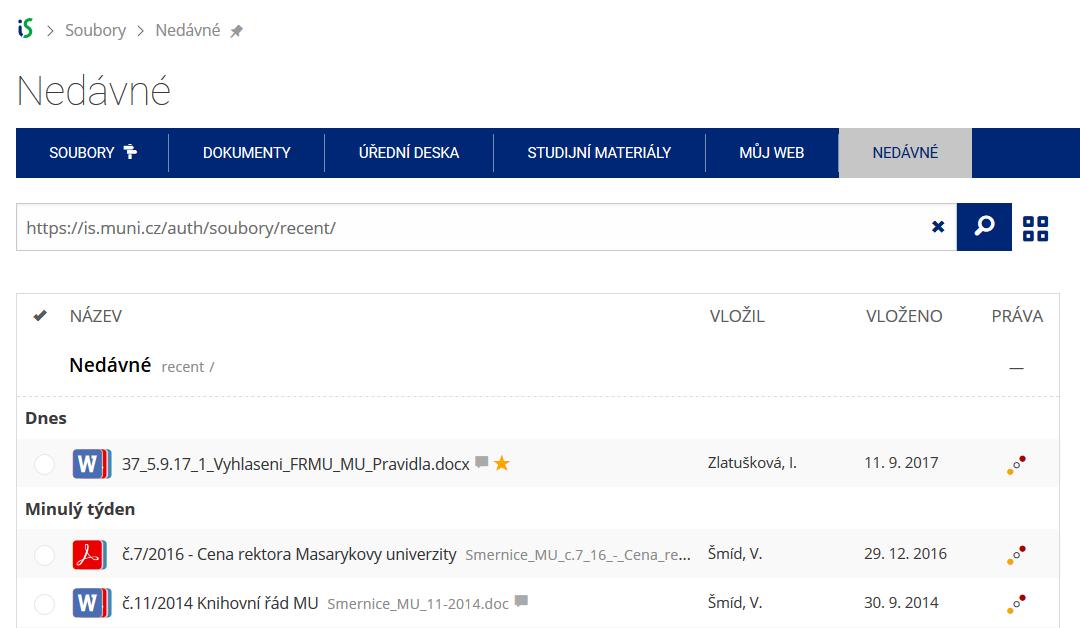 Pomocí funkce Nedávné je možné se rychle vrátit k právě prohlíženým souborům. Oblíbené soubory je také možné označit Hvězdičkou.