Závěrečná práce: Keval Krishan: Implementation of quantum-safe VPN
Diplomová práce
Implementation of quantum-safe VPN
Keval Krishan
Abstract
The rise of quantum computing presents a significant threat to many conventional cryptographic algorithms, prompting the urgent develop- ment of quantum-resistant alternatives. This thesis explores the imple- mentation and performance analysis of a quantum-safe Virtual Private Network (VPN) using post-quantum cryptographic algorithms. The study focuses on addressing the vulnerabilities of current VPNs …více
Zadání práce
Literature survey of existing work in NIST standardized post-quantum cryptography (PQC) algorithms and OpenVPN:: Conducting a thorough literature survey will involve review of the NIST post-quantum cryptography standardization landscape and understanding their impact on the TLS [TLSv1.3] protocol. The survey objective is to determine an effective method for integrating post-quantum KEM and digital signatures with TLS, enabling their utilization within OpenVPN.
Explore ways to modify OpenSSL to include PQC algorithms for key exchange and digital signature: This phase will involve investigation of methods to integrate PQC algorithms into the OpenSSL library, a fundamental component of many cryptographic systems including OpenVPN. This exploration seeks to identify feasible approaches for incorporating PQC based key exchange and digital signature schemes within OpenSSL to enable quantum-safe VPN capabilities.
Integrate the modified OpenSSL with OpenVPN: Once suitable modifications to OpenSSL have been identified and implemented, the next step will be to integrate the modified OpenSS library with OpenVPN. This integration process would involve adapting OpenVPN existing protocols and mechanisms to leverage the newly integrated PQC algorithms for key exchange and digital signature, ensuring compatibility and functionality.
Testing and validation of modified VPN (quantum-safe VPN) in the client-server architecture: Following the integration, thorough testing and validation of the quantum-safe VPN solution will be undertaken by the student. This phase will involve deploying the modified VPN in a client-server architecture, conducting comprehensive testing to assess security, performance, and interoperability aspects.
Performance benchmarking and comparative analysis of quantum-safe VPN against the standard version of OpenVPN: Finally, the performance of the quantum-safe VPN would be benchmarked and compared against traditional VPN solutions. Key metrics such as latency, throughput, and resource utilization will be evaluated under various conditions to gauge the efficacy of the quantum-safe enhancements. Comparative analysis aims to highlight the advantages and trade-offs of adopting a quantum-safe approach in VPN technologies.
Explore ways to modify OpenSSL to include PQC algorithms for key exchange and digital signature: This phase will involve investigation of methods to integrate PQC algorithms into the OpenSSL library, a fundamental component of many cryptographic systems including OpenVPN. This exploration seeks to identify feasible approaches for incorporating PQC based key exchange and digital signature schemes within OpenSSL to enable quantum-safe VPN capabilities.
Integrate the modified OpenSSL with OpenVPN: Once suitable modifications to OpenSSL have been identified and implemented, the next step will be to integrate the modified OpenSS library with OpenVPN. This integration process would involve adapting OpenVPN existing protocols and mechanisms to leverage the newly integrated PQC algorithms for key exchange and digital signature, ensuring compatibility and functionality.
Testing and validation of modified VPN (quantum-safe VPN) in the client-server architecture: Following the integration, thorough testing and validation of the quantum-safe VPN solution will be undertaken by the student. This phase will involve deploying the modified VPN in a client-server architecture, conducting comprehensive testing to assess security, performance, and interoperability aspects.
Performance benchmarking and comparative analysis of quantum-safe VPN against the standard version of OpenVPN: Finally, the performance of the quantum-safe VPN would be benchmarked and compared against traditional VPN solutions. Key metrics such as latency, throughput, and resource utilization will be evaluated under various conditions to gauge the efficacy of the quantum-safe enhancements. Comparative analysis aims to highlight the advantages and trade-offs of adopting a quantum-safe approach in VPN technologies.
Práce zkontrolována:
24. 5. 2024 12:08, prof. RNDr. Václav Matyáš, M.Sc., Ph.D., učo 344
24. 5. 2024 12:08, prof. RNDr. Václav Matyáš, M.Sc., Ph.D., učo 344
Jazyk práce
 angličtina
Termín obhajoby
20. 6. 2024
Konzultant
Mgr. Milan Patnaik
stud FI MU
stud FI MU
Studijní program
Plán
Information Security
Práce na příbuzné téma
Seznam prací, které mají shodná klíčová slova.
-
Implementation of quantum-safe VPN
Mgr. Keval Krishan -
Srovnání VPN realizací
Mgr. Přemysl Šteidl -
VPN řešení pro kolaborativní prostředí
Bc. Lukáš Spurný, učo 73192 -
Implementace bezpečného licenčního serveru
Mgr. Jozef Krchňavý -
Analýza šifrovaného provozu
Mgr. Martin Bajaník -
Integrace SSH/TLS do Netopeer Netconf serveru
Mgr. Michal Vaško -
"Der goldene Drache": Roland Schimmelpfennigs Theaterstück nach einem bewährten Rezept
Mgr. MgA. Eva Schulzová -
Intraindividuální hodnocení vývoje výkonnosti vrcholového běžce na lyžích
Bc. Dušan Augustiňák
Název
Vložil
Vloženo
Práva
Složky
Soubory
Krishan, K.
21. 5. 2024
10. 6. 2024
-
Přidání souboru
 Soubor nebo složku lze nahrát pomocí tlačítka Přidat.
 -
Další operace se soubory
 Podrobnosti lze zjistit označením příslušného řádku.
 -
Pohled pro experty
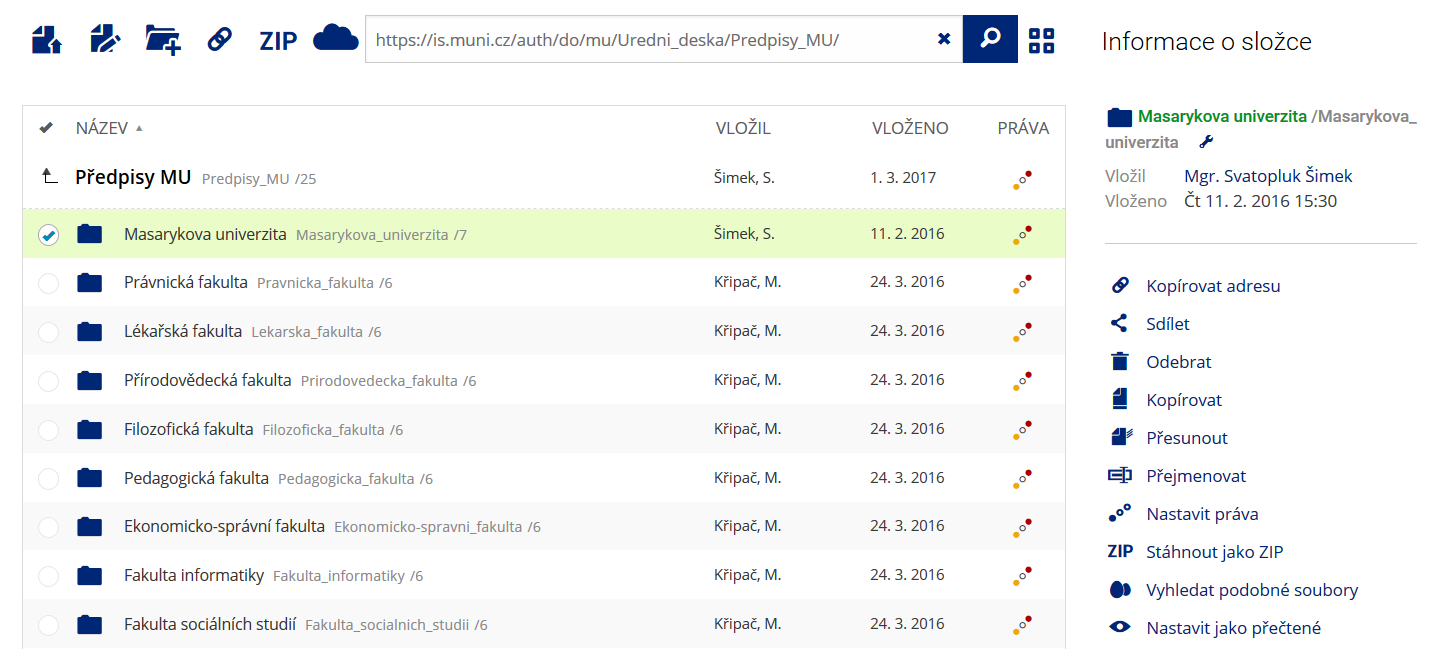 Pro častou práci je možné zvolit režim Více možností.
 -
Vyhledávání souborů
 Vyhledávaný výraz můžete zadat přímo do adresního řádku.
 -
Rychlý přístup k souborům
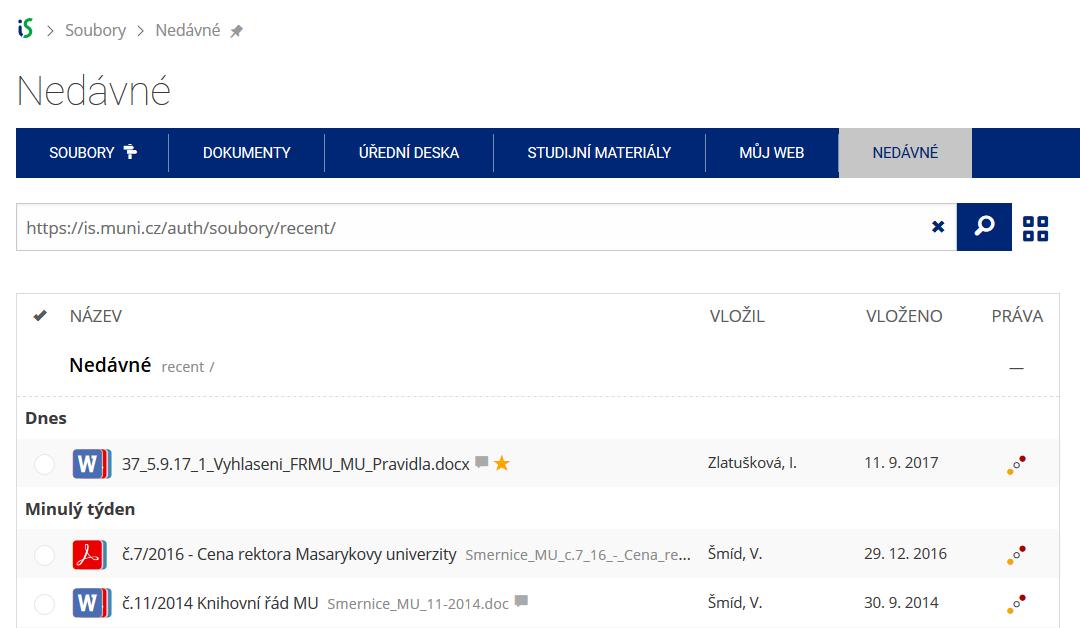 Pomocí funkce Nedávné je možné se rychle vrátit k právě prohlíženým souborům. Oblíbené soubory je také možné označit Hvězdičkou.