Závěrečná práce: Pavlína Koščová: Stanovení proteinu HMGB1 a protilátek proti HMGB1 v séru: včasná detekce zachraňuje život
Bakalářská práce
Stanovení proteinu HMGB1 a protilátek proti HMGB1 v séru: včasná detekce zachraňuje život
Detection of HMGB1 protein and anti-HMGB1 in serum: early detection saves life
Anotace
Bakalářská práce se věnuje proteinu HMGB1 a jeho protilátkám. Protein HMGB1 se vyskytuje v chromatinu, ale za určitých podmínek se může i uvolnit z buňky do extracelulárního prostředí. V jádře je významný např. při replikaci, transkripci, rekombinaci či reparaci DNA. Jeho zvýšená hladina v séru je příznakem mnoha onemocnění. Bakalářská práce je zaměřena na představení tohoto proteinu, jeho funkcí …více
Abstract
Bachelor thesis is focused on HMGB1 protein and its antibodies. HMGB1 protein occurs in chromatin but in some conditions it can be released from cell into the extracellular environment. In the nucleus it is important for example in replication, transcription, recombination or reparation DNA. Its increased level in serum is an index of many illnesses. The aim of the bachelor thesis is an introduction …více
Klíčová slova
HMGB1 anti-HMGB1 zánět detekce High mobility group protein B1 ELISA EMSA Western Blot QCMZadání práce
25. 5. 2012 09:46, RNDr. Michal Štros, DrSc., učo 197845
 čeština
Vedoucí
Citace dle normy ČSN ISO 690
Práce na příbuzné téma
Seznam prací, které mají shodná klíčová slova.
-
Metody detekce vybraných zoonotických mikroorganismů (Borrelia burgdorferi sensu lato, Ricketsia spp.) využívané v klinické praxi
Mgr. et Mgr. Michal Dvořák -
Protilátková odpověď proti antigenům z extraktů Eudiplozoon nipponicum a příprava sekundární protilátky anti-Carp IgM/IgD
Mgr. Michaela Chmelíková -
Izolace, kultivace a detekce Borrelia burgdorferi sensu lato z živočišných tkání
Mgr. Tereza Kutinová -
Diagnostika parazitických hlístic rodu Trichinella
Mgr. Michaela Chmelíková -
Funkce chromozomálních proteinů HMGB1 a HMGB2 v biologii telomer
Ing. Martin Kučírek, Ph.D. -
Charakterizace vazby myeloperoxidasy na erytrocyty
Mgr. Silvie Kremserová, Ph.D. -
Markery zánětu a jejich role u multifaktoriálních onemocnění
Mgr. Jana Veverková, Ph.D., učo 358036 -
Vliv pseurotinových analogů na odpověď profesionálních fagocytů
Mgr. et Mgr. Daniela Rubanová, Ph.D.
Složky
Soubory
-
Přidání souboru
 Soubor nebo složku lze nahrát pomocí tlačítka Přidat.
 -
Další operace se soubory
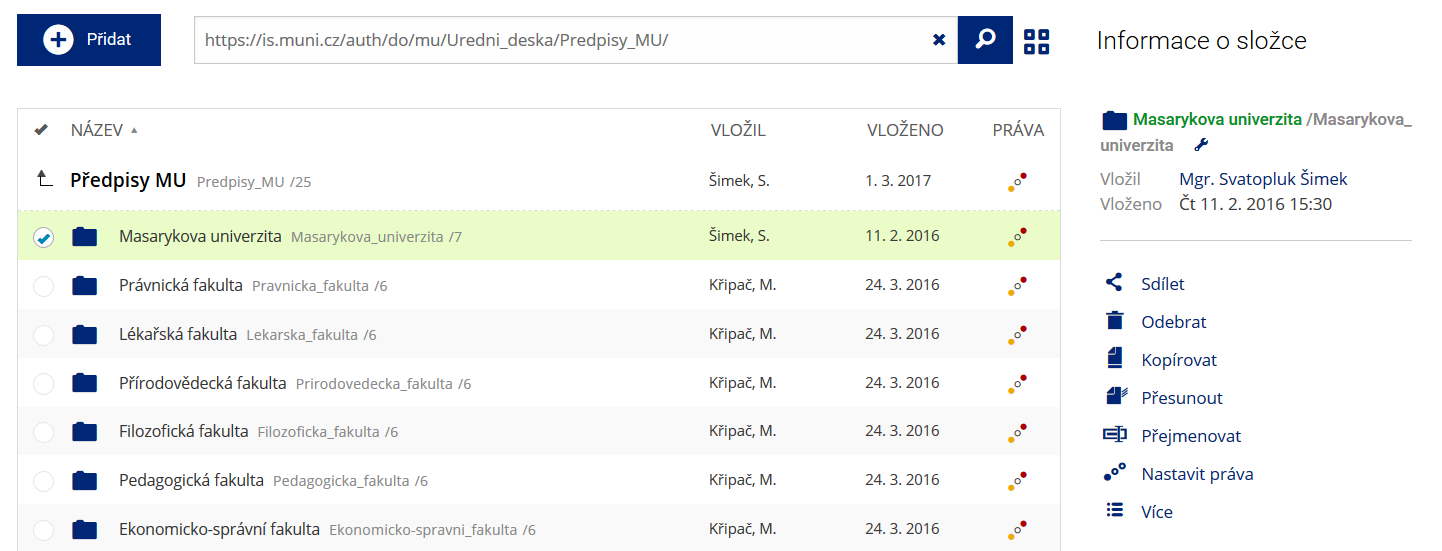 Podrobnosti lze zjistit označením příslušného řádku.
 -
Pohled pro experty
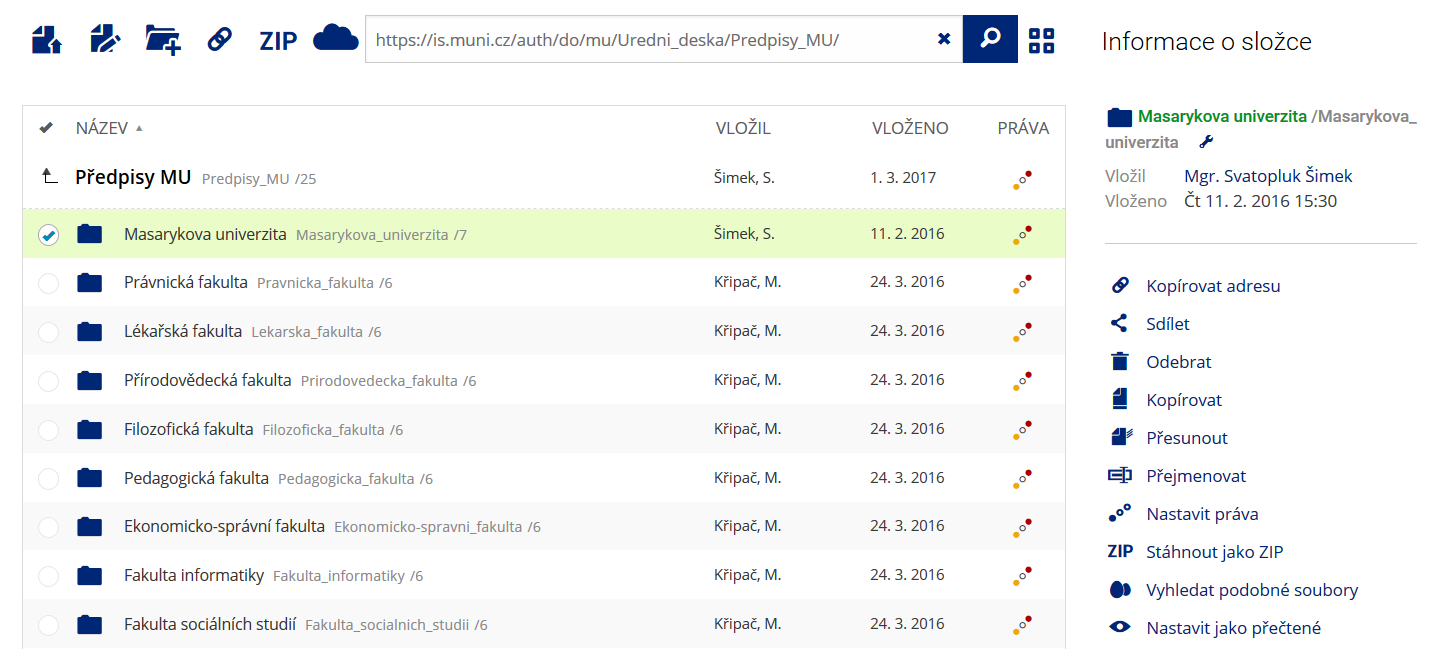 Pro častou práci je možné zvolit režim Více možností.
 -
Vyhledávání souborů
 Vyhledávaný výraz můžete zadat přímo do adresního řádku.
 -
Rychlý přístup k souborům
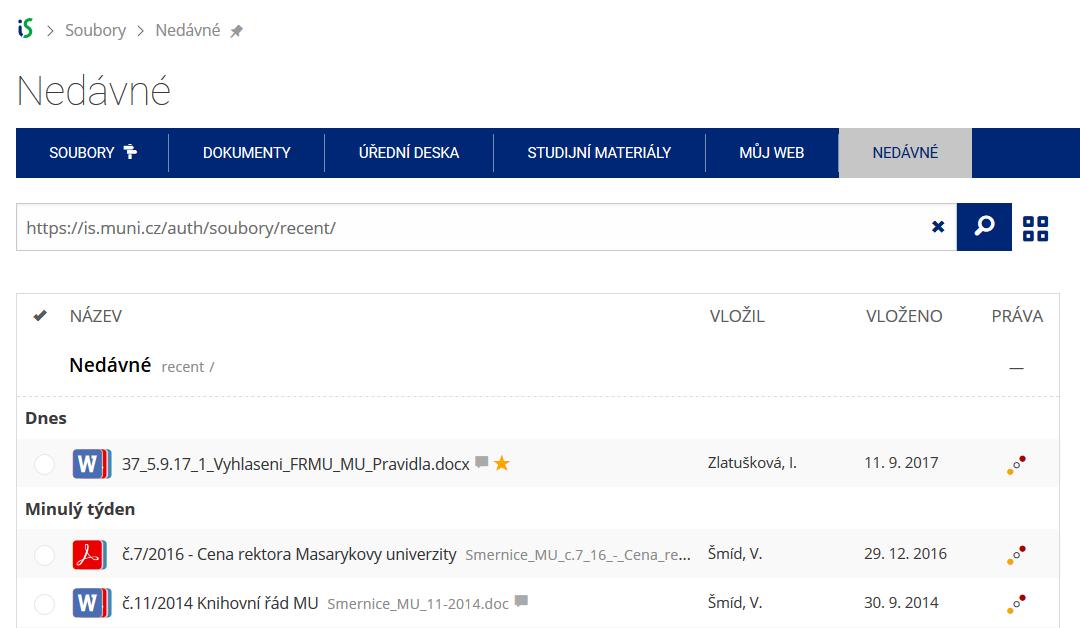 Pomocí funkce Nedávné je možné se rychle vrátit k právě prohlíženým souborům. Oblíbené soubory je také možné označit Hvězdičkou.