Anotace
Cíl: Disertační práce postihuje změnu subjektivně vnímané
kvality života pacientů se ztrátou či poruchou hlasu. Zaměřuje
se na psychické a sociální aspekty nemocných u vybraných
chirurgicky léčených skupin. Jednalo se o 43 pacientů s obrnou
zvratného nervu a z tohoto počtu 32 pacientů s jednostrannou
obrnou zvratného nervu, 29 pacientů s časným stádiem glotického
karcinomu hrtanu, 45 pacientů léčených totální laryngektomií a
8 pacientek po změně pohlaví male to female léčené
fonochirurgickou operací.
Disertační práce si za svůj hlavní cíl kladla otázku, zda
porucha nebo ztráta hlasu ovlivňuje psychickou a sociální
stránku člověka. Širším cílem práce bylo poukázat na
onemocnění, jejichž chirurgické léčení s identifikací
subjektivně vnímaných potřeb jedince, je tou správnou cestou k
efektivní péči. Dílčím cílem bylo vyhodnocení epidemiologických
faktorů zahrnujících věk, pohlaví, rodinný stav, bydliště,
vzdělání, dále negativní návyky jako je kouření a nadměrné
požívání alkoholu. Mezi další dílčí cíle byly zahrnuty
psychické aspekty pacientů zaměřené na pozitivní a negativní
emoce, obavy, hodnoty, životní cíle, životní postoje, návyky,
informovanost o nemoci a léčbě, víru. Další skupina cílů byla
zaměřena na sociální zázemí pacientů na rodinu, přátele a
veřejnost. Sledovanou veličinou byla i kvalita života
nemocných, jejich životní styl, soběstačnost, volný čas,
zaměstnání, rekvalifikace, bydlení, finanční situace, sociální
dávky, dojíždění na kontroly. Poslední velice důležitou
skupinou byly cíle zaměřené na subjektivní hodnocení hlasu
pacientů před a po chirurgické léčbě.
Metodika: Šetření jsme provedli pomocí dotazníku, rozhovoru a
pozorování. Dotazník byl otestován pomocí vícerozměrné
statistické analýzy metody s latentními proměnnými. Při
statistickém zpracování dat jsme použili charakteristiky
polohy, variability a dvouvýběrový t-test. Jsme si vědomi
omezení naší práce. Vzhledem ke specifičnosti zkoumaného vzorku
lze výsledky jen obtížně zobecnit. Sledování pacientů, kteří
podstoupili operaci obrny zvratného nervu, operaci glotického
karcinomu hrtanu, totální laryngektomii a fonochirurgickou
operaci hrtanu na Klinice otorinolaryngologie, chirurgie hlavy
a krku Pardubické krajské nemocnice je cenné pro lepší
exploraci této problematiky.
Výsledky:
1. Pacienti s obrnou zvratného nervu
Porucha hlasu omezovala před léčbou osobní i sociální život 22
(54 %) pacientům, a to 7 (17 %) vždy, 4 (10 %) spíše vždy a 11
(27 %) někdy. Po léčbě ho omezovala 13 (33 %) pacientům, 2 (5
%) vždy, 2 (5 %) většinou vždy a 9 (23 %) někdy.
Šestnáct (40 %) respondentů uvedlo, že se změnila jejich
sociální situace. Osm (34 %) pacientů ztratilo zaměstnání a
hledalo nové s obtížemi, finanční situace se zhoršila 13 (33 %)
respondentům.
Pacienti uvedli, že před chirurgickou léčbou jednostranné obrny
zvratného nervu byl hlas u 14 pacientů významně poškozen. Šest
pacientů mělo středně změněný hlas a 2 nemohli mluvit vůbec.
Jeden pacient uvedl, že měl hlas lehce změněný. Jako normální
považovalo svůj hlas 8 pacientů. Po chirurgické léčbě
jednostranné obrny zvratného nervu 13 pacientů uvedlo, že byl
jejich hlas lepší než dříve a 8 pacientů normální nebo většinou
normální. Dva pacienti označili svůj hlas stejný jako před
léčbou. Šest pacientů hodnotilo svůj hlas jako horší než před
objevením se potíží, ale stále dobrý a jeden pacient jako
mnohem horší než před léčbou.
2. Pacienti s časným stádiem glotického karcinomu hrtanu
Porucha hlasu omezovala před chirurgickou léčbou osobní i
sociální život jednomu pacientovi někdy a jednomu spíš vždy,
dvěma pacientům většinou nikdy a ostatním nikdy. Po léčbě
omezovala osobní a sociální život 13 (46 %) pacientům, 2 (7 %)
vždy, 4 (14 %) spíš vždy a 7 (25 %) někdy.
Sociální situace se změnila 11 respondentům. Sedm pacientů
ztratilo zaměstnání. Dva pacienti hledali nové zaměstnání s
obtížemi a tři bez úspěchu. Finanční situace se zhoršila 10
respondentům.
Před chirurgickou léčbou byl hlas u 8 pacientů lehce změněný, u
3 pacientů středně změněný, u 5 pacientů významně poškozený. U
ostatních 13 pacientů byl hlas normální. Po chirurgické léčbě 5
pacientů uvedlo, že byl jejich hlas lepší než dříve a jeden
pacient normální nebo většinou normální. Dva pacienti označili
svůj hlas stejný jako před léčbou. Jedenáct pacientů hodnotilo
hlas jako horší než před objevením se potíží, ale stále dobrý a
9 pacientů mnohem horší než před léčbou.
3. Pacienti léčení totální laryngektomií
Porucha hlasu neomezovala před léčbou osobní i sociální život
pacientů. Po totální laryngektomii omezovala ztráta hlasu
osobní a sociální život 29 (65 %) pacientům, 9 vždy, 6 spíš
vždy a 14 někdy.
Sociální situace se změnila 20 respondentům. Jedenáct pacientů
ztratilo zaměstnání. Jeden pacient hledal nové zaměstnání
snadno a jeden bez úspěchu. Finanční situace se zhoršila 12
respondentům.
Pacienti po totální laryngektomii uvedli, že ke komunikaci
využívají v 26 (67 %) případech jícnový hlas, ve 4 případech
retní šepot a v 9 případech elektrolarynx. Šest pacientů na
tuto položku neodpovědělo.
Dle zápisů v lékařské dokumentaci jeden pacient hovořil
výborným jícnovým hlasem dle Robeové (F – G), 11 pacientů velmi
dobrým (E - F), 2 dobrým, 2 tvořili jícnový hlas (D – E),
celkem 36 %. Ruktus tvořilo 9 (20 %) pacientů, 11 (24 %)
pacientů ruktus netvořilo, 9 (20 %) používalo elektrolarynx.
Úroveň slovní zásoby všech pacientů byla přiměřená. 11 pacientů
mělo problémy s odezíráním, 2 pacienti odezírali částečně a 32
respondentů nemělo problémy s odezíráním.
4. Pacientky po změně pohlaví male to female léčené
fonochirurgickou operací
Před operací respondentky podstoupily foniatrickou léčbu s
neúspěšným efektem. Ženy považovaly svůj hlas před operací
stále za mužský. Po operaci 5 žen bylo se svým hlasem
stoprocentně spokojených, jedna žena uvedla, že její hlas byl
slabý a nezněl plně, mohlo to být ovlivněno skutečností, že
byla dotazována časně po operaci. Dvě dotazované čekaly od
operace podstatně více. Dle lékařských nálezů funkční výsledky
prokázaly zvýšení hlasu u 7 pacientek. Sedm respondentek
udávalo po operaci zvýšení sebevědomí, snížení tenze při
komunikaci, zlepšení osobního i sociálního života.
Závěr: Komplexní péče o pacienty s poruchou hlasu by měla být
individuální a holistická. Větší pozornost by měla být věnována
psychice i sociální stránce pacientů. Psychoterapie by měla být
součástí managementu léčení. Cílem psychologických intervencí
by mělo být zmírnění pocitů osamělosti, redukce strachu z
léčby, snížení zoufalství a deprese, pomoc při objasňování
nedorozumění a chybných informací, snížení pocitů izolace,
bezmocnosti, beznaděje a pocitu opuštěnosti druhými, vedení k
větší zodpovědnosti za vlastní uzdravení, lepší spolupráce s
lékařským týmem a ošetřovatelským personálem a obecné zlepšení
kvality života.
Velká pozornost by měla být věnována edukaci pacientů a jejich
rodin. Pacienti s poruchou hlasu potřebují více středisek
pomoci, stacionářů a center a rozšíření nabídky služeb
foniatrických a logopedických poraden. …víceméně
Abstract
Purpouse: PhD thesis affects change subjectively perceived
quality of life of patients with loss or impaired speech. It
focuses on the psychological and social aspects of patients
surgically treated for selected groups. These were 43 patients
with nerve palsy and the Reciprocal of 32 patients with
unilateral Reciprocal nerve palsy, 29 patients with early stage
cancer glottis of the larynx, 45 patients treated with total
laryngectomy and 8 patients after a sex change male to female
treated phonosurgery operations. PhD thesis to its main goal
wondered whether the failure or loss of voice affects the
psychological and social aspects of man. The wider aim of this
work was to stress the disease, the surgical treatment of
subjective identification with the perceived needs of the
individual, is the way to effective care. The operational
objective was to evaluate the epidemiological factors,
including age, sex, marital status, residence, education, the
negative habits like smoking and excessive alcohol consumption.
Other milestones include the psychological aspects of patients
focused on the positive and negative emotions, fears, values,
life goals, attitudes, habits, awareness of illness and
treatment, faith. Another group of objectives focused on the
social background of patients to family, friends and the
public. Followed the quantity and quality of life of patients,
their lifestyle, self-sufficiency, leisure, employment,
retraining, housing, financial situation, social benefits,
commute to controls. The last group of very important
objectives were focused on the subjective evaluation of voice
patients before and after surgical treatment.
Methods: We conducted our investigation with a questionnaire,
interview and observation. The questionnaire was tested using
multivariate statistical analysis methods with latent
variables. In statistical data processing we used the
characteristics of location, variability and two-sided t-test.
We are aware of the limitations of our work. Given the
specificity of a sample results can be difficult to generalize.
Monitoring of patients who underwent surgery Reciprocal nerve
palsy, surgery laryngeal cancer glottis, total laryngectomy and
larynx phonosurgery at the Clinic of Otorhinolaryngology, Head
and Neck Surgery Pardubice Regional Hospital is valuable for a
better exploration of this issue.
Results:
1. Patients with Reciprocal nerve palsy
Voice disorders before treatment, limited personal and social
life 22 (54 %) patients, and 7 (17 %) every 4 (10 %) more times
and 11 (27 %) sometimes. After treatment he limited 13 (33 %)
patients, 2 (5 %) each, 2 (5 %) always or usually 9 (23 %)
sometimes.
Sixteen (40 %) of respondents reported that they changed their
social situation. Eight (34 %) patients lost jobs and sought
new difficulties, the financial situation has worsened 13 (33
%) respondents.
Patients reported that the surgical treatment of unilateral
Reciprocal nerve palsy was the voice of 14 patients
significantly damaged. Six patients had moderate voice changed
and 2 could not speak at all. One patient said that his voice
was slightly changed. As his voice was considered a normal 8
patients. After the surgical treatment of unilateral nerve
palsy Reciprocal 13 patients reported that their voice was
better than before and 8 patients with normal or mostly normal.
Two patients have marked his voice the same as before
treatment. Six patients evaluated their voices as worse than
before the appearance of trouble, but still good and one
patient to be much worse than
before treatment.
2. Patients with early stage cancer glottis of the larynx
Voice disorders before surgical treatment of limited personal
and social life of one patient, and then one more each in two
patients, and most others never never. After treatment with
limited personal and social life 13 (46 %) patients, 2 (7 %)
each, 4 (14 %) more times and 7 (25 %) sometimes.
The social situation has changed 11 respondents. Seven patients
lost jobs. Two patients looking for a new job with difficulty
and three without success. The financial situation has
deteriorated 10 respondents.
Before surgical treatment was the voice in 8 patients, slightly
modified, in 3 patients, moderately altered, in 5 patients
significantly damaged. The other 13 patients were normal voice.
After the surgical treatment of 5 patients reported that their
voice was better than before, and one patient is usually normal
or normal. Two patients have marked his voice the same as
before treatment. Eleven patients evaluated as worse than a
vote before the appearance of trouble, but still a good 9
patients much worse than before treatment.
3. Patients treated with total laryngectomy
Voice disorders before treatment does not restrict personal and
social lives of patients. After total laryngectomy limited loss
of voice personal and social life 29 (65 %) patients,
9 each, 6 more times and then 14.
The social situation has changed 20 respondents. Eleven
patients lost jobs. One patient was looking for a new job
easily and one without success. The financial situation has
deteriorated 12 respondents. Patients after total laryngectomy
indicated that the communication used in 26 (67 %) cases of
esophageal voice in 4 cases of lip whisper in 9 cases
elektrolarynx. Six patients did not respond to this item.
According to entries in the medical record, one patient talked
a great voice from oesophageal Robe (F - G), 11 patients very
good (E - F), 2 good, 2 were oesophageal voice (D - E), a total
of 36 %. Eructation had only 9 (20 %) patients, 11 (24 %)
patients eructation not form, 9 (20 %) used elektrolarynx. The
level of vocabulary of all patients was appropriate. Eleven
patients had problems with speech reading, 2 patients part
speech reading and 32 respondents had problems with speech
reading.
4. Patients after a sex change male to female treated
phonosurgery operations
Before the operation respondentky undergone speech therapy
treatment of the failure effect. Women consider their vote
before the operation is still the man. After surgery, the 5
women were wholly satisfied with his voice, one woman said that
her voice was weak and sounded fully, it could be influenced by
the fact that she was questioned early after surgery. Two
questioned after surgery waited much more. According to medical
findings of the functional
results showed an increase of voice in 7 patients. Seven
respondents were going after the operation increase confidence,
reduce tension in communication, improving personal and social
life.
Conclusion: Comprehensive care for patients with voice
disorders should be individualized and holistic. Greater
attention should be paid to the psyche and the social component
of patients. Psychotherapy should be part of management
treatment. The aim of psychological interventions should be to
alleviate feelings of loneliness, fear of reduction treatment,
the reduction of despair and depression, assistance in
clarifying misunderstandings and misinformation, reducing
feelings of isolation, helplessness, hopelessness and the
feeling of abandonment by others, leading to greater
responsibility for their own healing, improved cooperation with
a medical team and affiliated personnel and the general quality
of life.
Great attention should be paid to education of patients and
their family. Patients with voice disorders need more help
centers, and day care centers and expand service offerings
phoniatric and speech
therapeutic advisory. …víceméně
 čeština
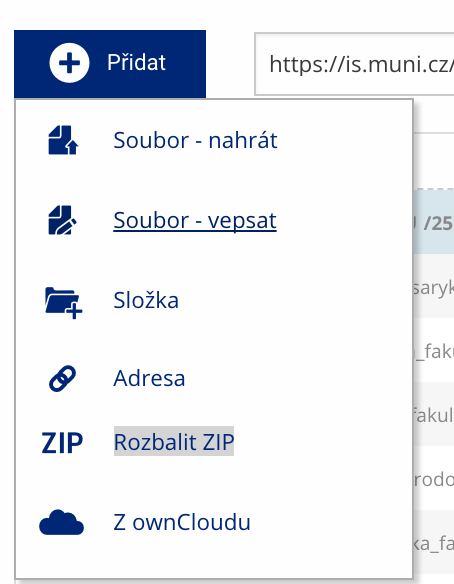 Soubor nebo složku lze nahrát pomocí tlačítka Přidat.
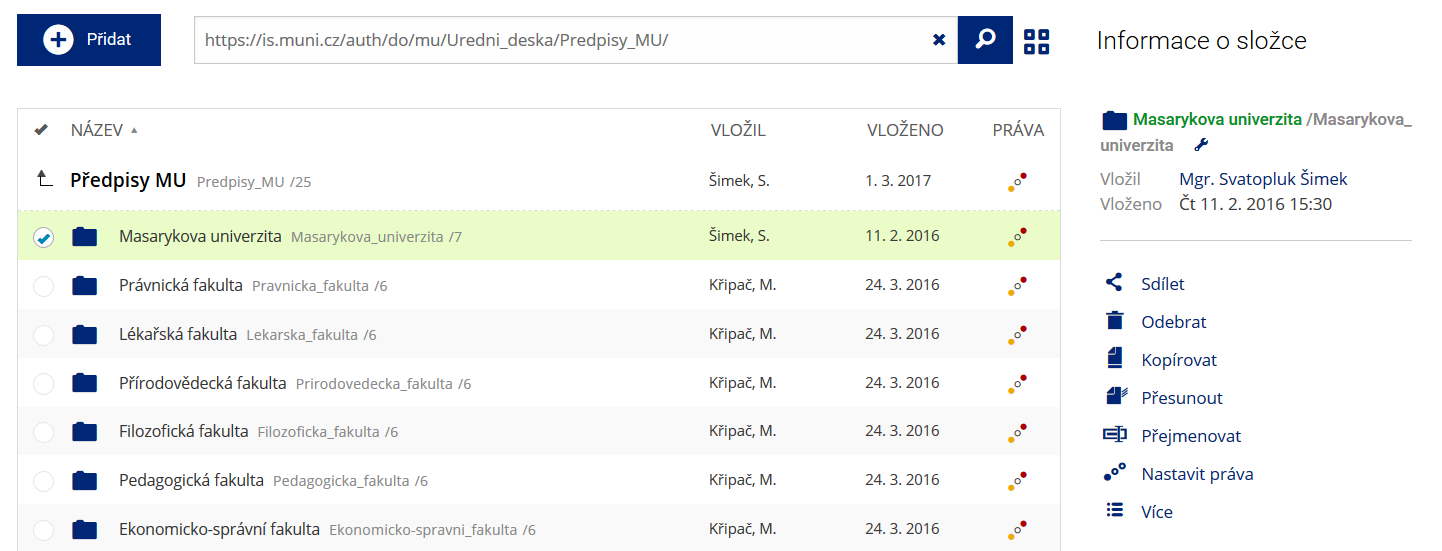 Podrobnosti lze zjistit označením příslušného řádku.
 Pro častou práci je možné zvolit režim Více možností.
 Vyhledávaný výraz můžete zadat přímo do adresního řádku.
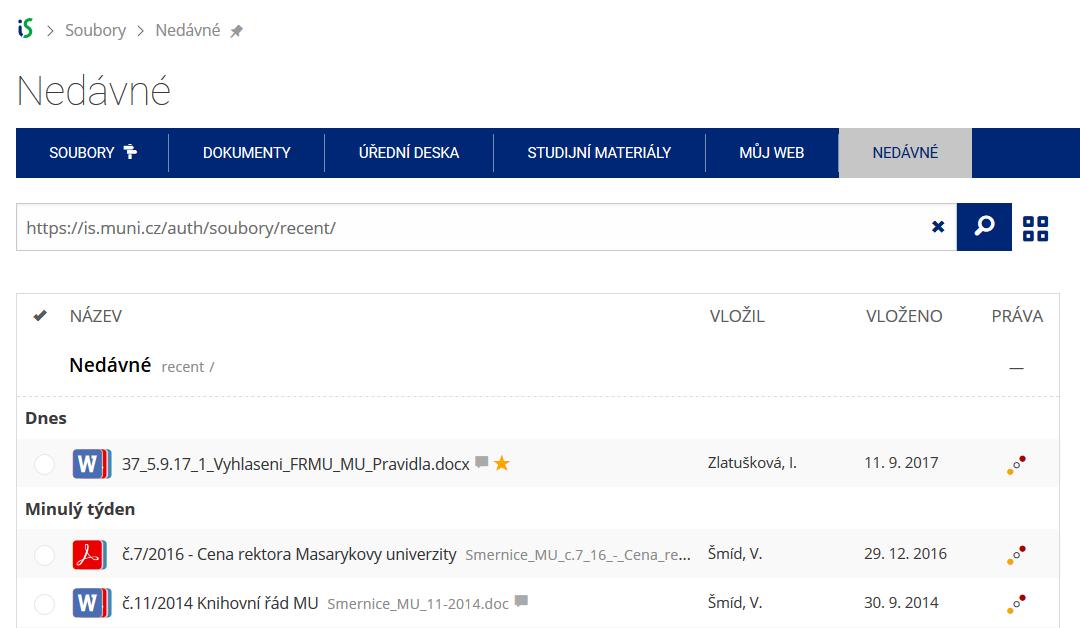 Pomocí funkce Nedávné je možné se rychle vrátit k právě prohlíženým souborům. Oblíbené soubory je také možné označit Hvězdičkou.