Závěrečná práce: Victor Peeters: Post-communist lustration in the Visegrád 4
Diplomová práce
Post-communist lustration in the Visegrád 4
Anotace
Lustrace je nástroj používaný v mnoha státech, které jsou v procesu tranziční spravedlnosti, aby se vyrovnali dobou komunistické oprese. Rozsah a záměr lustrací se však značně liší, a to i v zemích, které jsou si vzájemné blízké, a to i způsobem implementace tranziční spravedlnosti. Česká Republika, Maďarsko, Polsko a Slovensko tvoří Visegrádskou čtyřku (V4), čtyři země, které se všechny zabývaly tranziční …více
Abstract
Lustration is an instrument used in many states that are going through transitional justice to make a break with the past. However, the scope and extent of lustration vary massively, even in countries in close proximity to each other and with similar pathways of transitional justice. Within Central Europe, the Czech Republic, Hungary, Poland, and Slovakia constitute the Visegrád 4 (V4), four countries …více
Zadání práce
17. 5. 2022 08:08, prof. PhDr. Vít Hloušek, Ph.D.
 angličtina
Práce na příbuzné téma
Seznam prací, které mají shodná klíčová slova.
-
Externalities in Transitional Justice Decisions: The European Union and Transitional Justice Processes in Post-Communist Countries
doc. Mgr. et Mgr. Katarína Šipulová, Ph.D., MSt, učo 182643 -
Vliv hospodářských výsledků na popularitu vlády v zemích V4
Mgr. Ing. Filip Křenek -
Ekonomické hlasování a odpovědnost vládních stran ve střední Evropě
Mgr. et Mgr. Petra Vodová -
Zbrojní průmysl zemí V4 a jeho perspektivy
Mgr. Erik Jurásek -
Cenotvorba služeb retailového bankovnictví
Ing. Kristína Angelovičová -
IPO na burzách zemí Visegrádské čtyřky
Bc. Kristýna Svítilová -
Komparace vztahu vlády a parlamentu v politických systémech zemí Vyšegrádské čtyřky
Bc. Matěj Pěrka -
Tendencie katolíckych veriacich ku krajne pravicovým postojom v krajinách V4
Bc. Jozef Vajda
Složky
Soubory
-
Přidání souboru
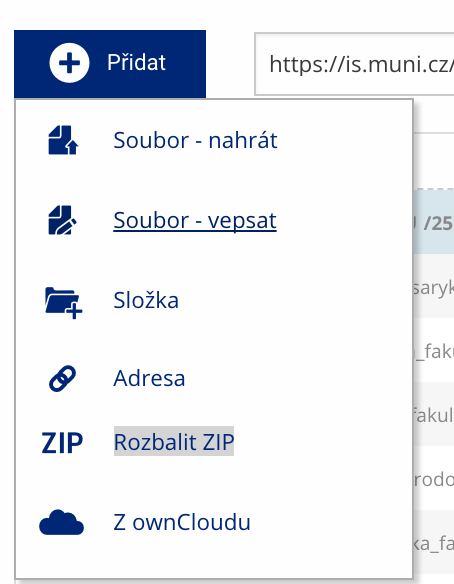 Soubor nebo složku lze nahrát pomocí tlačítka Přidat.
 -
Další operace se soubory
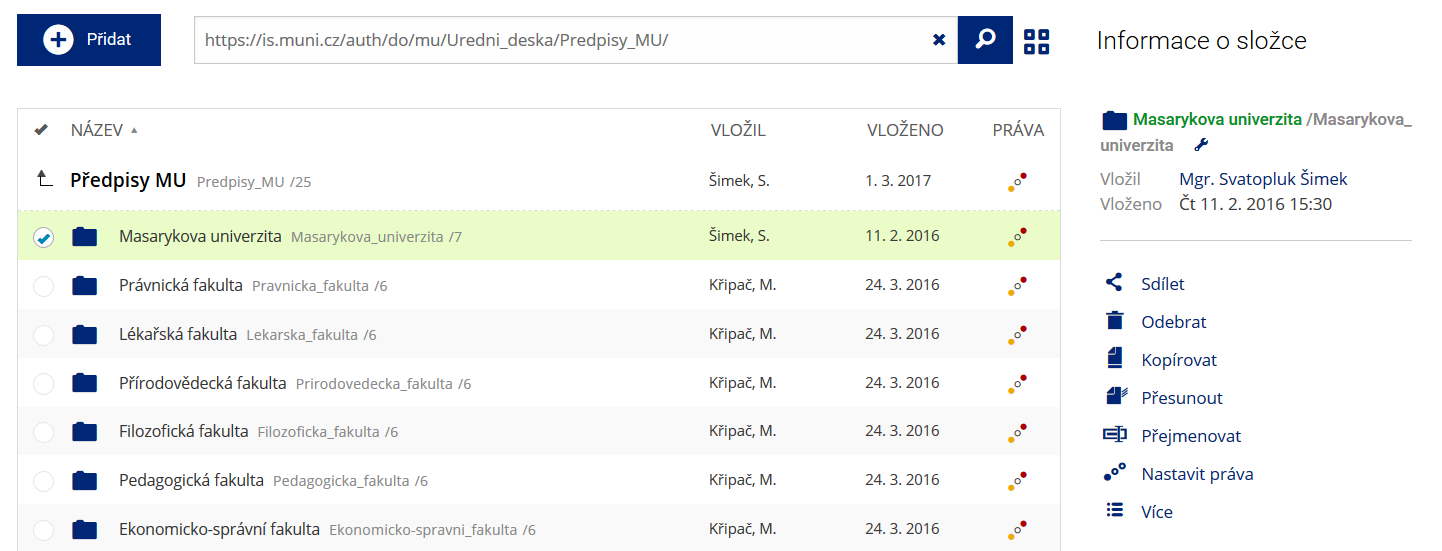 Podrobnosti lze zjistit označením příslušného řádku.
 -
Pohled pro experty
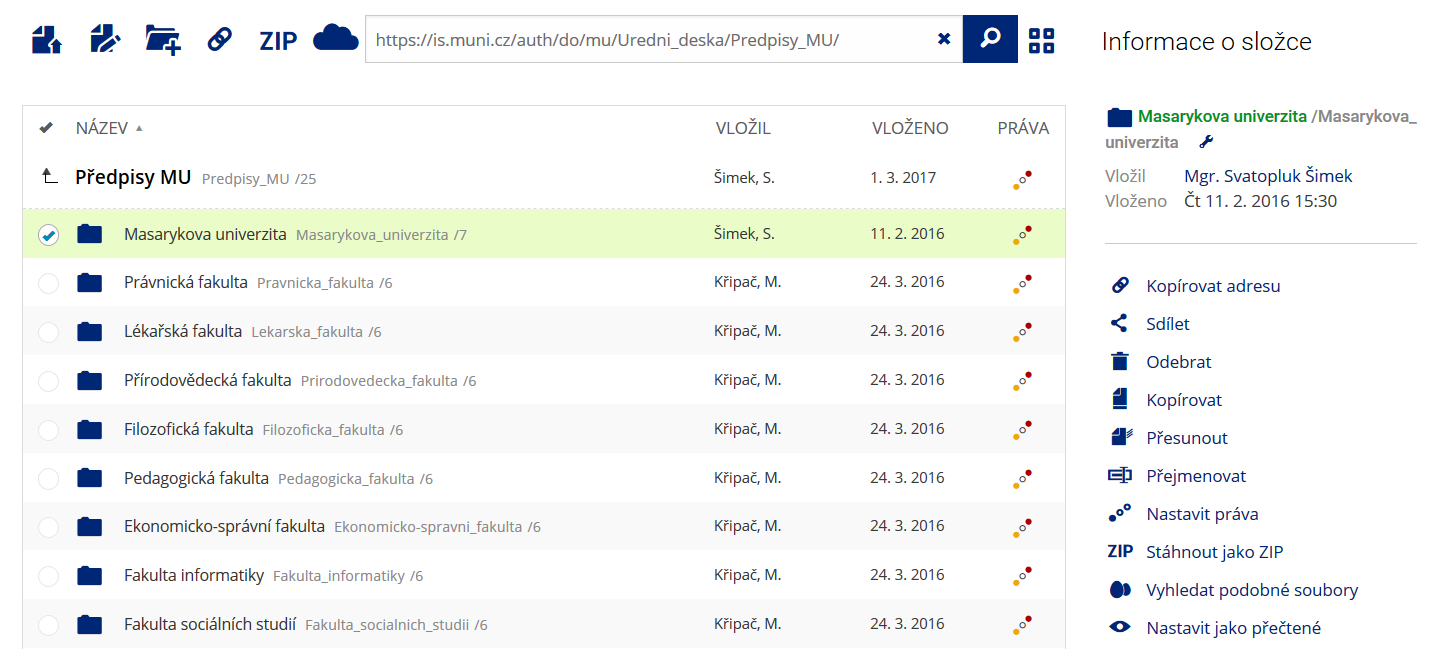 Pro častou práci je možné zvolit režim Více možností.
 -
Vyhledávání souborů
 Vyhledávaný výraz můžete zadat přímo do adresního řádku.
 -
Rychlý přístup k souborům
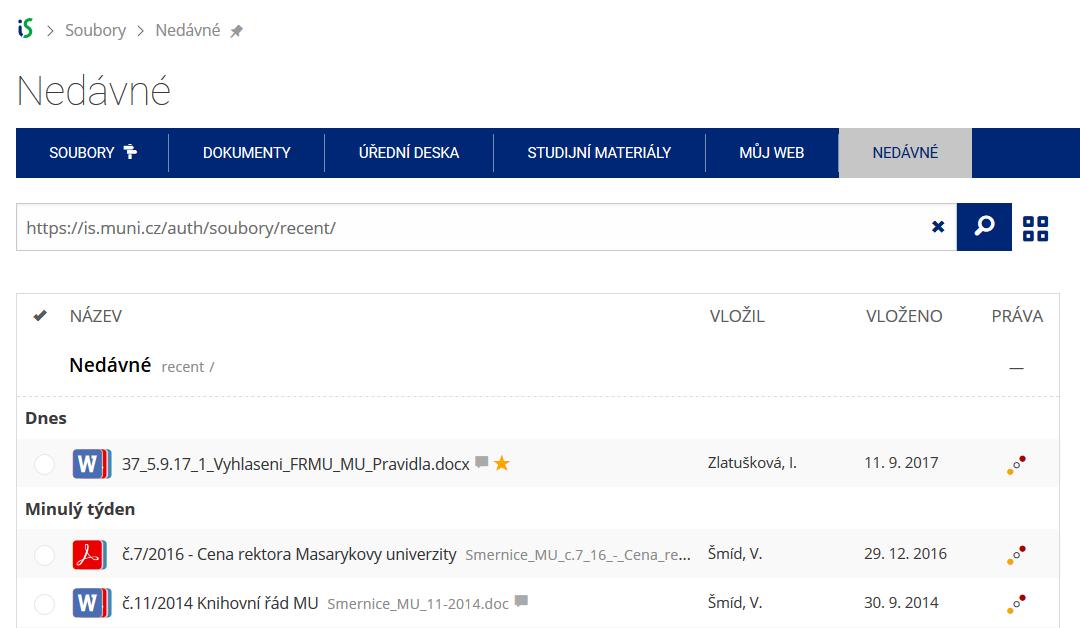 Pomocí funkce Nedávné je možné se rychle vrátit k právě prohlíženým souborům. Oblíbené soubory je také možné označit Hvězdičkou.