Závěrečná práce: Bc. Alona Sydorenko: Transnational Actors and International Criminal Law: Study of NGOs' influence on formation of International Criminal Court and its juridiction
Diplomová práce
Transnational Actors and International Criminal Law: Study of NGOs' influence on formation of International Criminal Court and its juridiction
Bc. Alona Sydorenko
Abstract
The International Criminal Court (ICC) was established on 1 July 2002 after ratification by 60 states of the Rome Statute, with which the Court is governed. The ICC is the first permanent, treaty based, international tribunal, which tries for the most serious crimes to the international community, which are the genocide, crimes against humanity and war crimes. Its development was followed and facilitated …více
Zadání práce
NGOs started to be an integral part of people’s life, especially in questions of human rights. This work intends to analyse the influence of particular NGOs on the process of creating the criminal courts as well as the role of NGOs in fact finding and legal argumentation in the decisions of the courts.
In 1995 a hand of NGOs formed the NGO Coalition for an International Criminal Court (CICC). The coalition now includes over 2,000 NGOs worldwide united in their support for a fair and effective International Criminal Court (ICC). The CICC played a uniquely influential role in the establishment of this international institution. It emphatically contributed to the process from the early discussions at the UN, through the Rome Statue, the ratification campaign and beyond. The Court would not have emerged in the way it did without the active participation of groups and individuals from the sphere of global civil society. NGOs can play a central role before, during, and even after an investigation. Their contributions fall into three main categories: telling others about the Court, providing information to the Court, serving as a link between the Court and victims and witnesses.
Not only ICC is provided with “help” of NGOs, they draw a bead on ICTY and ICTR as well. The main goal of NGOs is to cooperate with Tribunals, but also to control them in some point and to make a preasure on them. However each organisation was its “role” in this “theatre”. Viewing the mandates of different organizations can briefly highlight the qualitative difference, not in legal wisdom but in potential reach and influence. Human Rights Watch’s mandate is to investigate and expose human rights violations and hold abusers accountable. Amnesty International works broadly to promote adherence to the Universal Declaration of Human Rights and other internationally recognized human rights instruments. Their most formidable “weapons” are information campaigns. One more aspect of Tribunal’s cooperation with NGOs is their justice and eventually rely on the NGOs to maintain the connection with with the witnesses and victims violence identified by the Tribunals (in 1999 the Victims and Gender Support Unit mandated non-governmental organizations operating in Rwanda (including HAGURUKA, AVEGA, Rwanda Women Network and its social network ASOFERWA, and Pro-femmes Twese Hamwe)) to provide services in legal guidance, psychological and medical rehabilitation and other forms of assistance, such as resettlement, to victims and witnesses.
Bibliography:
1. Nizkor, Equipo. Rome Statute of the International Criminal Court. Statutes of the International Criminal Tribunals from Nuremberg (1945) to Sierra Leone (2002). Madrid. 2002.
2. Ferencz, Benjamin B.. Defining International Aggression. The Search for World Peace. A Documentary History and Analysis. Oceana Publications, Dobbs Ferry: New York. 1975
3. Burroughs, John. International Criminal Court, Wearpons of Mass destruction, NGOs and Other Issues: a Report on the Negotiations and the Statue. April 1999. http://lcnp.org/global/icc.htm
4. Glasius, Marlies. The International Criminal Court: A Global Civil Society Achievement. Routledge Advances in International Relations and Global Politics: 2005.
Práce zkontrolována:
10. 5. 2010 18:40, JUDr. Mgr. Ivo Pospíšil, Ph.D., učo 23638
10. 5. 2010 18:40, JUDr. Mgr. Ivo Pospíšil, Ph.D., učo 23638
Jazyk práce
 angličtina
Termín obhajoby
2. 6. 2010
Práce byla úspěšně obhájena
Vedoucí
Oponent
Mgr. Hubert Smekal, Ph.D.
KMVES FSS MU
KMVES FSS MU
Citace dle normy ČSN ISO 690
SYDORENKO, Alona. Transnational Actors and International Criminal Law: Study of NGOs' influence on formation of International Criminal Court and its juridiction. Online. Diplomová práce. Brno: Masarykova univerzita, Fakulta sociálních studií. 2010. Dostupné z: https://is.muni.cz/th/mpi4r/.
Studijní program
Politologie
Práce na příbuzné téma
Seznam prací, které mají shodná klíčová slova.
-
Mezinárodní trestní soud - funkční stálá soudní instituce univerzálního charakteru?
JUDr. Ing. Jan Lhotský, Ph.D., E.MA, učo 63164 -
Weaving New Futures: The role of Talking Through Art in Rwandan society
Bc. Kateřina Mrázová -
Mezinárodní trestní soud a otázka agrese po revizní konferenci Římského statutu
Mgr. Vendula Karásková, učo 325963 -
Analýza rozsudku Zvláštního soudu pro Sierra Leone – případová studie Charles Taylor
Mgr. et Mgr. Jitka Straková -
Kriminalistické aspekty vyšetřování válečných zločinů a zločinů proti lidskosti a míru
Mgr. Anna Kovbuz -
Výhrady k mezinárodním smlouvám o lidských právech
Mgr. Zuzana Durajová, učo 108141 -
Prostředky boje proti terorismu v mezinárodním právu
Bc. Vojtěch Hromek -
The Contemporary Situation in Xinjiang: China’s Stance
Vendula Haplová
Název
Vložil
Vloženo
Práva
Archiv závěrečné práce Alona Sydorenko FSS N-PL EP mpi4r/5
Sydorenko, A.
28. 4. 2010
Složky
Soubory
Smekal, H.
28. 5. 2010
-
Přidání souboru
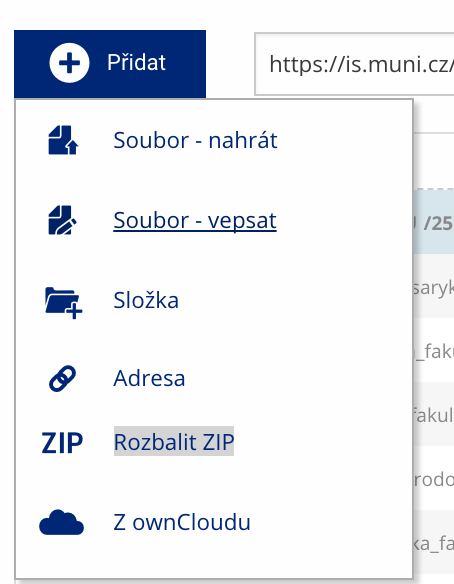 Soubor nebo složku lze nahrát pomocí tlačítka Přidat.
 -
Další operace se soubory
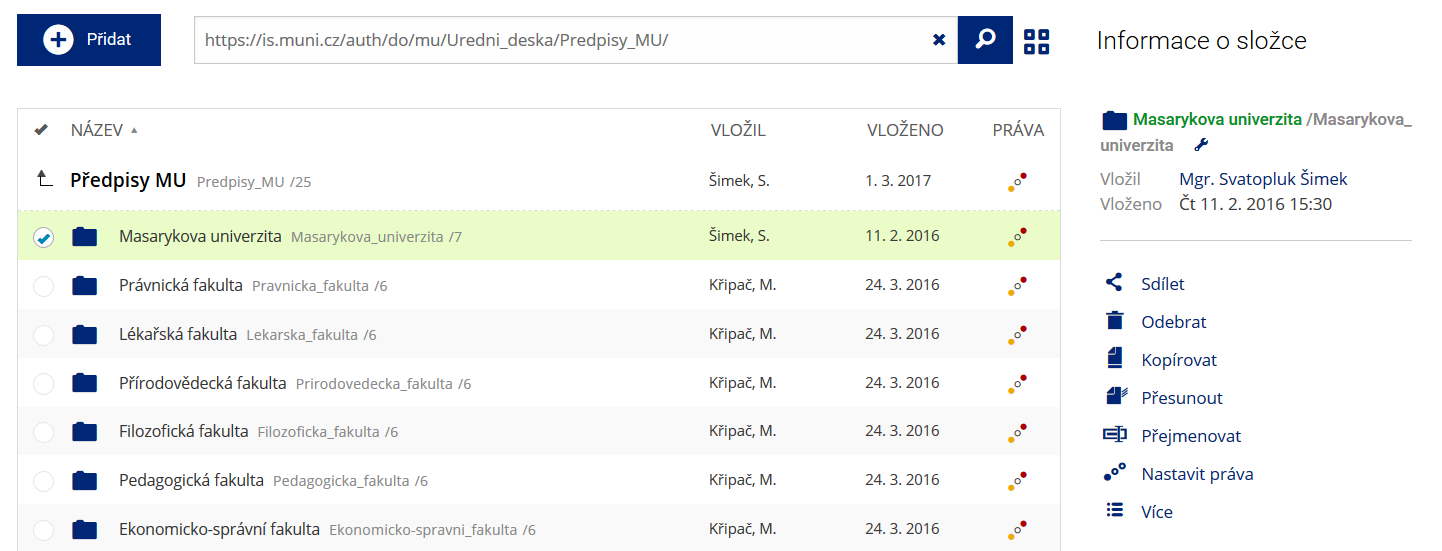 Podrobnosti lze zjistit označením příslušného řádku.
 -
Pohled pro experty
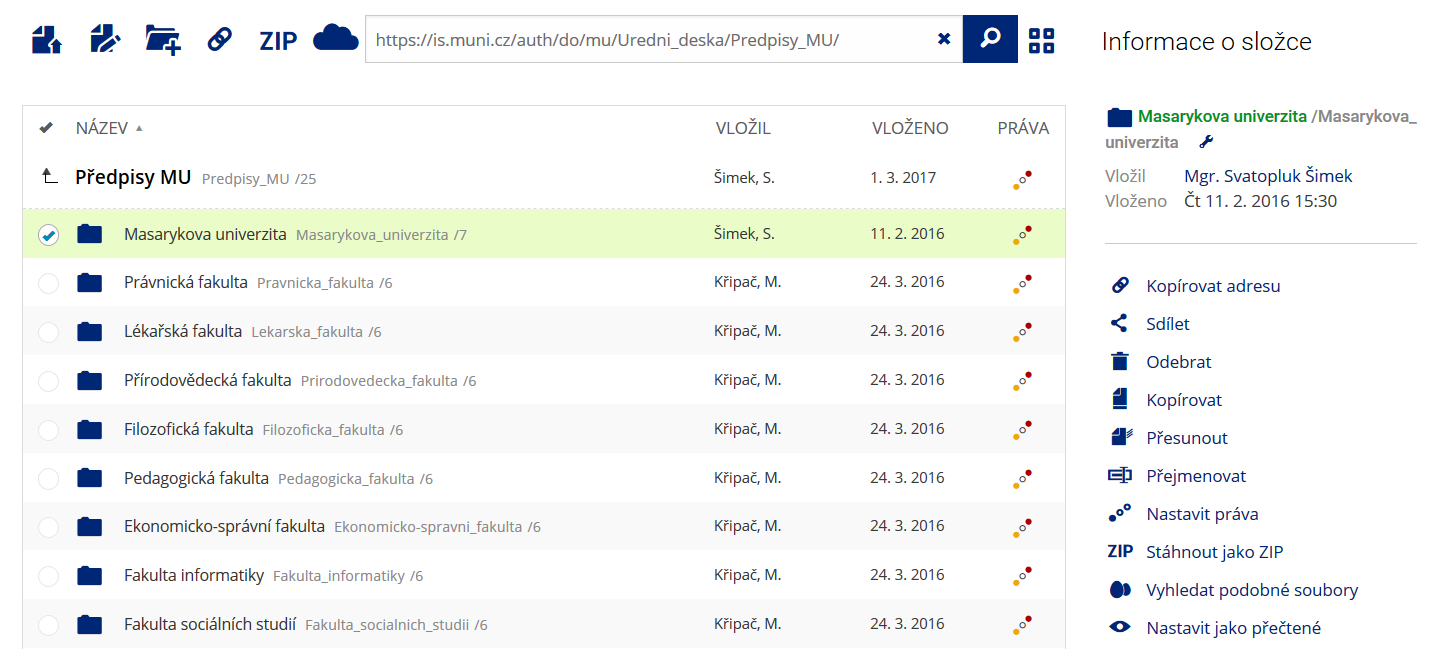 Pro častou práci je možné zvolit režim Více možností.
 -
Vyhledávání souborů
 Vyhledávaný výraz můžete zadat přímo do adresního řádku.
 -
Rychlý přístup k souborům
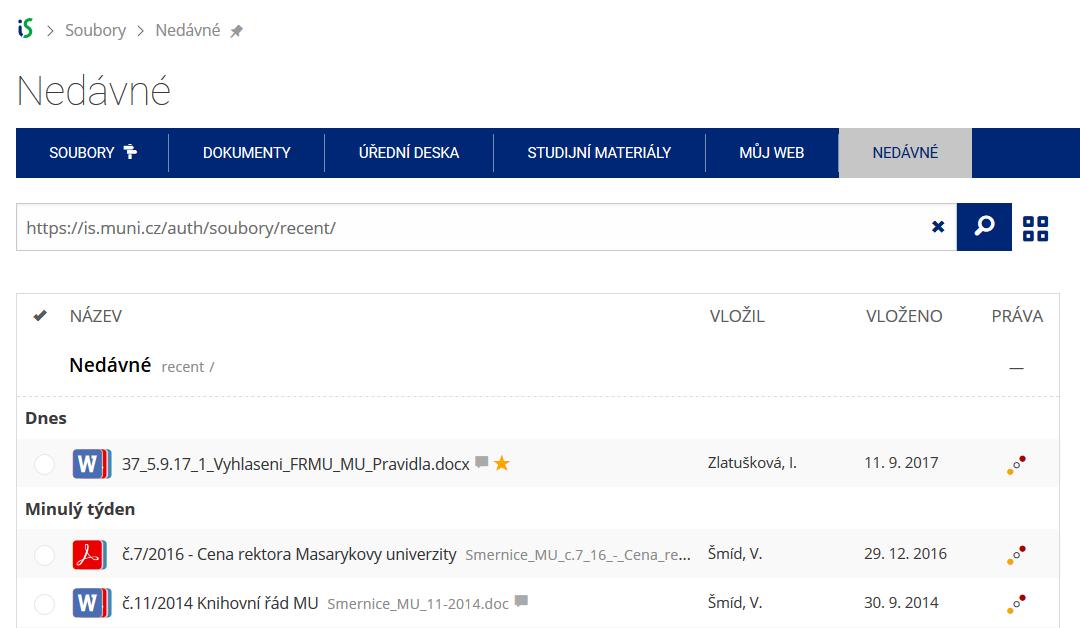 Pomocí funkce Nedávné je možné se rychle vrátit k právě prohlíženým souborům. Oblíbené soubory je také možné označit Hvězdičkou.