Abstract
This PhD project presents an analysis and comparison of two
consecutive US Administrations in the period between 1993 and
2009, the one of William J. Clinton and the other of George W.
Bush, and their foreign policy goals and interests in the
region of Western Balkans. In that respect, the thesis aims to
prove that the foreign policy understanding of the region and
the US role in it with both Administrations remained
essentially the same. Therefore, the case argued here is that
both of the Administrations in question comprehended the region
in the same fashion and therefore had same or very similar
foreign policy goals and interests in it. In that regard, this
thesis addresses, using methods of Content Analysis (CA) and
then Discourse Analysis (DA) of selected primary sources, the
aforementioned issue of the goals and interests of both
Administrations in the region and, in addition, provides
insight into how comparable, and hence similar, these actually
were in the period from 1993 to 2009. More than that, the
thesis is also aimed at presenting an analytical insight into
the matter of the foreign policy understanding of the Western
Balkans with both Administrations, and is thus seeking to
demonstrate that the dominant meanings/images concerning the
understanding of the Western Balkans and the American role in
it were the same with these Administrations. This, last but not
least, also means that this thesis aspires to confirm
continuity in dominant meanings/images concerning the foreign
policy goals and interests of the two foreign policy
discourse(s) analyzed. Hence, both Administrations maintained
the (re)production of the same foreign policy discourse on the
Western Balkans, and, in addition, resorted to very much
similar language, which also meant engaging in (re)production
of the same foreign policy discourse.
In respect to the previously presented points, it may be
claimed that, as it is shown in this project, both
Administrations shared the goal of stabilizing the region of
Western Balkans and then ‘remaking’ it thorough the democratic
transformation process. The Clinton Administration primarily
engaged in resolving the conflicts in the region, largely in
order to stop their spread and put an end to many of the then
urgent regional problems, and this was supposed to be a prelude
for the democratization of the region. On the other hand, the
G. W. Bush Administration also laid heave emphasis on the
stabilization of the region through the democratization process
and the Euro-Atlantic integration, and its discourse in this
regard, very much like the one of the previous Administration,
was substantial. Thus, both Administrations actually aimed at
one and the same goal in the region at hand, and this/these
regional goal(s) and interest(s) did not witness any
(significant) change from the Clinton to the Administration of
G. W. Bush. Thus, both of these Administrations specifically
aimed at accomplishing the following: a) stabilization of the
region, which was in the Clinton Administration largely
understood as prevention of further escalation of the
conflict(s), while the G. W. Bush Administration had to
counter, largely diplomatically, several much smaller, in terms
of both size and form, insurgencies in the region, b)
transformation of the region in terms of democratization,
economic, and social transformation so as to further stabilize
the Western Balkans, c) integration in the Euro-Atlantic
structures and the process of regional integration into the
wider Euro-Atlantic community.
In addition, speaking of the methods used in this project, it
is vital to point out that Content Analysis has in this project
been used as the pre-analysis to Discourse Analysis. Hence,
this pre-analysis has provided initial insights into the
foreign policy discourses analyzed. This means that the
language used has been subjected to analysis using AntConc, a
freeware concordance program/tool developed to allow
exploration and analysis of corpus linguistics. After these
initial insights on modes and patterns of language usage have
been acquired and presented, the analysis proceeds in a more
discursive direction where dominant meanings in discourse are
identified, analyzed, and compared, in terms of both meaning
and use, with both Administrations in question. Attention in
this process is also paid to the foreign policy context in
order to provide a more comprehensive understanding of the
issue at hand.
Last of all, it is important to mention that there are several
contributions of this project. On the one hand, extending
already existing knowledge on the topic at hand is considered
crucial. Counting with the fact that the US involvement in the
region has been a must for more than two decades now, this
thesis is supposed to provide additional insight into the topic
of the said American engagement and thus possibly address some
of continuing debates regarding the US role in the region,
especially after 2000/01. In that respect, it is important to
note that the US regional engagement has been a subject of
numerous debates touching upon many different, and often rather
‘sensitive,’ such as, for example, ‘humanitarian intervention,’
or independence of Kosovo, issues in the modern international
affairs. On the other hand, and very much in line with the
previously presented points, it can be argued that other
contribution of this thesis is also to shed additional light on
the G. W. Bush’s engagement in the Western Balkans that has
been much less researched and focused on than the one of his
predecessor in the White House. Last but not least, both the
Social Constructivist perspective presented in this thesis,
and, on the other hand, the methods used represent powerful
‘tools’ not only in exploration of the said topic, primarily
due to a very limited number of similar studies on the region,
but chiefly in terms of analysis of constant changes in/of our
social surroundings. …víceméně
 angličtina
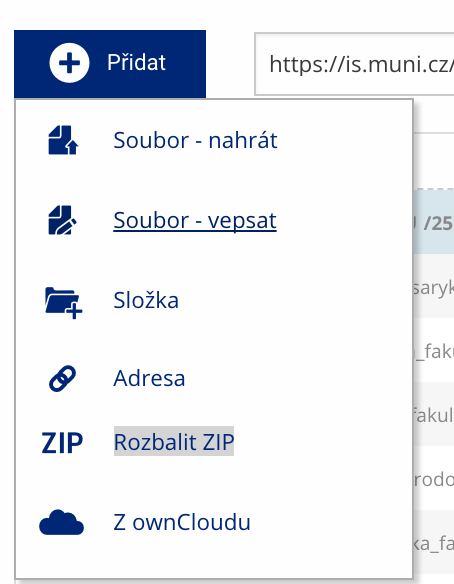 Soubor nebo složku lze nahrát pomocí tlačítka Přidat.
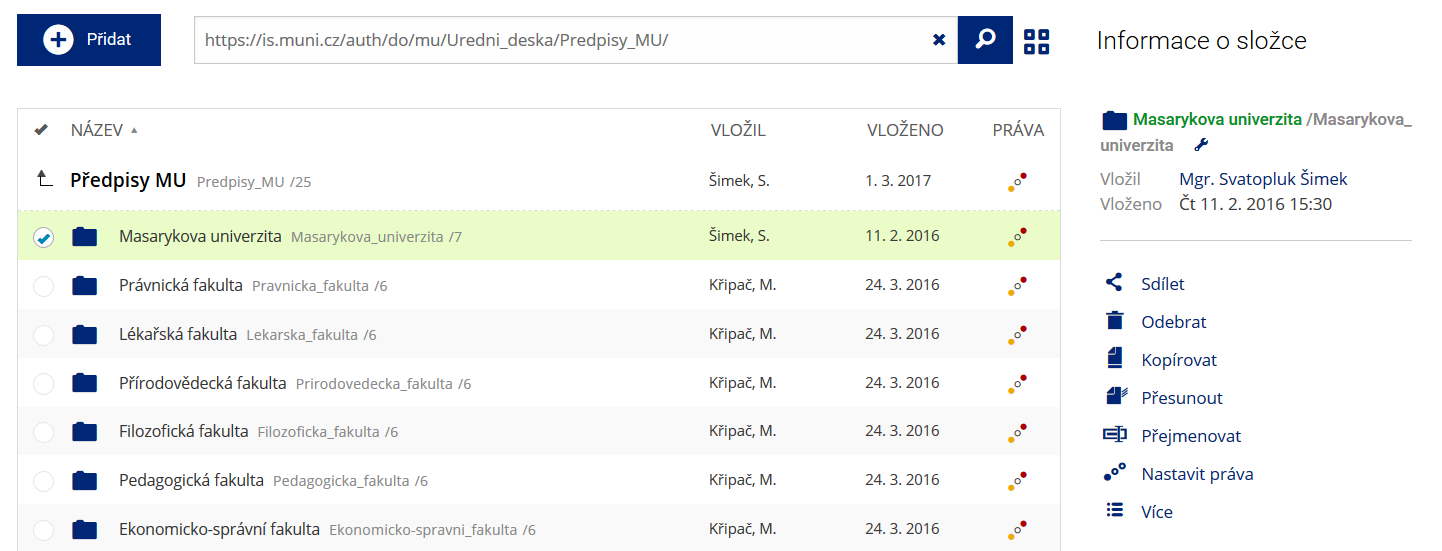 Podrobnosti lze zjistit označením příslušného řádku.
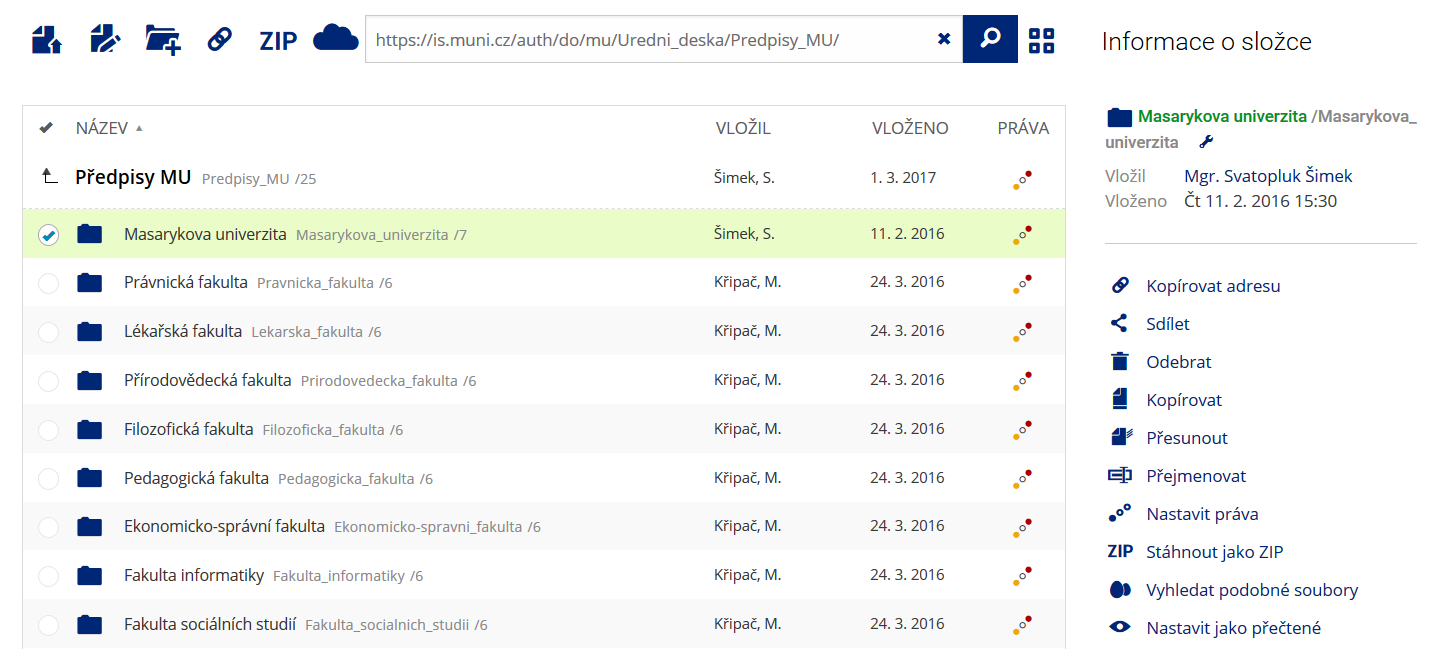 Pro častou práci je možné zvolit režim Více možností.
 Vyhledávaný výraz můžete zadat přímo do adresního řádku.
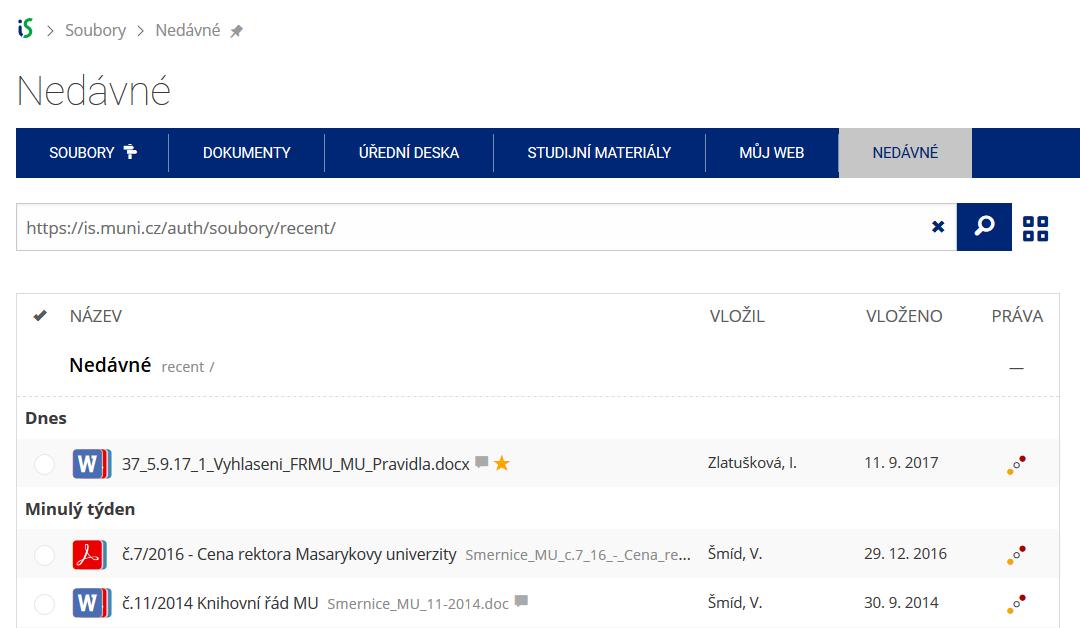 Pomocí funkce Nedávné je možné se rychle vrátit k právě prohlíženým souborům. Oblíbené soubory je také možné označit Hvězdičkou.