Závěrečná práce: Václav Audrlický: Detekce Strongyloides spp. u sympatrických primátů a lidí v národním parku Cantanhez, Guinea Bissau pomocí qPCR
Bakalářská práce
Detekce Strongyloides spp. u sympatrických primátů a lidí v národním parku Cantanhez, Guinea Bissau pomocí qPCR
Detection of Strongyloides spp. in sympatric primates and humans in Cantanhez National Park, Guinea Bissau using qPCR approach
Anotace
Antropogenní vlivy mění do značné míry dynamiku ekosystémů. Zřejmě nejničivější je ztráta habitatů, kdy dochází ke zmenšování hranic mezi živočichy a lidmi, což může vést, mimo jiné, ke zvýšenému kontaktu mezi lidmi a nehumánními primáty (NHP). Takový blízký kontakt a sdílení habitatů může vést k přenosu různých patogenů. Více než 60 % infekčních agens, které jsou pro člověka patogenní, mají zoonotický …více
Abstract
Anthropogenic influences change the ecosystem dynamics to a great extent. Habitat loss is probably the most devastating impact because it reduces the boundaries between animals and humans, which leads, among other things, to increased contact between humans and non-human primates (NHP). Close contact and habitat sharing can lead to the transmission of various pathogens. More than 60% of infectious …více
Klíčová slova
Parazit Přenos Primát Člověk Nematoda Strongyloides Parasite Transmission Primate HumanZadání práce
9. 5. 2024 01:49, Mgr. Barbora Pafčo, Ph.D., učo 269851
 angličtina
Oponent
Parazitologický ústav, Biologické centrum AV ČR, v. v. i., České Budějovice
Konzultant
ÚBZ Biol PřF MU
Citace dle normy ČSN ISO 690
Práce na příbuzné téma
Seznam prací, které mají shodná klíčová slova.
-
Využití velkokapacitního sekvenování k identifikaci druhů a linií zástupců Strongyloides v prostředí s výskytem více hostitelských druhů.
Mgr. Václav Audrlický -
Přenos infekčních onemocnění mezi člověkem a lidoopy
Mgr. Bc. Stanislav Hodeček -
Velkokapacitní sekvenování jako nástroj studia strongylidních hlístic u primátů
Mgr. Vladislav Ilík, Ph.D., učo 451795 -
Druhová diverzita parazitů primátů jihovýchodní Asie
Mgr. Petra Smetanová -
Parazitofauna evropských blešivců rodu Gammarus
Bc. Jana Vašíková -
Výskyt a molekulární analýzy zástupců rodu Strongyloides u divokých orangutanů z různých populací napříč Indonésii.
Mgr. Petra Smetanová -
Neviditelný svět aneb věci, které nevidíme, ale jsou stále s námi - mikrosvět
Mgr. Andrea Pondikasová -
Hodnocení variability dynamického záznamu lidské chůze
Mgr. Kristýna Vičanová
Složky
Soubory
-
Přidání souboru
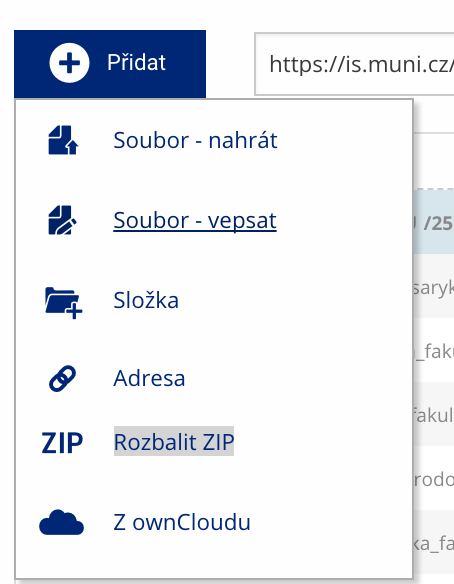 Soubor nebo složku lze nahrát pomocí tlačítka Přidat.
 -
Další operace se soubory
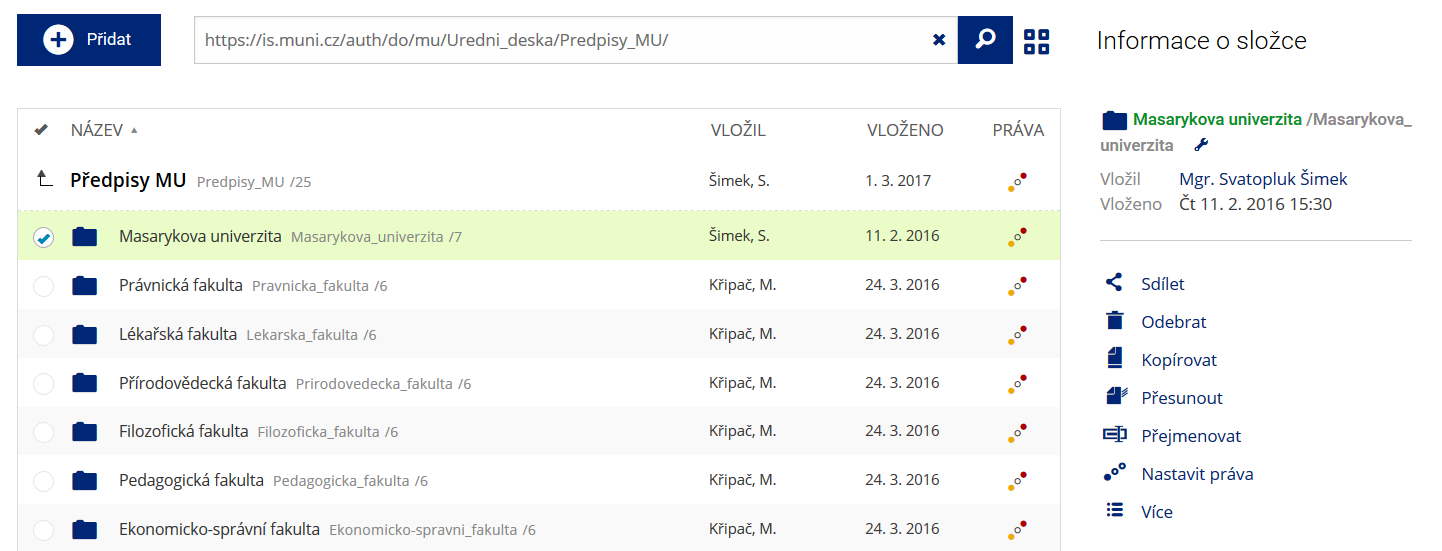 Podrobnosti lze zjistit označením příslušného řádku.
 -
Pohled pro experty
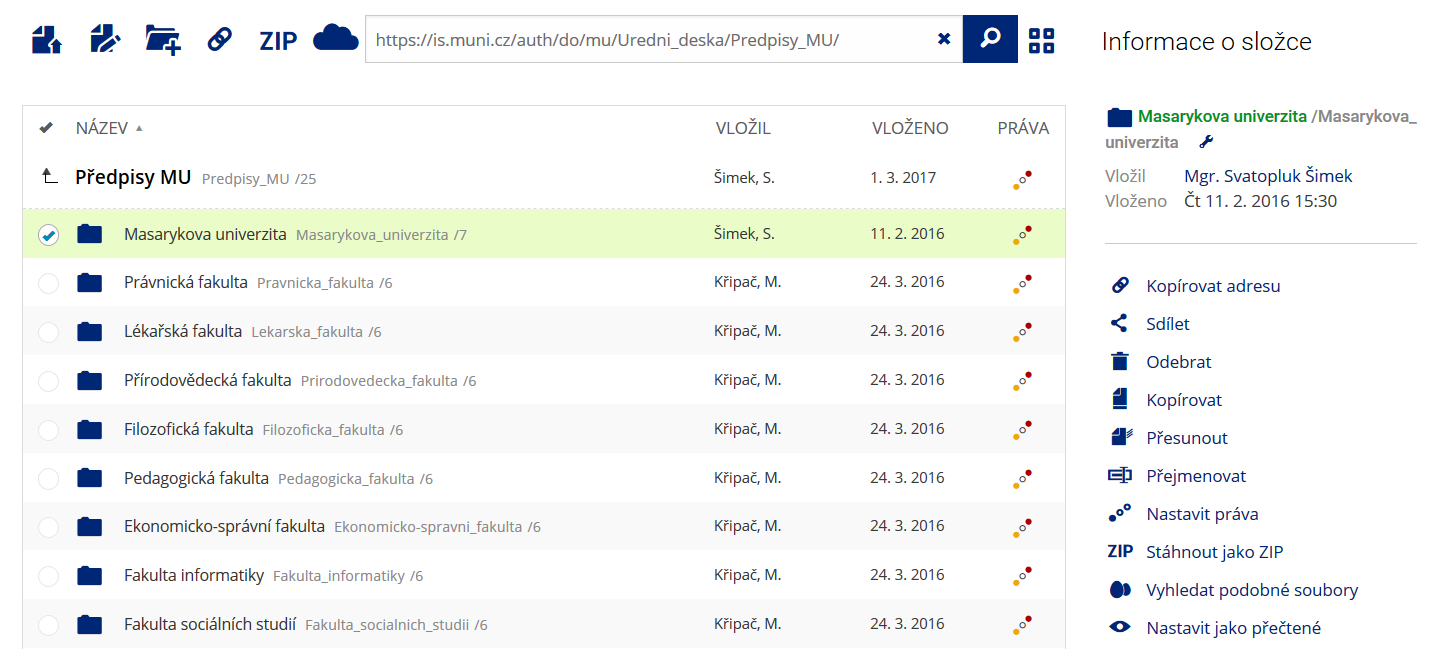 Pro častou práci je možné zvolit režim Více možností.
 -
Vyhledávání souborů
 Vyhledávaný výraz můžete zadat přímo do adresního řádku.
 -
Rychlý přístup k souborům
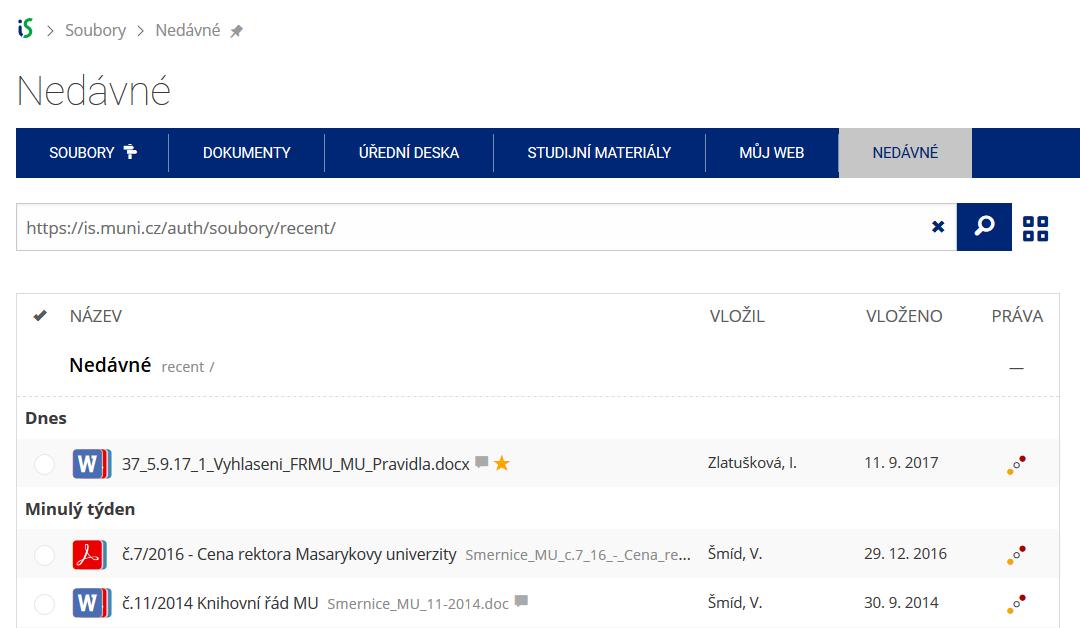 Pomocí funkce Nedávné je možné se rychle vrátit k právě prohlíženým souborům. Oblíbené soubory je také možné označit Hvězdičkou.