Anotace
Tématem disertace je tolerance jako pojem teorie práva. Za
metody práce zvolila autorka sémantický pohled, explanační
studii, normativní pojetí, instrumentalistickou metodu,
interdisciplinární přístup z hlediska historického,
antropologického, biologického, psychologického a
sociologického. Pojem vymezuje z hlediska materiálních a
formálních znaků a z hlediska společenského uznání a akceptace.
Společnost si přeje, aby v ní vládl „dobrý život“ a „dobré
právo“, spravedlnost a tolerance. Je to v jejím zájmu, protože
to znamená zmenšení prostoru pro porušování práv a oprávněných
zájmů jednotlivců a skupin a posílení sociálního smíru. Také
jednotlivci a skupiny si přejí stav tolerance, aby bylo pokud
možno tolerováno vše, co je v jejich zájmu. Současně je třeba
zajistit, aby nebyla narušena práva jiných individuí, zájmy
skupin a celospolečenské zájmy. Práce se snaží o teoretické
vymezení ospravedlnitelného a zároveň vzhledem k lidské povaze
a přirozenosti uskutečnitelného požadavku tolerance. Každý
člověk se rodí s určitými danostmi, mezi které řadíme - rasu,
národnostní nebo etnickou příslušnost, barvu kůže, sexuální
orientaci, během svého života s určitou determinací pak nabývá
dalších charakteristik - náboženského vyznání nebo bezvěrectví,
politického nebo jiného přesvědčení, sociálního zařazení, má
určité vlastnosti vzhledem ke svému věku a zdravotnímu stavu.
Řada právních norem výslovně uvádí, že pro tyto znaky a
vlastnosti nesmí být s nikým zacházeno jinak než s členy
majoritní společnosti s výjimkami odůvodněné pozitivní
diskriminace. Tolerance je myslitelná jedině za podmínky
stanovení a dodržování určitých mezí, pravidel a norem chování.
Logický důkaz tohoto tvrzení je v postulátu, podle kterého
svoboda jedince končí tam, kde začíná svoboda druhého. Pro
toleranci stejně jako pro svobodu jedince či skupiny je
limitující veřejný zájem neboli obecné blaho a zájem na právní
jistotě. Autorka vybrala v historickém přehledu souvztažné
myšlenky ze starověkých právních textů - zákoníku Chammurabiho,
Mojžíšova zákona, Tóry. Čerpala z antických pramenů – Zákona
dvanácti desek, justiniánského kodexu a Pandect, připomněla
myšlenky Solóna, Platóna, Aristotela. K tématu byli
prostřednictvím svých myšlenek využiti tito autoři z novověké
historie: Nicollo Macchiavelli, Hugo Grotius, Thomas Hobbes,
John Locke, Jean Jacques Rousseau Imannuel Kant, Jeremy Bentham
a další. Z myslitelů 20. století čerpá z děl těchto autorů:
John Dewey, Herbert Lionel Adolphus Hart, Isaah Berlin, Konrád
Lorenz, Claude Lévi Strauss, John Rawls, Jürgen Habermas. Z
českých právníků se podrobně zabývá dílem Oty Weinbergera a
Viktora Knappa, a zmiňuje současné české autory – Holländera,
Přibáně, Večeřu, Kühna. Názor na přirozenou lidskou tendenci k
agresi popsala autorka v neurofyziologickém exkursu. Ještě dvě
kapitoly disertace se vymykají systematickému zkoumání pojmu
tolerance – jedna se věnuje fenoménu holokaustu a norimberskému
procesu a druhá totalitě komunistického režimu a procesu s Dr.
Miladou Horákovou. Autorka zkoumala výskyt pojmu tolerance v
normách evropského a českého práva a v soudních rozhodnutích.
Za cíl disertační práce si autorka stanovila přispět k diskuzi
o toleranci, nastínit v době postmoderního pluralismu a
tříštění názorů na obsah práva možnost, jak doplnit právní
terminologii v oblasti ochrany lidských práv o komplexní
dimenzi – toleranci. …víceméně
Abstract
The topic of the thesis is tolerance as a concept of theory of
law.
The author chose the following methods – semantic point of
view, explanatory study, normativistic conception,
instrumentalistic method, comparativist method, historically
genetic analysis and interdisciplinar approach from the
anthropological, biological, psychological and sociological
point of view. The expression is defined from the point of
view of material and formal characteristics and from the point
of view of social appreciation and acceptance.
The right to tolerance can be understood within the range of
theory of human rights as a legitimate possibility of behaving,
expressing oneself and being, it also means to be an individual
in one´s own uniqueness who exists in a society and is
tolerated by the others. Right to tolerance means at least not
to be punished penalized or discriminated against for being
different, to be respected and to have equal opportunities to
protect one´s legitimate interests. The word tolerance itself
has two meanings – pasive which is the capacity to be tolerated
and also the duty to respect rights, characteristics and
behavior of others, therefore to tolerate actively. The work
deals with both law in general meaning and individual rights
for which there is no special expression in Czech, unlike
English (Law, Right), German (Recht, Gericht) or French (Loi,
Droit).
There is a wish from society for the rule of “a good life“ and
“a good law“, justice and tolerance. It is in its own interest
because it means reduced space for violation of individual
rights or rights of social groups and it also means increased
social agreement. Also individuals and social groups want the
state of tolerance so that everything in their own interests is
tolerated if possible. At the same time it is necessary to
ensure that interests of other individuals are not harmed, such
as the interests of social groups or the very interests of the
whole society are not geopardized. The aim of this thesis is to
define theoreticaly justifiable social demand for tolerance
which is at the same time relevant to human nature.
Every person is born with some specific characteristics which
are – race, nationality or ethincity, skin colour, sexual
orientation, during one´s life with some determination there
come some more characteristics, such as religion or atheism,
political opinion, social classification and some more
qualities which are attributed to age and health condition.
There are many laws that clearly state that nobody can be
treated differently from the social majority because of these
characteristics, with exeption of reasonable positive
discrimination.
Tolerance can be thought of only under the condition of stating
and respecting some limits and rules. Logical proof of this
statement is in the presupposition that the freedom of one
person ends where the freedom of another person begins. The
whole generations of philosophers (from Confucius to
contemporary philisophers) agreed with the principle “Don´t do
to others what you don´t want them to do to you.“. The public
interest, welfare of the society or the demand for legal
certainty are the limits of tolerance and freedom of an
individual or a group of individuals.
For the review of history the author chose some of the linked
thoughts of Antique legal texts – Hammurabi´s Code, Code of
Moses, Torah. She also brought some ideas from Antique sources
– The law of the Twelve Tables, Justinian´s Code and Pandects,
she also brought some thoughts of Solon, Platon, Aristoteles.
She mentions examples from works of these authors of modern
history: Nicollo Macchiavelli (1469 – 1527), Hugo Grotius (1583
- 1645), Thomas Hobbes (1588 – 1679), John Locke (1632 – 1704),
Jean Caulvin (1508 – 1564), Denis Diderot (1713 -
1784), Jean-Jacques Rousseau (1712 – 1778), Charles-Louis
Montesquieu (1689 - 1755), Imannuel Kant (1724 – 1804), Jeremy
Bentham (1748 – 1832).
From the philosophers of the 20th century she uses works of
these authors: John Dewey (1859 – 1952), Herbert Lionel
Adolphus Hart (1907 -1992), Isaah Berlin (1909- 1997), Konrad
Lorenz (1903 – 1989), Claude Lévi-Strauss (1908), John Rawls
(1921 – 2002), Jürgen Habermas (1929).
From Czech lawyers she gives a detailed analysis of the work of
Ota Weinberger (1919 – 2009) and Viktor Knapp (1914 – 1996),
and mentions many other contemporary authors.
The opinion about human natural tendency to agression is
described by the author in a neurophysiological review. There
are two more chapters that differ from the semantic analysis of
the word tolerance – one is devoted to the phenomenon of
holocaust and the Nuremberg Trial and the other one is about
communism and Milada Horakova trial.
In the final part of the thesis the author described
institutional and legislative security of the right to
tolerance, she also summarized some tendencies in decisions of
European Court for Human Rights in Strasbourg and
Constitutional Court of the Czech Republic.
The author chose to contribute to the discussion about
tolerance as the aim of the thesis, but also to present in the
time of postmodern pluralism and opinion diversification the
possibility to complete the list of human rights with a complex
dimension – tolerance. …víceméně
 čeština
 Soubor nebo složku lze nahrát pomocí tlačítka Přidat.
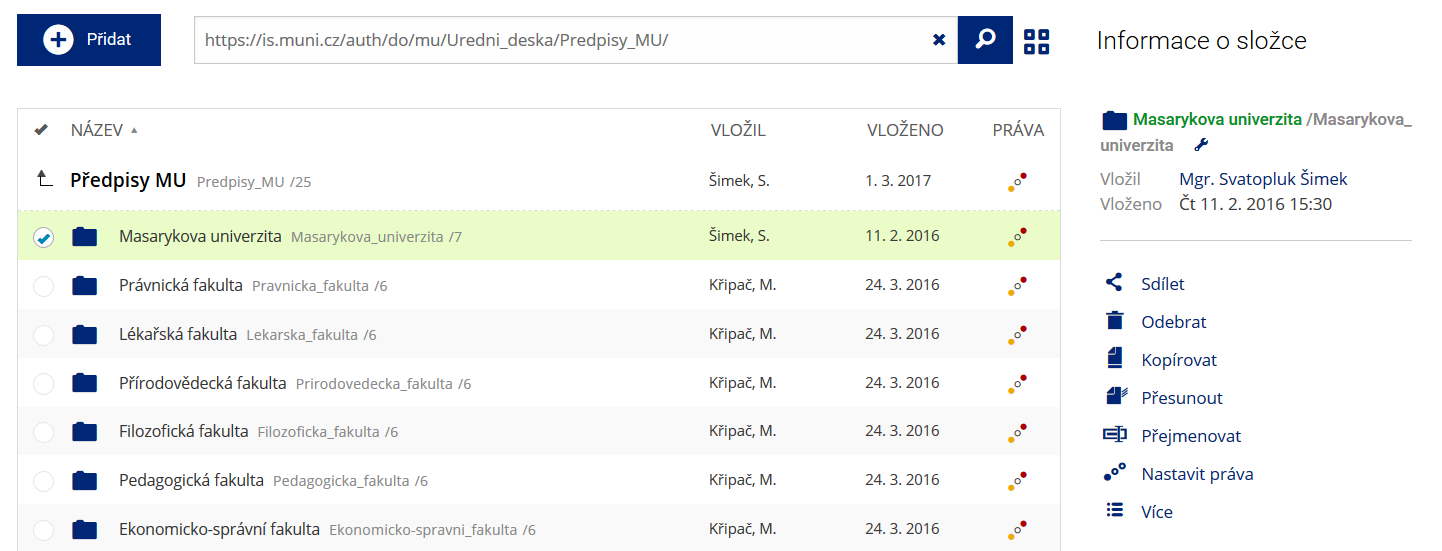 Podrobnosti lze zjistit označením příslušného řádku.
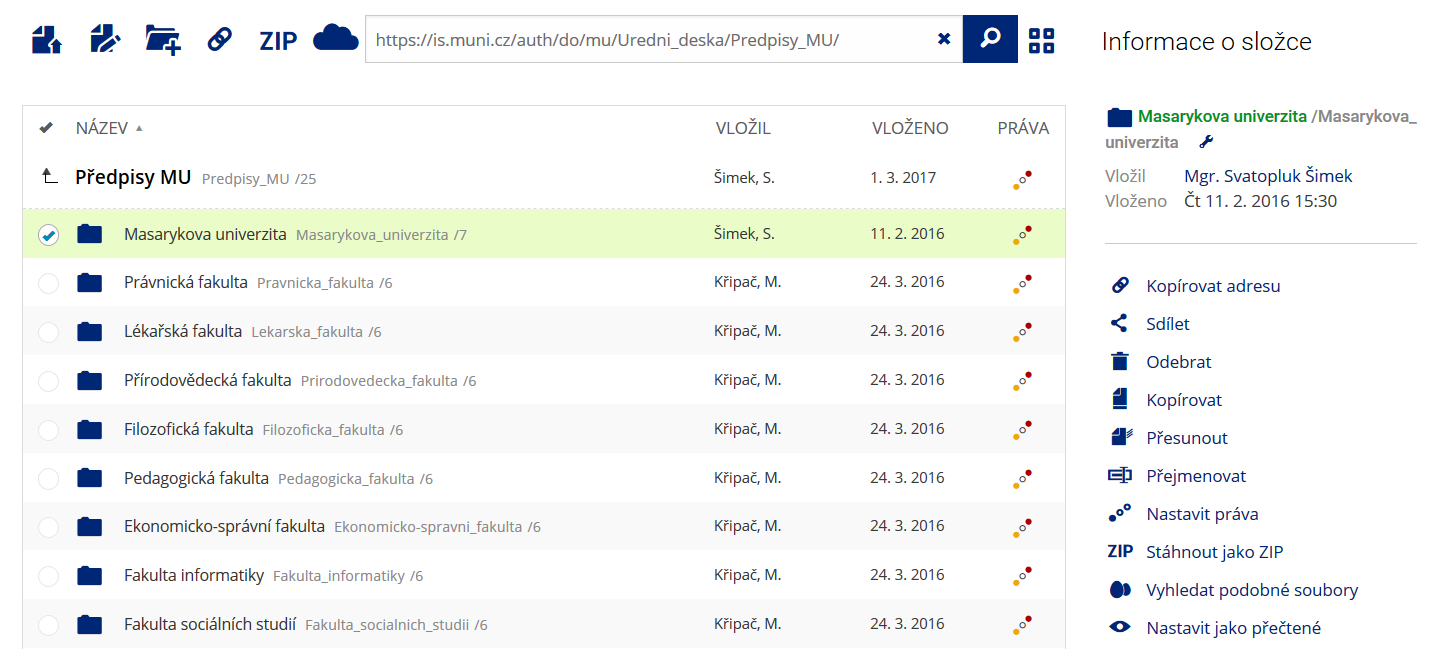 Pro častou práci je možné zvolit režim Více možností.
 Vyhledávaný výraz můžete zadat přímo do adresního řádku.
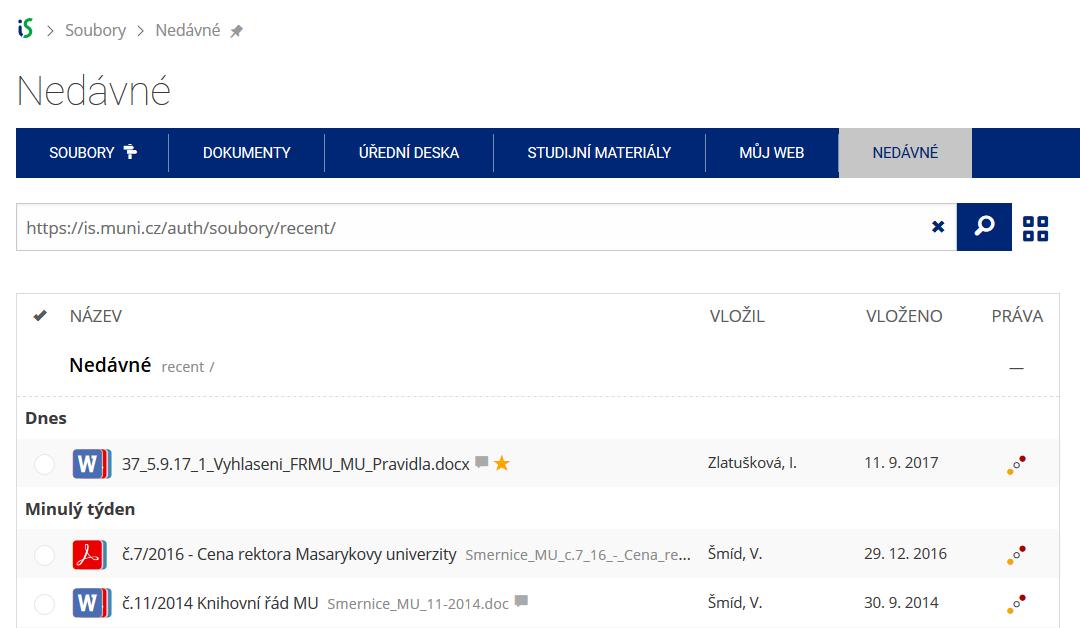 Pomocí funkce Nedávné je možné se rychle vrátit k právě prohlíženým souborům. Oblíbené soubory je také možné označit Hvězdičkou.