Závěrečná práce: Karolina Vojáčková: Zpřesnění odhadu pohlaví pomocí paleoproteomiky: propojení poznatků a přenos praxe
Bakalářská práce
Zpřesnění odhadu pohlaví pomocí paleoproteomiky: propojení poznatků a přenos praxe
Advancing sex estimation through paleoproteomics: Integrating knowledge and practice transfer
Anotace
Odhad pohlaví je jedním z prvních kroků při antropologických analýzách kosterních pozůstatků. Tradičně jsou k tomuto účelu využívány osteologické metody zkoumající především morfometrii lebky a pánve nebo genetické analýzy. Využití těchto přístupů ale může být limitováno špatnou zachovalostí kostí nebo degradací DNA. V posledních letech se jako alternativa začíná uplatňovat proteomická analýza, která …více
Abstract
Sex estimation is one of the first steps in the anthropological analysis of human skeletal remains. Traditionally, osteological methods examining primarily the morphology of the pelvis and skull or genetic analyses are used for this purpose. However, the application of these approaches may be limited by poor preservation of bones or by DNA degradation. In recent years, proteomic analysis has emerged …více
Zadání práce
Biological sex assessment of human skeletons traditionally employs macroscopic methods, including both metric and non-metric approaches. Metric methods involve measurements of various skeletal elements, while non-metric methods focus on observing morphological traits, primarily in the skull and pelvis. The effectiveness of these methods can vary by age category (non-adults vs. adults), and the preservation state of skeletal remains - often affected by damage or loss - can significantly impact the accuracy of sex estimation. To address these challenges, molecular methods present promising alternatives for precise sex determination. While genetic sexing is a valuable technique, it is limited by high costs and difficulties in preserving nuclear DNA. A recent alternative involves analyzing sexually dimorphic amelogenin protein fragments in tooth enamel. This minimally invasive method requires only a small amount of enamel, which is well-preserved even in archaeological specimens. The amelogenin protein, essential for enamel formation, has sex-linked isoforms that exhibit high preservation rates. The 88% amino acid sequence similarity between AMELX and AMELY isoforms allows for the distinct identification of peptides from each sex. This technique has shown great potential as a rapid and cost-effective solution for sex estimation, achieving 99 to 100% accuracy across various test populations. This advancement represents a significant leap forward in biological anthropology.
The present project aims to enhance methods for sex estimation in both archaeological and forensic contexts through paleoproteomics at the Department of Anthropology, Faculty of Science, Masaryk University. The materials will consist of samples in various states of preservation from diverse chrono-cultural and geographic contexts. Proteomic analysis will be carried out at CEITEC Masaryk University.
The tasks to be undertaken are as follows:
1. Master the chemical procedures for proteomic sex estimation at CEITEC Masaryk University and implement this expertise in the Department of Anthropology, Faculty of Science, Masaryk University.
2. Establish the extraction setup and develop in-house protocols for current and future use based on the available equipment.
3. Perform the proteomic analysis to obtain critical data.
4. Analyze the data in terms of demographic parameters and highlight its significance within the studied contexts.
The manuscript and defense must be in English.
To be awarded credit for the first semester (course Bi4502 Bachelor Thesis I) the above-stated tasks 1 and 2 need to be accomplished, and to be awarded credit for the second semester (course Bi6100 Bachelor Thesis II) the above-stated tasks 3 and 4 need to be accomplished, therefore, to finish the thesis and hand it in for thesis defense in the IS Archive. The recommended extent of the thesis is 30-50 pages but can be exceeded if the thesis development requires it. However, the 30-page lower limit is the minimum that can be accepted. The thesis will exclude the explicit description of utilized material and methods, including in cases when the thesis is in the form of a literature review. The method/process description will clearly state the author’s contribution to the acquired results. The Czech version of the ISO 690 style will be the citation style. Appropriate tabular and graphical summarizing and instructive illustrations will form part of the thesis. The thesis will be handed in PDF format in the IS Archive and in print-bound form for defense and archiving purposes. In the formal and content aspects the valid MU legislation, Dean’s Measure on final these, and Department of Anthropology internal regulations must be met.
28. 5. 2025 12:36, Kévin Alexis André Salesse, M.Sc., Ph.D., učo 247563
 angličtina
Oponent
University of Trieste, Department of Chemical and Pharmaceutical Sciences
Konzultant
Citace dle normy ČSN ISO 690
Práce na příbuzné téma
Seznam prací, které mají shodná klíčová slova.
-
Paleoproteomické přístupy analýzy starobylých vzorků
Mgr. Klára Vlčková, učo 505544 -
Molekulárně biologický výzkum mumifikované mozkové tkáně
Mgr. Monika Pechočiaková -
Proteomika u mnohočetného myelomu
Mgr. Jana Čumová, Ph.D. -
Studium laserové ablace ocelí ve spojení ICP-OES a ICP-MS
Mgr. Veronika Konečná -
Kvantifikace proteinů pomocí hmotnostní spektrometrie
Bc. Michaela Duchovná -
Optimalizace podmínek přípravy vzorků pro MALDI-MS profilování bakterií
Mgr. Magdaléna Kačalová -
Využití MALDI-MS v taxonomii bakterií mléčného kvašení
Mgr. Marta Medková, učo 222795 -
Identifikace genů exprimovaných leukocyty vakcinovaných a nevakcinovaných kuřat po infekci Salmonella enterica
Mgr. Zuzana Seidlerová, Ph.D., učo 269567
Složky
Soubory
-
Přidání souboru
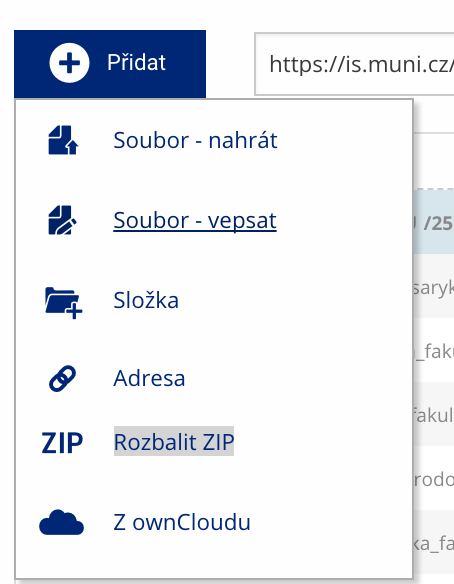 Soubor nebo složku lze nahrát pomocí tlačítka Přidat.
 -
Další operace se soubory
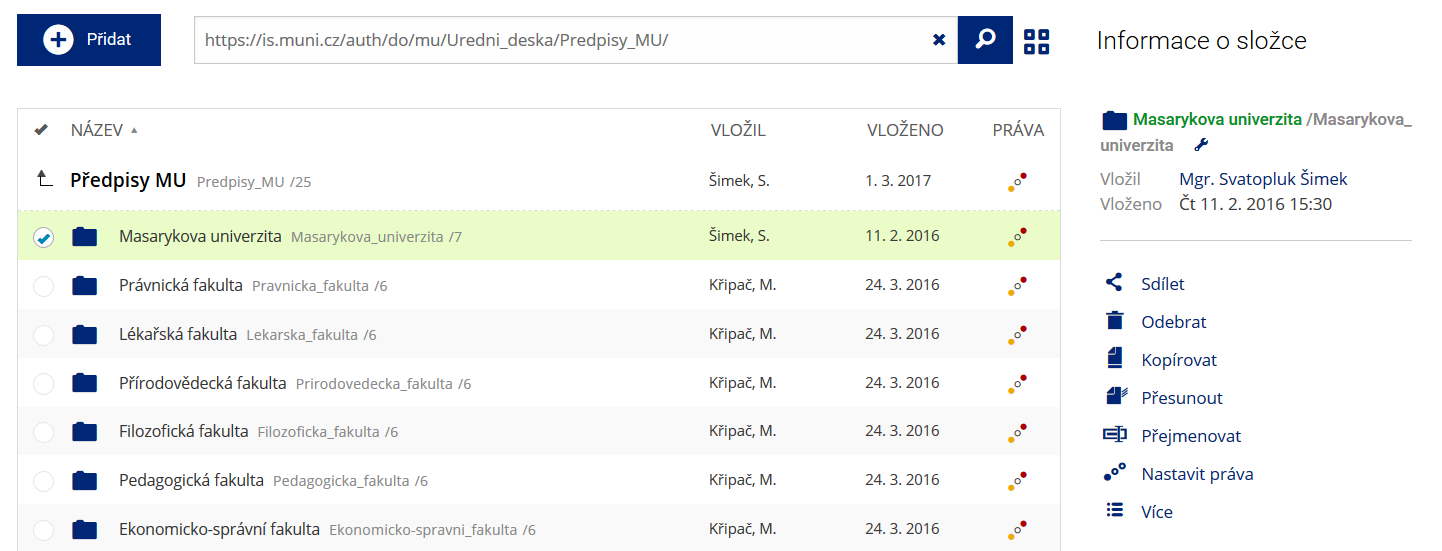 Podrobnosti lze zjistit označením příslušného řádku.
 -
Pohled pro experty
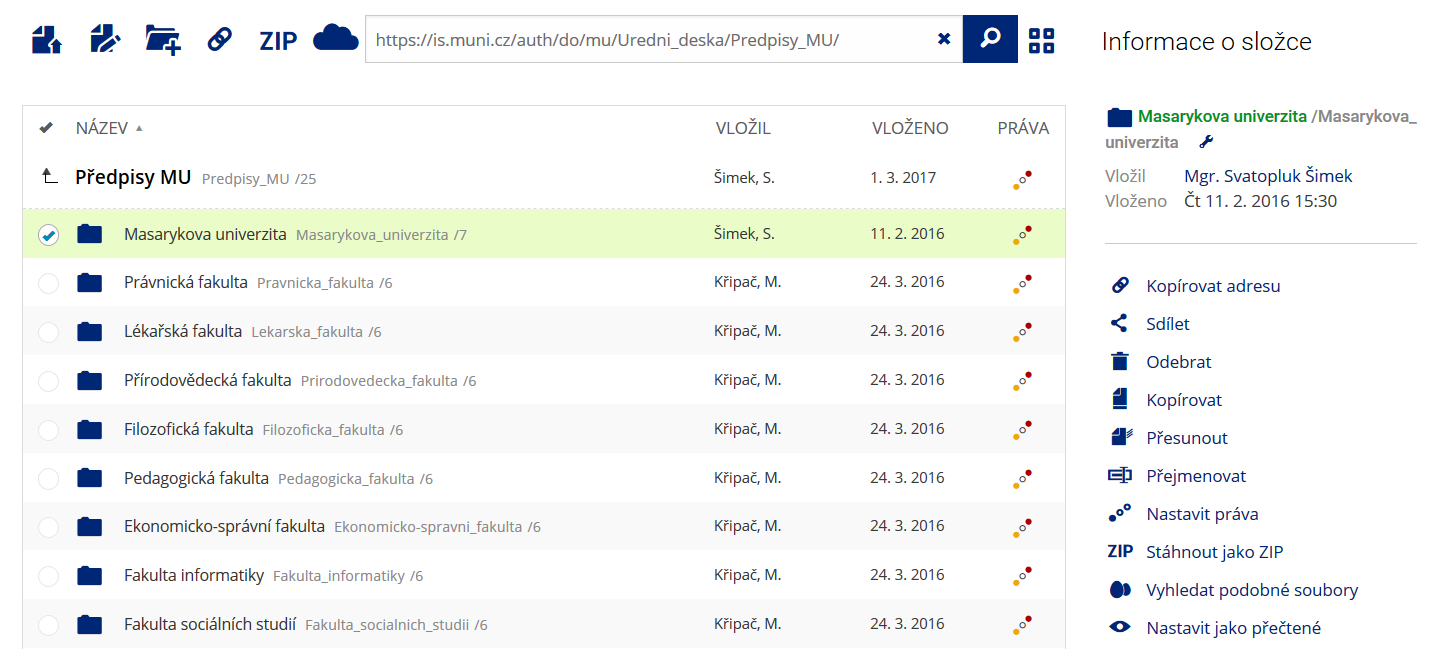 Pro častou práci je možné zvolit režim Více možností.
 -
Vyhledávání souborů
 Vyhledávaný výraz můžete zadat přímo do adresního řádku.
 -
Rychlý přístup k souborům
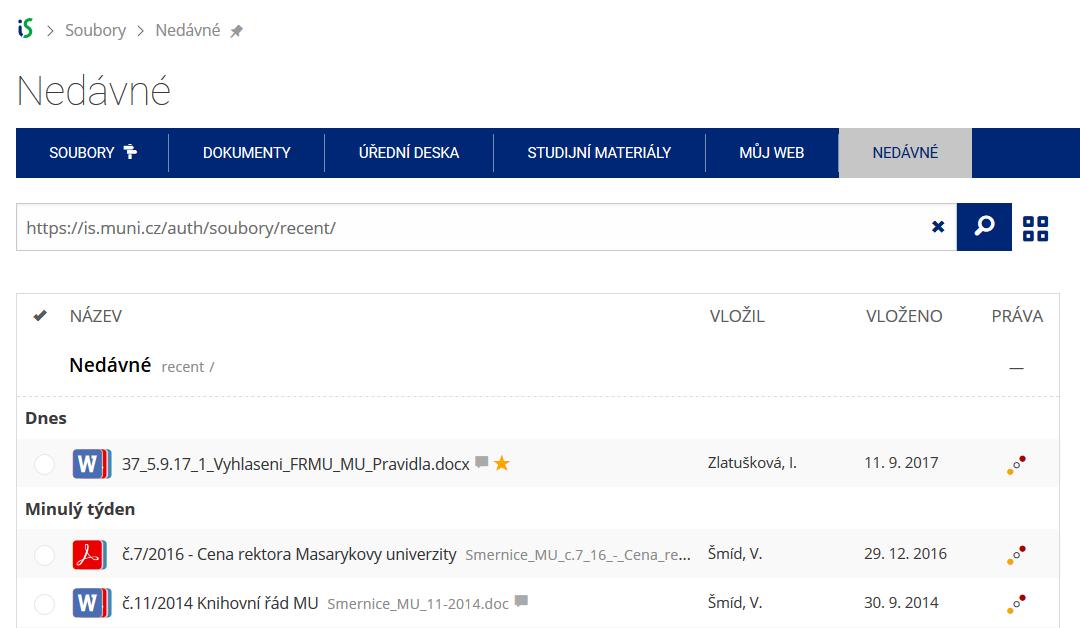 Pomocí funkce Nedávné je možné se rychle vrátit k právě prohlíženým souborům. Oblíbené soubory je také možné označit Hvězdičkou.