Závěrečná práce: Alžbeta Ivaničová: Rekonstrukce stravy za života v císařském Římě: analýza stabilních izotopů vlasů z katakomb sv. Petra a Marcellina
Bakalářská práce
Rekonstrukce stravy za života v císařském Římě: analýza stabilních izotopů vlasů z katakomb sv. Petra a Marcellina
Reconstructing premortem diet in Imperial Rome: Stable isotope analysis of hair from the Saints Peter and Marcellinus catacombs
Anotace
V roce 2003 byla objevena nová zajímavá část katakomb svatého Petra a Marcellina. Pohřby v této části katakomb měly podobu hromadných hrobů, na rozdíl od zbytku katakomb, kde se pohřby konaly v pohřebních výklencích. Mezi kostrovými ostatky byly nalezeny předměty, jako jsou kousky jantaru, sandaraku nebo zlaté šperky, což naznačuje, že se zde nacházeli lidé patřící k římské elitě. Kromě předmětů se …více
Abstract
An exciting new region of the Saints Peter and Marcellinus catacombs was discovered in 2003. The burials in this part of catacombs were in the form of mass graves, unlike the rest of the catacombs, which were in the form of funerary niches. Items such as pieces of amber, sandarac or golden jewellery were found among the skeletal re-mains, indicating that there were people belonging to the roman elite …více
Zadání práce
In the early 2000s, approximately 3,000 skeletons were unexpectedly uncovered in the oldest section (Region X) of the Saints Peter and Marcellinus catacombs in Rome, Italy, near the sanctuary of the eponymous saints. Radiocarbon dating and associated grave goods indicate that these burials date to the early Imperial period. This area stands out from typical Roman catacombs due to its interconnected rooms of varying shapes, sizes, and elevations. Archaeological and anthropological investigations linked the assemblage to one or more epidemic events that occurred within a relatively short timeframe. Many individuals were buried with highly elaborate funerary care, including gypsum-plastered textile wrappings and exotic resins such as succinite, sandarac, and frankincense. The presence of high-quality textiles, including gold and probable silk threads, suggests that at least some individuals belonged to the Roman elite.
This exceptional context provided a unique opportunity to study diet and social differences in food access. Previous research by Salesse and colleagues, based on bulk carbon and nitrogen isotope analysis of bone collagen and apatite, indicated a diet mainly composed of C3 plants (likely wheat) and domestic animal products. However, identifying consumption of aquatic, particularly marine, resources remained methodologically challenging.
Although overall skeletal preservation was poor, exceptionally preserved hair was recovered from some individuals. This thesis aims to investigate the final months of diet by performing serial carbon (C), nitrogen (N), and sulfur (S) isotope analysis on hair samples from 21 individuals buried in these mass graves. The hair material is already available at the Department of Anthropology, Masaryk University.
The planned tasks include:
1. Reviewing the methodological framework using relevant literature in both French and English.
2. Conducting sampling and chemical pretreatment of archaeological hair.
3. Statistically processing the isotopic data and carrying out intra- and inter-site comparisons.
4. Interpreting the results in terms of dietary practices and placing them within a broader contextual framework.
The manuscript and defense must be in English.
To be awarded credit for the first semester (course Bi4502 Bachelor Thesis I) the above-stated tasks 1 and 2 need to be accomplished, and to be awarded credit for the second semester (course Bi6100 Bachelor Thesis II) the above-stated tasks 3 and 4 need to be accomplished, therefore, to finish the thesis and hand it in for thesis defense in the IS Archive. The recommended extent of the thesis is 30-50 pages but can be exceeded if the thesis development requires it. However, the 30-page lower limit is the minimum that can be accepted. The thesis will include the explicit description of utilized material and methods, including in cases when the thesis is in the form of a literature review. The method/process description will clearly state the author’s contribution to the acquired results. The Czech version of the ISO 690 style will be the citation style. In the thesis it will also be declared whether a generative AI model was used in its preparation, specify which model was employed, and state the reason and extent of its use. Appropriate tabular and graphical summarizing and instructive illustrations will form part of the thesis. The thesis will be handed in PDF format in the IS Archive and in print-bound form for defense and archiving purposes. In the formal and content aspects the valid MU legislation, Dean’s Measure on final these, and Department of Anthropology internal regulations must be met.
5. 6. 2026 16:38, Kévin Alexis André Salesse, M.Sc., Ph.D., učo 247563
 angličtina
Konzultant
Citace dle normy ČSN ISO 690
Práce na příbuzné téma
Seznam prací, které mají shodná klíčová slova.
-
Síťování na Horácku
Mgr. Bc. Darina Holéczyová, učo 361285 -
Analýza lidských vlasů z novokřtěnského hřbitova v Přibicích
Mgr. Martin Kříž -
Techniky modelování a vykreslování vlasů v reálném čase
Martin Havlíček -
Výukový materiál pro obor Kadeřník
Mgr. Milena Prokopová -
Stanovení toxických prvků a jejich forem v klinických materiálech
Mgr. Kristýna Maléřová -
Účes ako indikátor sociálnej identity v praveku
Mgr. Alexandra Gottierová -
Stát se poutníkem. Vizuální proměny těla na cestě k posvátnu (X.-XIV. st.)
Mgr. Martin Drlíček -
Tvorba srsti a vlasů v 3ds Max
Mgr. Andrej Borges
Složky
Soubory
-
Přidání souboru
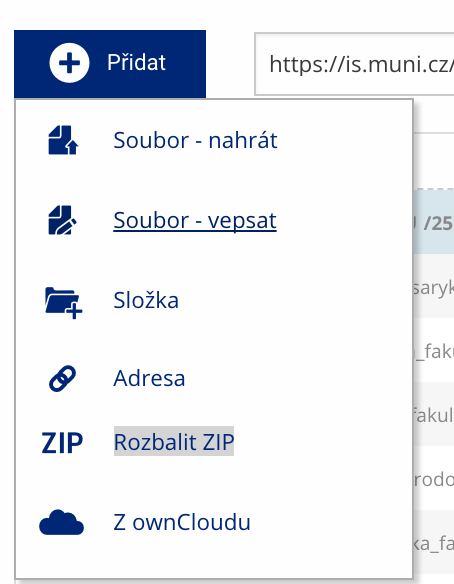 Soubor nebo složku lze nahrát pomocí tlačítka Přidat.
 -
Další operace se soubory
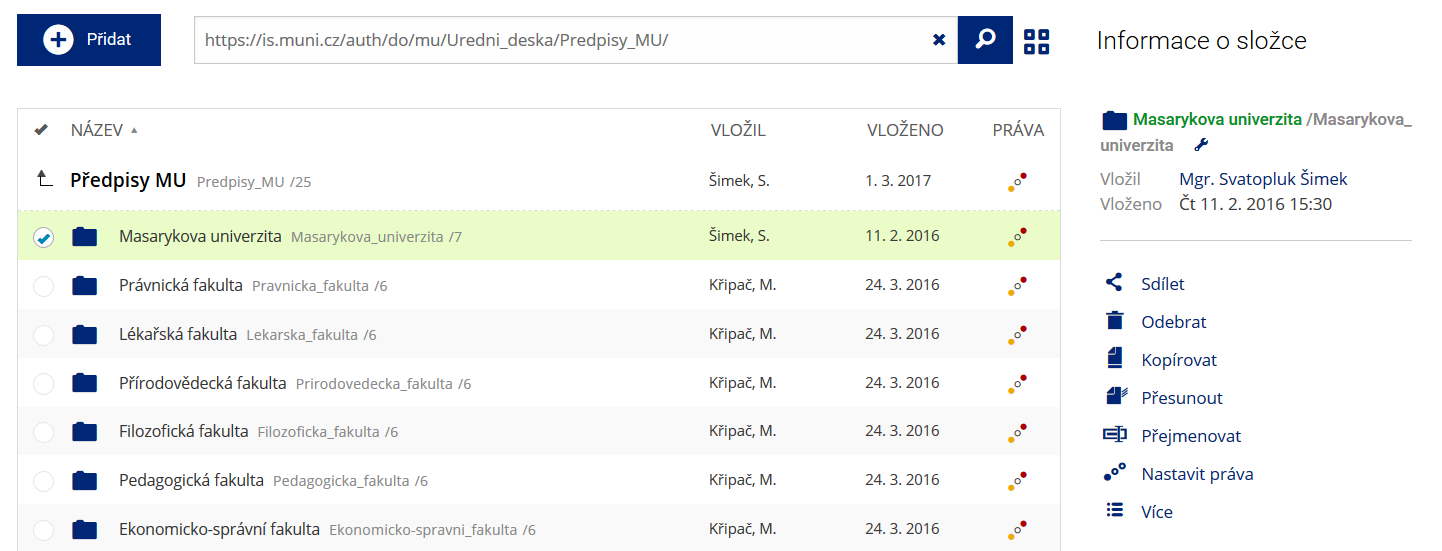 Podrobnosti lze zjistit označením příslušného řádku.
 -
Pohled pro experty
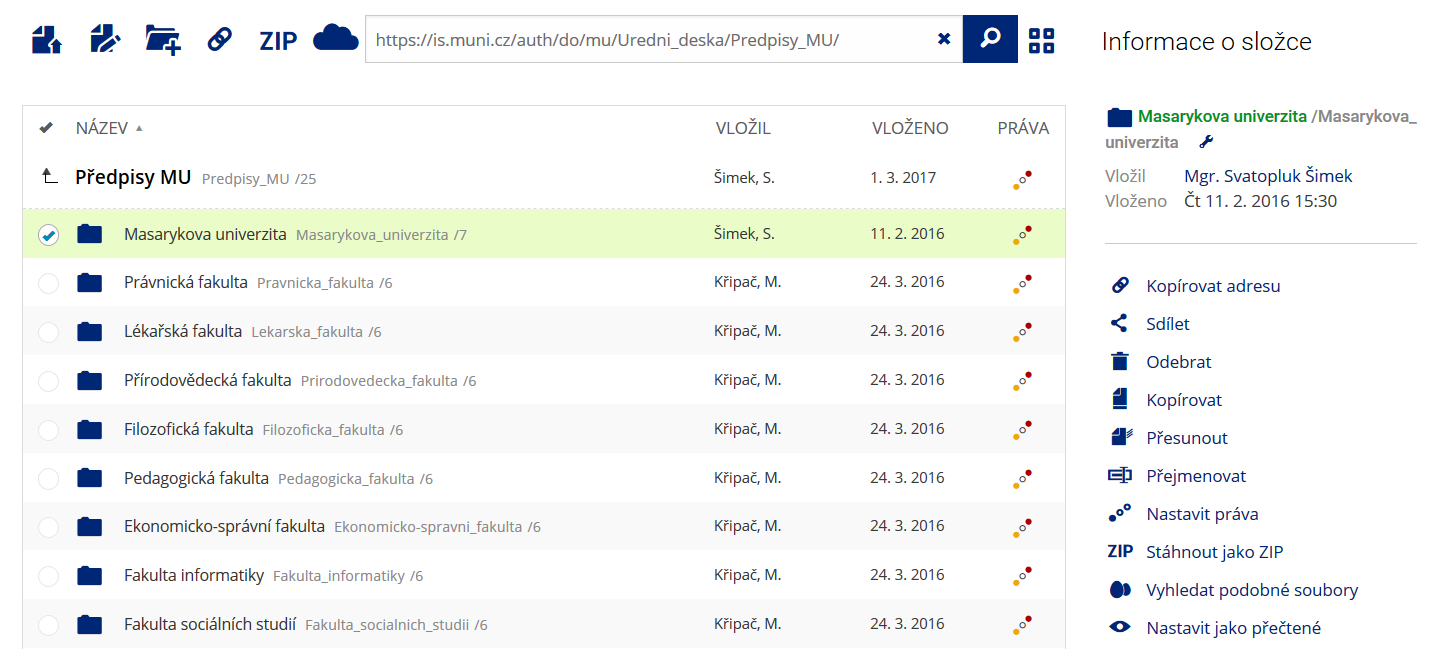 Pro častou práci je možné zvolit režim Více možností.
 -
Vyhledávání souborů
 Vyhledávaný výraz můžete zadat přímo do adresního řádku.
 -
Rychlý přístup k souborům
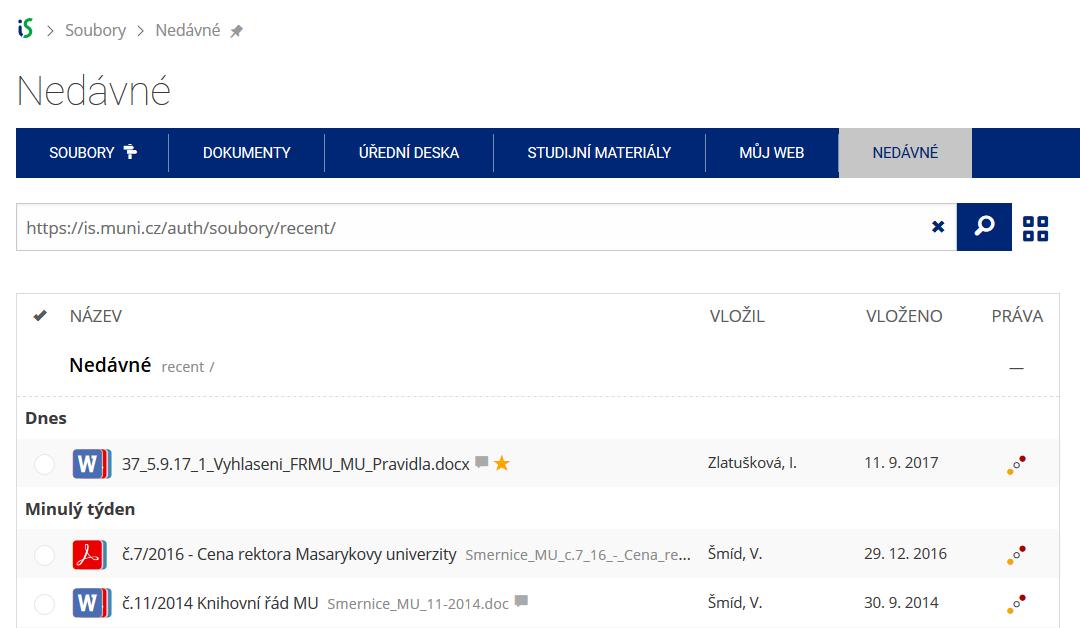 Pomocí funkce Nedávné je možné se rychle vrátit k právě prohlíženým souborům. Oblíbené soubory je také možné označit Hvězdičkou.