Anotace
Cyanobacterial toxins pose an increasing threat to drinking
water supplies and thus, require adequate removal, which,
especially for large-scale water treatment, must be technically
and economically feasible. Conventional water treatment
approaches may sufficiently remove cyanobacteria and
extracellular metabolites but they are often ineffective
against dissolved organic pollutants, such as extracellular,
dissolved cyanotoxins. Although some advanced treatments may
remove dissolved cyanotoxins effectively, they often come with
various disadvantages and deficiencies. For instance,
adsorption and filtration only physically remove dissolved
pollutants while traditionally applied oxidants only degrade
certain cyanotoxins, may require impractically high
concentrations or reaction times, and may even be involved in
the formation of toxic disinfection by-products. A promising
approach to address this challenge and overcome these
deficiencies are Advanced Oxidation Processes, which rely on
the in situ formation of highly reactive species such as the
hydroxyl radical.
First, a review of the current state-of-the-art for cyanotoxin
removal by advanced oxidation processes revealed that, although
all the investigated advanced oxidation processes can degrade
cyanotoxins, their degradation efficacy and efficiency depends
on various factors including water quality as well as toxin-
and technique-specific parameters. Therefore, the best
treatment approach has to be chosen according to the prevalent
water treatment challenge and with respect to the processes’
individual strengths and weaknesses. Although a single
treatment step may yield promising results, due to the
increasingly complex nature of surface water, a multi-barrier
approach will always be best approach to provide harmless and
high-quality drinking water. Based on this review, future
research should focus more on the assessment of treatment
processes under environmentally relevant conditions, process
up-scaling and performance optimization, and the examination of
the residual toxicity after the treatment as one of the most
essential drinking water quality criteria.
A promising but, especially with respect to cyanotoxins,
underexplored advanced oxidation process is the innovative
non-thermal plasma technology. Electrical discharge plasmas can
be generated in the gaseous phase above the water or within the
water itself. Thus, plasmas can provide a range of different
reactive chemical species like radicals, electrons, ionized and
excited atoms and molecules as well as photons. As they can be
tailored towards a specific water treatment challenge and
desired degradation mechanisms, plasma-based treatments yield a
high potential. Therefore, six common but fundamentally
different plasma concepts were systematically compared for the
degradation of the cyanotoxin cylindrospermopsin. Based on the
degradation efficacy and efficiency but also on other aspects
with high practical relevance like scalability and the need for
regular maintenance, a dielectric barrier discharge in air
around a water mist, corona-like and spark discharges submerged
in water were found to be the best, most versatile and adaptive
plasma-based treatments for the degradation of
cylindrospermopsin. Although the different plasmas also
generated UV radiation, heat and mechanical forces, the
chemically-induced toxin degradation was the dominant process.
As the reaction of produced reactive species and the dissolved
pollutant is defined by their interaction with each other, the
active discharge volume is a crucial parameter, also with
respect to the scalability of the respective plasma treatment.
Based on the results from the comparison of six different
discharges and with respect to other technically relevant
aspects, the dielectric barrier discharge in air around a water
mist and the corona-like discharge submerged in water were then
investigated in more detail with respect to the effect of the
most pertinent treatment parameters on the degradation and
underlying degradation mechanisms. For the dielectric barrier
discharge, the degradation efficacy increased when the
operating voltage was decreased, while the corona-like
discharge was more effective at an increased operating voltage
and at a pH-value ≥ 7.5. After optimization of the treatment
parameters, the corona-like discharge yielded a removal
efficacy of 0.24 ± 0.02 g/kWh/L. The dielectric barrier
discharge was less effective, resulting in an efficacy of 0.03
± 0.00 g/kWh/L. Interestingly, a pH-dependent residual
oxidative effect of the plasma-treated water was observed for
the corona-like discharge submerged in water, which resulted in
an ongoing CYN degradation, even without further application of
the plasma. For the corona-like discharge, hydroxyl radicals
were identified as the main reactive species while the
dielectric barrier discharge in air around a water mist mainly
produced ozone.
The residual toxicity of the treated water is an integral
measure for the quality of drinking water. Therefore, the last
study answered the question whether the degradation of
cylindrospermopsin equals its detoxification. Following its
degradation by hydroxyl and sulfate radicals produced in Fenton
and Fenton-like reactions, the residual toxicity of the treated
toxin solution was examined using a 3-dimensional in vitro
human liver model. Degradation by the sulfate radicals appeared
to be more effective compared with the hydroxyl radicals.
However, based on the identified degradation products, the
underlying degradation mechanisms were similar for both radical
species. Furthermore, in both cases, the residual toxicity
substantially reduced due to the treatment. Although the
results indicated that some of the formed degradation products
may still exhibit toxicity, the overall toxicity reduction and
proposed degradation pathways allowed for the conclusion that
“Yes, cylindrospermopsin degradation equals its
detoxification!”. …víceméně
Abstract
Cyanobacterial toxins pose an increasing threat to drinking
water supplies and thus, require adequate removal, which,
especially for large-scale water treatment, must be technically
and economically feasible. Conventional water treatment
approaches may sufficiently remove cyanobacteria and
extracellular metabolites but they are often ineffective
against dissolved organic pollutants, such as extracellular,
dissolved cyanotoxins. Although some advanced treatments may
remove dissolved cyanotoxins effectively, they often come with
various disadvantages and deficiencies. For instance,
adsorption and filtration only physically remove dissolved
pollutants while traditionally applied oxidants only degrade
certain cyanotoxins, may require impractically high
concentrations or reaction times, and may even be involved in
the formation of toxic disinfection by-products. A promising
approach to address this challenge and overcome these
deficiencies are Advanced Oxidation Processes, which rely on
the in situ formation of highly reactive species such as the
hydroxyl radical.
First, a review of the current state-of-the-art for cyanotoxin
removal by advanced oxidation processes revealed that, although
all the investigated advanced oxidation processes can degrade
cyanotoxins, their degradation efficacy and efficiency depends
on various factors including water quality as well as toxin-
and technique-specific parameters. Therefore, the best
treatment approach has to be chosen according to the prevalent
water treatment challenge and with respect to the processes’
individual strengths and weaknesses. Although a single
treatment step may yield promising results, due to the
increasingly complex nature of surface water, a multi-barrier
approach will always be best approach to provide harmless and
high-quality drinking water. Based on this review, future
research should focus more on the assessment of treatment
processes under environmentally relevant conditions, process
up-scaling and performance optimization, and the examination of
the residual toxicity after the treatment as one of the most
essential drinking water quality criteria.
A promising but, especially with respect to cyanotoxins,
underexplored advanced oxidation process is the innovative
non-thermal plasma technology. Electrical discharge plasmas can
be generated in the gaseous phase above the water or within the
water itself. Thus, plasmas can provide a range of different
reactive chemical species like radicals, electrons, ionized and
excited atoms and molecules as well as photons. As they can be
tailored towards a specific water treatment challenge and
desired degradation mechanisms, plasma-based treatments yield a
high potential. Therefore, six common but fundamentally
different plasma concepts were systematically compared for the
degradation of the cyanotoxin cylindrospermopsin. Based on the
degradation efficacy and efficiency but also on other aspects
with high practical relevance like scalability and the need for
regular maintenance, a dielectric barrier discharge in air
around a water mist, corona-like and spark discharges submerged
in water were found to be the best, most versatile and adaptive
plasma-based treatments for the degradation of
cylindrospermopsin. Although the different plasmas also
generated UV radiation, heat and mechanical forces, the
chemically-induced toxin degradation was the dominant process.
As the reaction of produced reactive species and the dissolved
pollutant is defined by their interaction with each other, the
active discharge volume is a crucial parameter, also with
respect to the scalability of the respective plasma treatment.
Based on the results from the comparison of six different
discharges and with respect to other technically relevant
aspects, the dielectric barrier discharge in air around a water
mist and the corona-like discharge submerged in water were then
investigated in more detail with respect to the effect of the
most pertinent treatment parameters on the degradation and
underlying degradation mechanisms. For the dielectric barrier
discharge, the degradation efficacy increased when the
operating voltage was decreased, while the corona-like
discharge was more effective at an increased operating voltage
and at a pH-value ≥ 7.5. After optimization of the treatment
parameters, the corona-like discharge yielded a removal
efficacy of 0.24 ± 0.02 g/kWh/L. The dielectric barrier
discharge was less effective, resulting in an efficacy of 0.03
± 0.00 g/kWh/L. Interestingly, a pH-dependent residual
oxidative effect of the plasma-treated water was observed for
the corona-like discharge submerged in water, which resulted in
an ongoing CYN degradation, even without further application of
the plasma. For the corona-like discharge, hydroxyl radicals
were identified as the main reactive species while the
dielectric barrier discharge in air around a water mist mainly
produced ozone.
The residual toxicity of the treated water is an integral
measure for the quality of drinking water. Therefore, the last
study answered the question whether the degradation of
cylindrospermopsin equals its detoxification. Following its
degradation by hydroxyl and sulfate radicals produced in Fenton
and Fenton-like reactions, the residual toxicity of the treated
toxin solution was examined using a 3-dimensional in vitro
human liver model. Degradation by the sulfate radicals appeared
to be more effective compared with the hydroxyl radicals.
However, based on the identified degradation products, the
underlying degradation mechanisms were similar for both radical
species. Furthermore, in both cases, the residual toxicity
substantially reduced due to the treatment. Although the
results indicated that some of the formed degradation products
may still exhibit toxicity, the overall toxicity reduction and
proposed degradation pathways allowed for the conclusion that
“Yes, cylindrospermopsin degradation equals its
detoxification!”. …víceméně
 angličtina
 Soubor nebo složku lze nahrát pomocí tlačítka Přidat.
 Podrobnosti lze zjistit označením příslušného řádku.
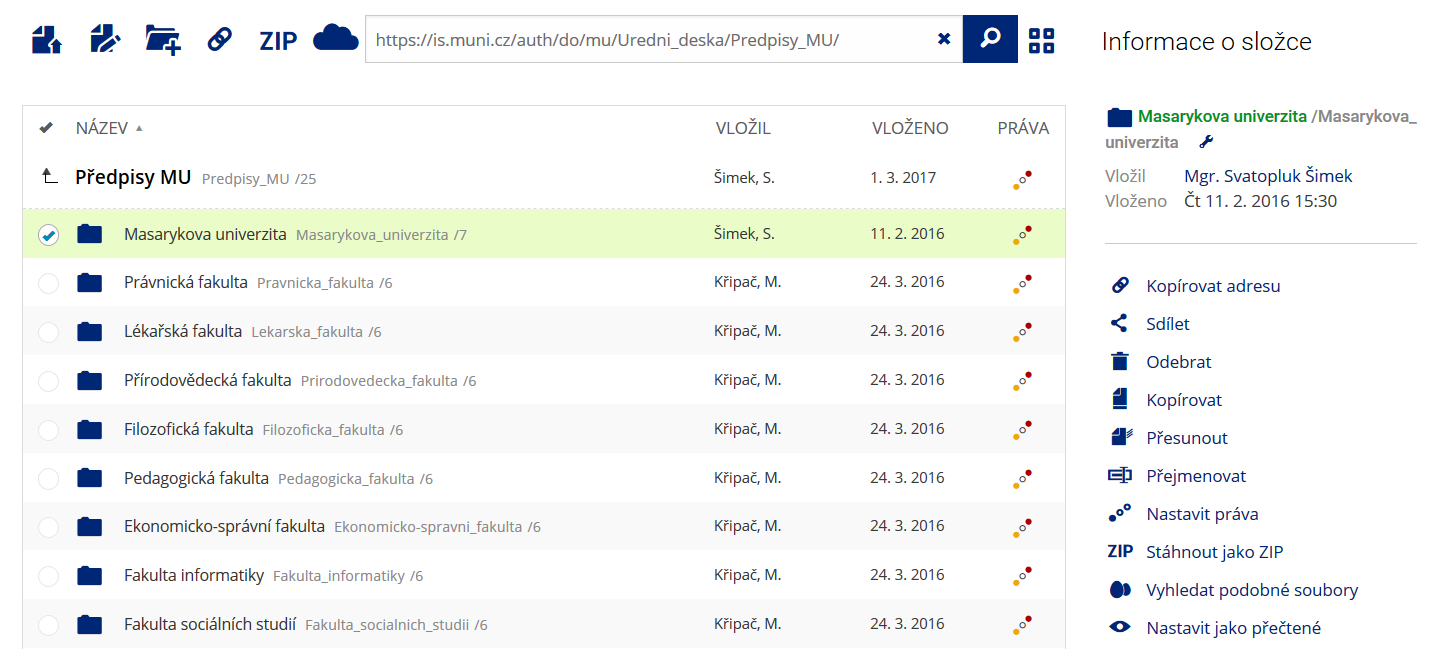 Pro častou práci je možné zvolit režim Více možností.
 Vyhledávaný výraz můžete zadat přímo do adresního řádku.
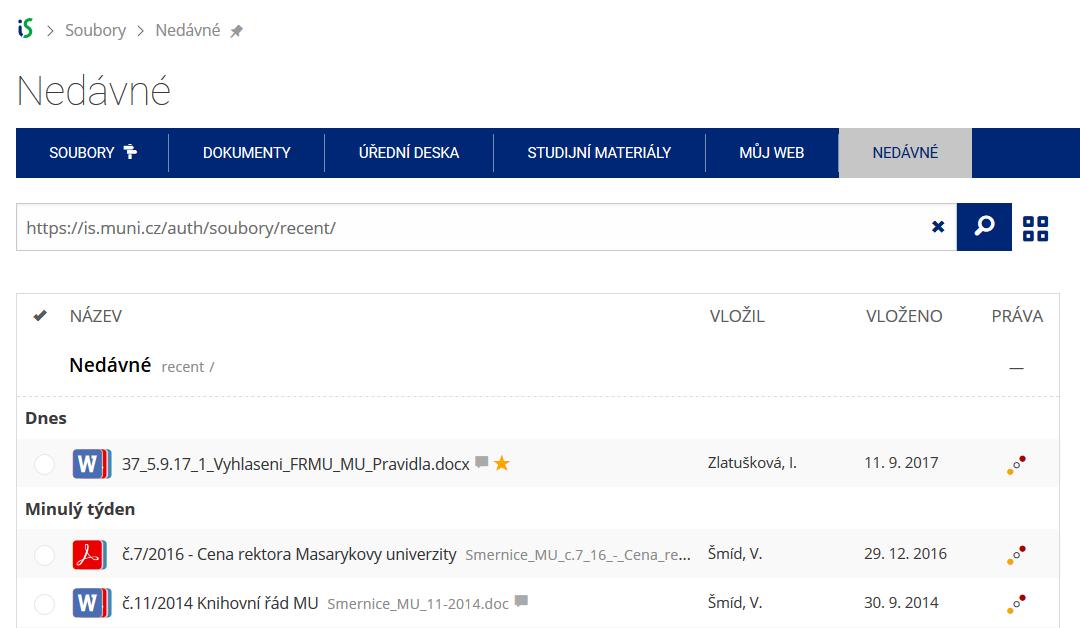 Pomocí funkce Nedávné je možné se rychle vrátit k právě prohlíženým souborům. Oblíbené soubory je také možné označit Hvězdičkou.