Závěrečná práce: Dušan Slúka: The tool to identify meiotic recombination breakpoints using haplotype-resolved human genome assemblies
Diplomová práce
The tool to identify meiotic recombination breakpoints using haplotype-resolved human genome assemblies
Anotace
Sekvenovanie rodokmeňov je účinný prístup k diagnostike zriedkavých genetických ochorení. Klasické analýzy zvyčajne mapujú sekvenačné čítania na referenčný genóm a fázujú varianty zdedené od rodičov. Keďže kompletné haplotypovo rozlíšené zostavy sa stávajú dostupnými, je možné analyzovať dedičnosť na úrovni celých chromozómových blokov namiesto izolovaných variantných miest. Táto práca predstavuje …více
Abstract
Pedigree sequencing is a powerful approach for diagnosing rare genetic diseases. Classical analyses usually map reads to a reference genome and phase variants inherited from the parents. As complete haplotype-resolved assemblies become available, it becomes possible to analyse inheritance at the level of whole chromosomal blocks instead of isolated variant sites. This thesis delivers a command-line …více
Klíčová slova
meiotic recombination meiotická rekombinácia crossover breakpoints body zlomu crossing-overu haplotype-resolved assembly haplotypovo rozlíšená zostava human trio ľudské trio T2T assembly T2T zostava pangenome graph pangenómový graf haplotype phasing fázovanie haplotypov rare disease diagnostics diagnostika zriedkavých ochorení bioinformatics bioinformatikaZadání práce
The sequencing and DNA analysis of human pedigrees represents a gold standard technique for the identification and diagnostics of rare genetic diseases. In this effort, distinguishing between maternally and paternally inherited mutations is crucial. However, currently available tools are not designed for haplotype-resolved human genome assemblies, such as those currently produced by the Telomere-To-Telomere (T2T) consortium. To address this gap, the student will develop a tool that precisely estimates the meiotic recombination breakpoints (i.e. switches between parental haplotypes), using traditional pairwise alignments, as well as experimental pangenome graph structures. Further, the student will demonstrate the utility of the developed tool using both simulated and real datasets (family trio with haplotype-resolved assemblies for child, as well as mother and father). The developed tool should be easy to install and well-documented, to facilitate potential adoption by the scientific community.
25. 5. 2026 07:57, Mgr. Monika Čechová, Ph.D., učo 256590
 angličtina
Citace dle normy ČSN ISO 690
Práce na příbuzné téma
Seznam prací, které mají shodná klíčová slova.
-
Bioinformatická analýza glykosyltransferas z Mycobacterium tuberculosis
Mgr. Bc. Lucie Čtveráčková, Ph.D. -
Analýza sekvenčních variant u pacientů s vzácným onemocněním
Ing. Aneta Reichel, učo 496864 -
PredictSNP onco: server pro automatickou analýzu mutací přispívajících k rozvoji rakoviny
Mgr. Adam Dobiáš -
Moderní metody získávání a zpracování biomedicínských dat
Mgr. Michal Strehovský, učo 139566 -
Bioinformatické vyhledávání a srovnání lektinů z Photorhabdus
Mgr. Radim Jaroušek, Ph.D. -
Srovnávací genomika klinicky významných druhů rodu Staphylococcus
Mgr. Vojtěch Kovařovic, Ph.D., učo 408266 -
Isoformy proteinu p53 a jejich DNA vazebné vlastnosti
Mgr. Monika Toporcerová -
LLWS: REST backend for centralized execution of bioinformatics calculations
Ing. Petr Kabourek, učo 242739
Složky
Soubory
-
Přidání souboru
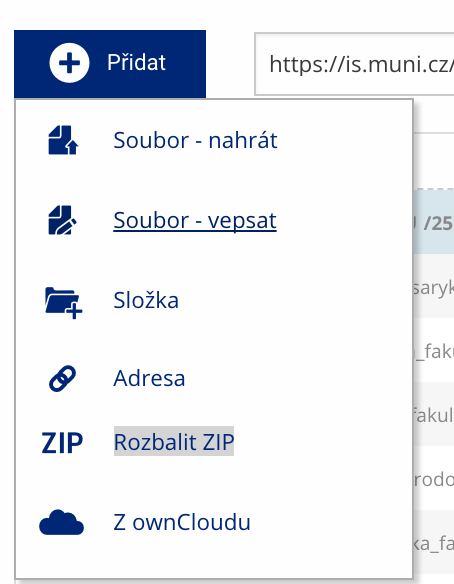 Soubor nebo složku lze nahrát pomocí tlačítka Přidat.
 -
Další operace se soubory
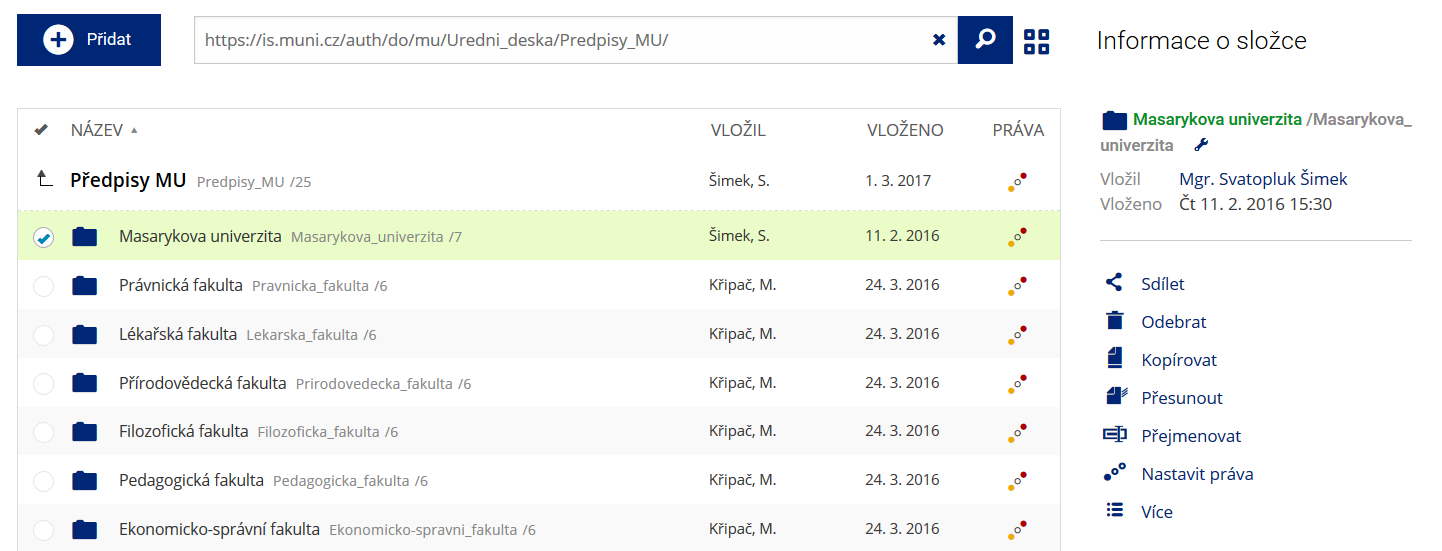 Podrobnosti lze zjistit označením příslušného řádku.
 -
Pohled pro experty
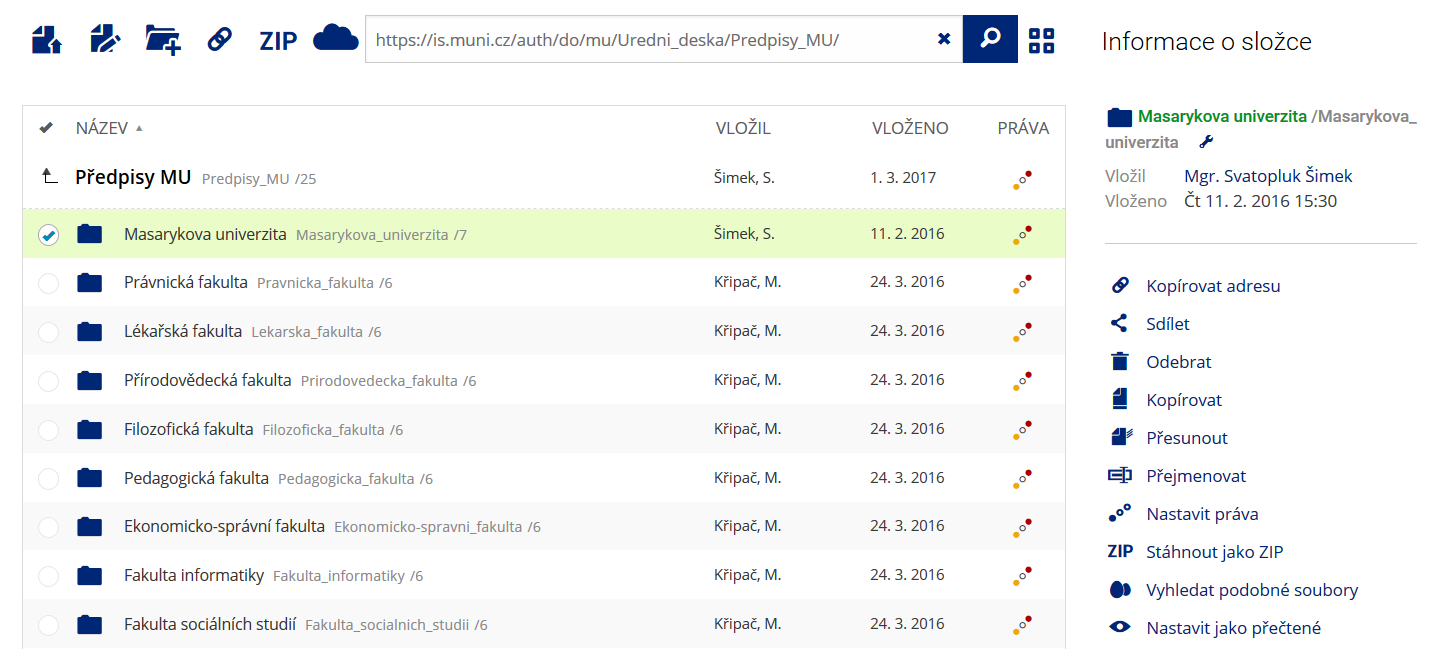 Pro častou práci je možné zvolit režim Více možností.
 -
Vyhledávání souborů
 Vyhledávaný výraz můžete zadat přímo do adresního řádku.
 -
Rychlý přístup k souborům
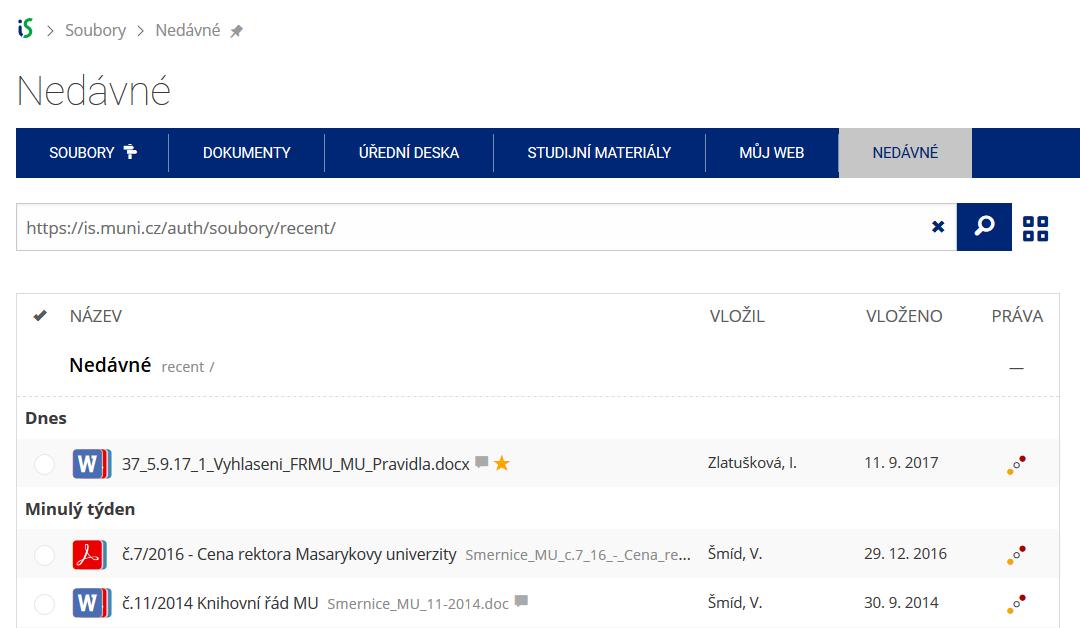 Pomocí funkce Nedávné je možné se rychle vrátit k právě prohlíženým souborům. Oblíbené soubory je také možné označit Hvězdičkou.