Závěrečná práce: Bc. Lucia Krnáčová: Dietary practices of Hutterites studied by stable isotope analysis
Diplomová práce
Dietary practices of Hutterites studied by stable isotope analysis
Anotace
Cílem této práce bylo rekonstruovat stravovací návyky populace Hutteritů z Přibic pomocí analýzy stabilních izotopů a porovnat je se stravovacími návyky populací z jiných moravských lokalit (Mikulov, Želešice a Dolní Věstonice). Studie využila stabil-ní izotopová data uhlíku (δ13C), dusíku (δ15N) a síry (δ34S) k získání přehledu o stra-vě a sociální dynamice těchto historických populací (11. – 17. …více
Abstract
This thesis aimed to reconstruct the dietary practices of the Hutterite population from Přibice through stable isotope analysis and compare these practices with those of populations from other Moravian sites (Mikulov, Želešice, and Dolní Věstonice). The study utilized stable carbon (δ13C), nitrogen (δ15N), and sulphur (δ34S) isotopic data to get an overview about the diet and social dynamics of these …více
Zadání práce
Addressing the question of Hutterite identity requires understanding the mechanisms and strategies involved in the processes of constructing ancient identities. While history has greatly improved our knowledge on this subject, it overall fails to define or glimpse individualities. Archaeology, and even more so the archaeological sciences which include biomolecular anthropology, allow us to deepen this knowledge by entering into micro-history and discovering particularities. Osteobiographical approaches integrating isotopic analyses are today the most capable of reconstructing life histories which, when juxtaposed and recontextualised, allow us to reconstruct bio-cultural interactions and characterise identity traits.
The aim of this project is to use archaeo-biogeochemistry, in particular stable isotope analysis (d13C, d15N and d34S), to highlight the internal commonalities and external peculiarities of Moravian Hutterite communities, by comparison to coetaneous non-Hutterite populations, through the prism of their food practices.
The tasks to be addressed in this thesis are:
1) To develop the theoretical framework of the thesis, with a focus on the historical, archaeological, and methodological contexts
2) To sample the collections, perform the stable isotope analysis, and acquire the isotopic results
3) To statistically process isotopic data according to biological (sex, age, etc.), archaeological (funerary practices, funerary furniture, etc.), and chronological (medieval periods, modern periods, etc.) parameters. To proceed intra- and inter-site comparisons.
4) To interpret the results in terms of dietary practices, and discuss and contextualise the results in a broader framework.
This work may require travel abroad for analysis.
To be awarded credit for the first semester (course Bi7771 Diploma Thesis I) the above stated task 1 needs to be accomplished, to be awarded credit for the second semester (course Bi8772 Diploma Thesis II) also the above stated task 2 needs to be accomplished, to be awarded credit for the third semester (course Bi9200 Diploma Thesis III) also the above stated task 3 needs to be accomplished and to be awarded credit for the fourth semester (course Bi9773 Diploma Thesis IV) also the above stated task 4 needs to be accomplished, therefore to finish the thesis and hand it in for thesis defense in the IS Archive.
The recommended extent of the thesis is 50-100 pages but can be exceeded if the thesis development requires it. However, the 50-page lower limit is the minimum which can be accepted. The thesis will exclude the explicit description of utilized material and methods, including in cases when the thesis is in form of a literature review. The method/process description will clearly state the author’s contribution to acquired results. Czech version of the ISO 690 style will be the citation style. Appropriate tabelar and graphical summarizing and instructive illustrations will form part of the thesis. The thesis will be handed in in the PDF format in the IS Archive and in print bound form for defense and archiving purposes. In the formal and content aspects the valid MU legislation, Dean’s Measure on final these and Department of Anthropology internal regulations must be met.
6. 6. 2024 12:22, Kévin Alexis André Salesse, M.Sc., Ph.D., učo 247563
 angličtina
Oponent
Department of Anthropology, The Chinese University of Hong Kong
Konzultant
Práce na příbuzné téma
Seznam prací, které mají shodná klíčová slova.
-
Mobility and landscape use among the Přibice anabaptists: insights from isotopic analysis
Bc. Gabriela Joanna Sečkářová, učo 521717 -
Interpretace nálezové situace prostřednictvím 3D digitální dokumentace
Mgr. Michaela Brázdová -
Prostorová analýza tafonomických změn v rámci habánského pohřebiště v Přibicích
Mgr. Tereza Bělušová -
Nabídka a kvalita školního stravování ve školách současnosti
Mgr. Lenka Suchopárová, Ph.D. -
Stravovací návyky nevidomých středoškolských a vysokoškolských studentů
Mgr. Klára Matěnová, DiS., učo 66480 -
Poruchy příjmu potravy v dětství a adolescenci
Mgr. Marie Hladíková -
Změna stravovacích návyků zahraničních studentů
Mgr. Adéla Olivíková -
Výskyt rizikových faktorů obezity u dětí staršího školního věku
Mgr. Zuzana Dostálová, učo 142866
Složky
Soubory
-
Přidání souboru
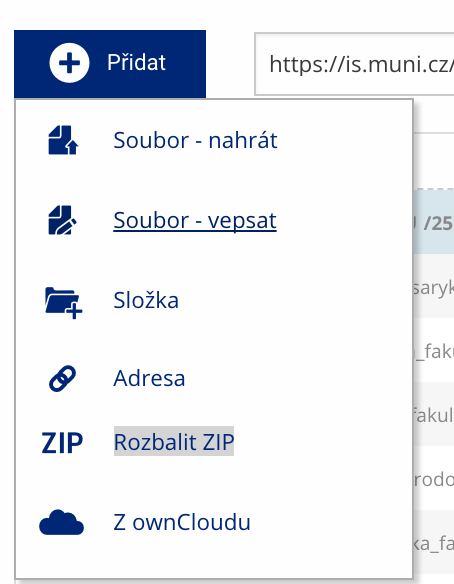 Soubor nebo složku lze nahrát pomocí tlačítka Přidat.
 -
Další operace se soubory
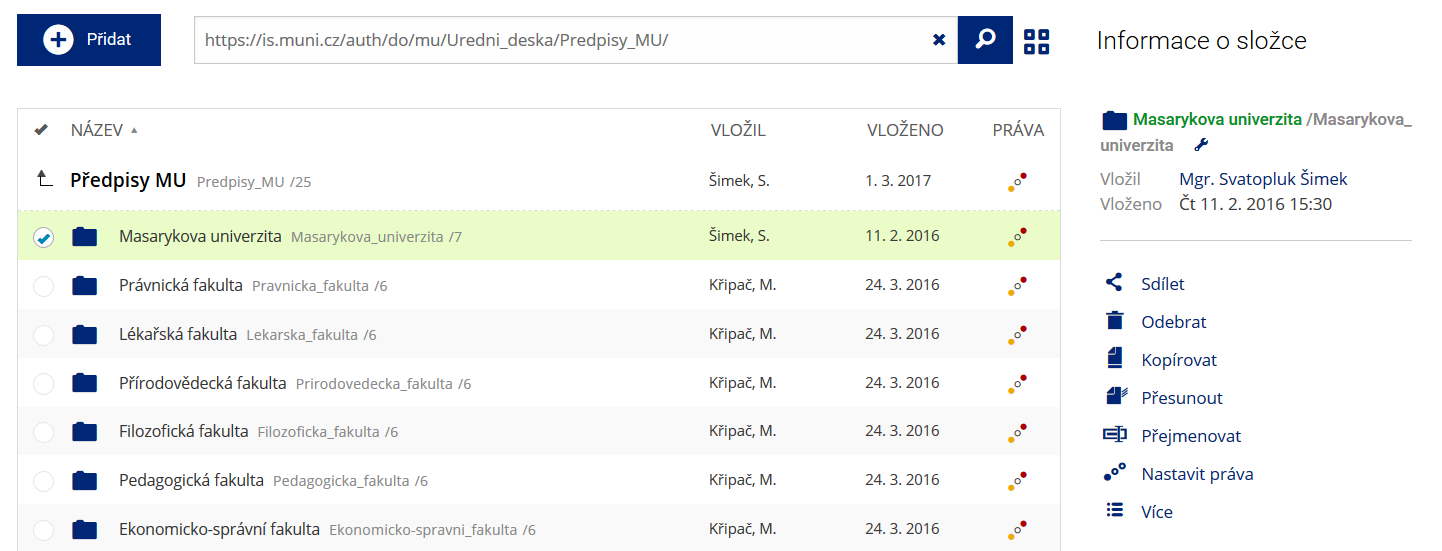 Podrobnosti lze zjistit označením příslušného řádku.
 -
Pohled pro experty
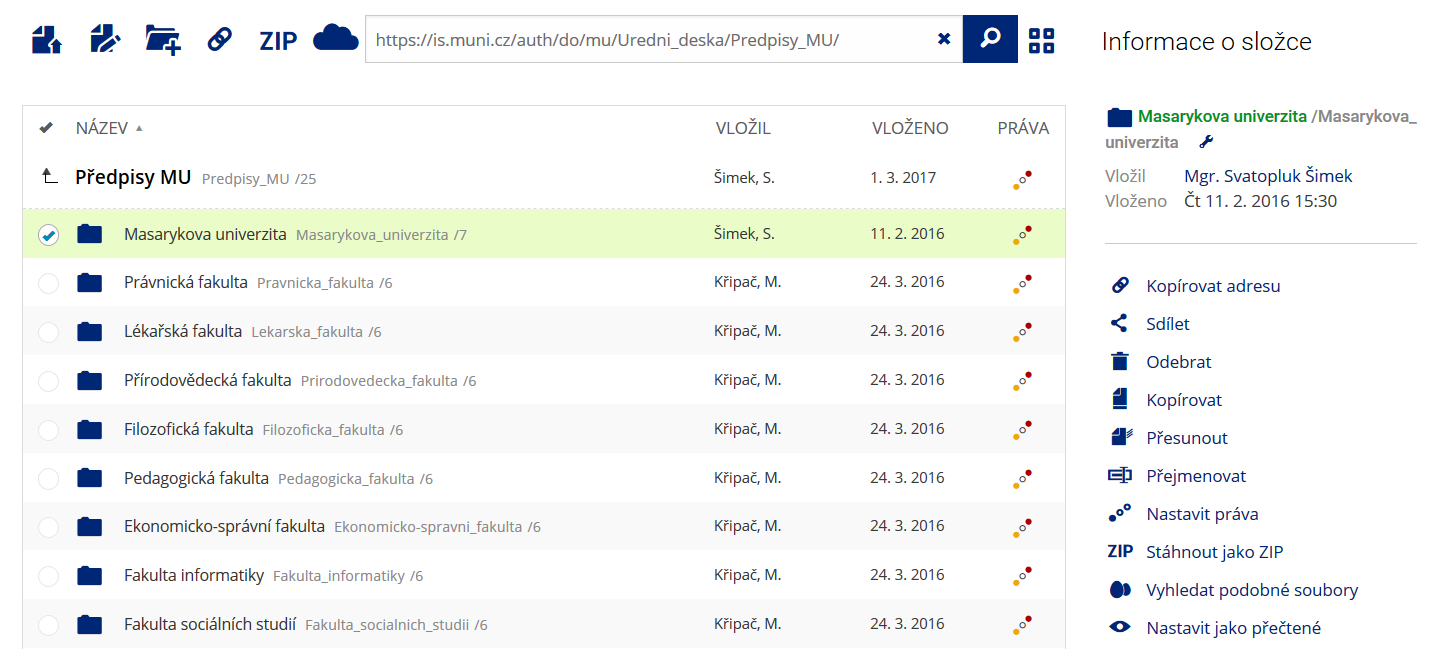 Pro častou práci je možné zvolit režim Více možností.
 -
Vyhledávání souborů
 Vyhledávaný výraz můžete zadat přímo do adresního řádku.
 -
Rychlý přístup k souborům
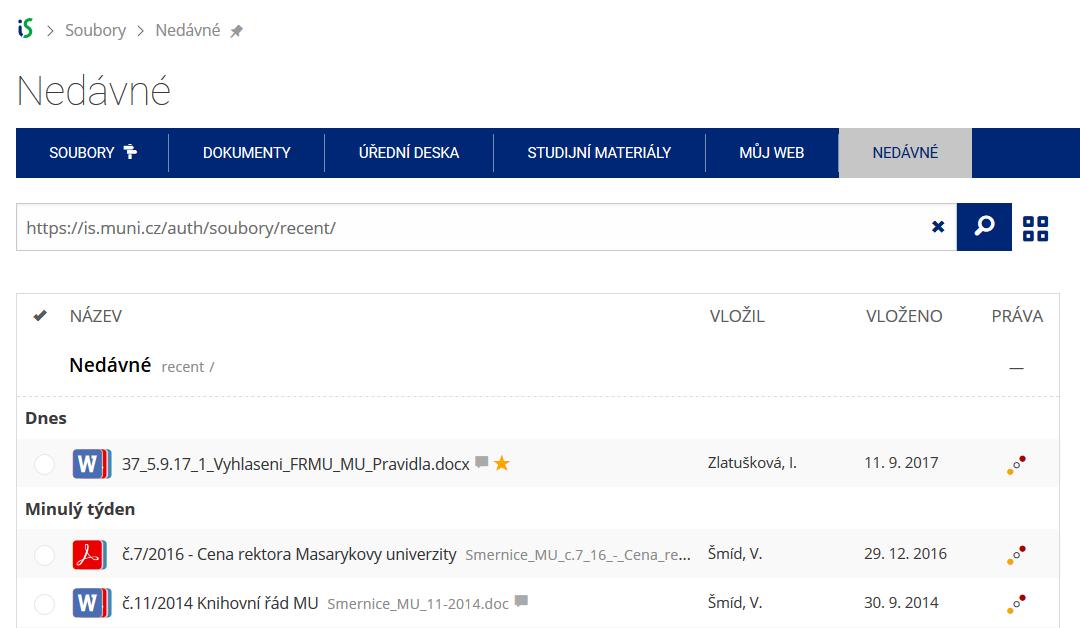 Pomocí funkce Nedávné je možné se rychle vrátit k právě prohlíženým souborům. Oblíbené soubory je také možné označit Hvězdičkou.