Thesis/Dissertation: Bc. Martin Polák: Binding properties of p53 protein and its mutant to structural motifs in the DNA
Master's thesis
Binding properties of p53 protein and its mutant to structural motifs in the DNA
Vazebné vlastnosti proteinu p53 a jeho mutantů k strukturním motivům v DNA
Abstract
Protein p53 patří mezi významné nádorové supresory. Funguje jako transkripční faktor a váže se na cílové sekvence v promotorech celé řady genů důležitých pro zastavení buněčného cyklu a apoptózu. Bylo ukázáno, že se může vázat také na různé strukturní motivy DNA. V této práci se zabývám nádorovým supresorem p53 a jeho vazbou na lokální struktury v DNA. Přestože velké procento mutantních p53 má narušenou …more
Abstract
Protein p53 is very important tumor suppressor. It works as a transcriptional factor and it binds to the target sequences of promotors of several genes, which are important in terms of cell cycle arrest and apoptosis. It was shown, that p53 can bind to the various DNA structure motives. This thesis is concern about tumor suppressor p53 and its binding ability to local structures of DNA. Although high …more
15/5/2014 07:46, prof. Mgr. Václav Brázda, Ph.D., UČO 15548
 Czech
Czech
Supervisor
Readers
Theses on a related topic
List of theses with an identical keyword.
-
Binding of p53 mutants to DNA and local DNA structures
Mgr. Alessandra Dinová -
Analysis of DNA binding proteins with a focus on their interaction with local DNA structures
Mgr. Natália Valková, Ph.D. -
Methods of functional mutation analysis in genes involved in human diseases
Mgr. Edita Ošťádalová -
PredictSNP onco: web server for automatic analysis of oncology-based mutations
Mgr. Adam Dobiáš -
Tumor supressor protein p53 and its significance in regulation of cellular homeostasis
Mgr. Jan Coufal, Ph.D. -
Development of methodological handbook for instruction of selected chapters from genetics at secondary schools
Mgr. Petra Stuchlíková -
Origin of chromothripsis and its role in cellular pathophysiology
Mgr. Kristýna Taušová, UČO 442017 -
Comparing biological sequences in order to predict structure and function of proteins
Mgr. Monika Čechová, Ph.D., UČO 256590
Folders
Files
-
Přidání souboru
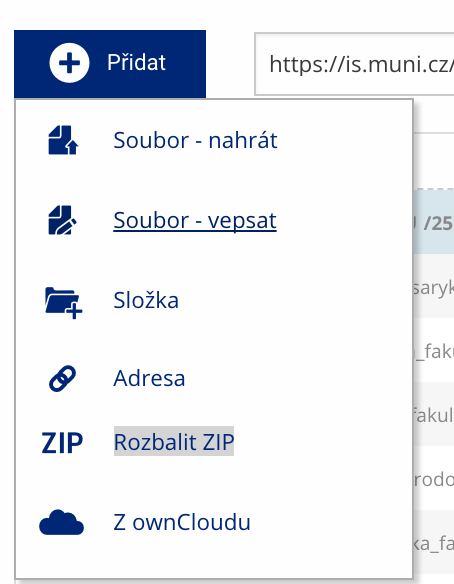 Soubor nebo složku lze nahrát pomocí tlačítka Přidat.
 -
Další operace se soubory
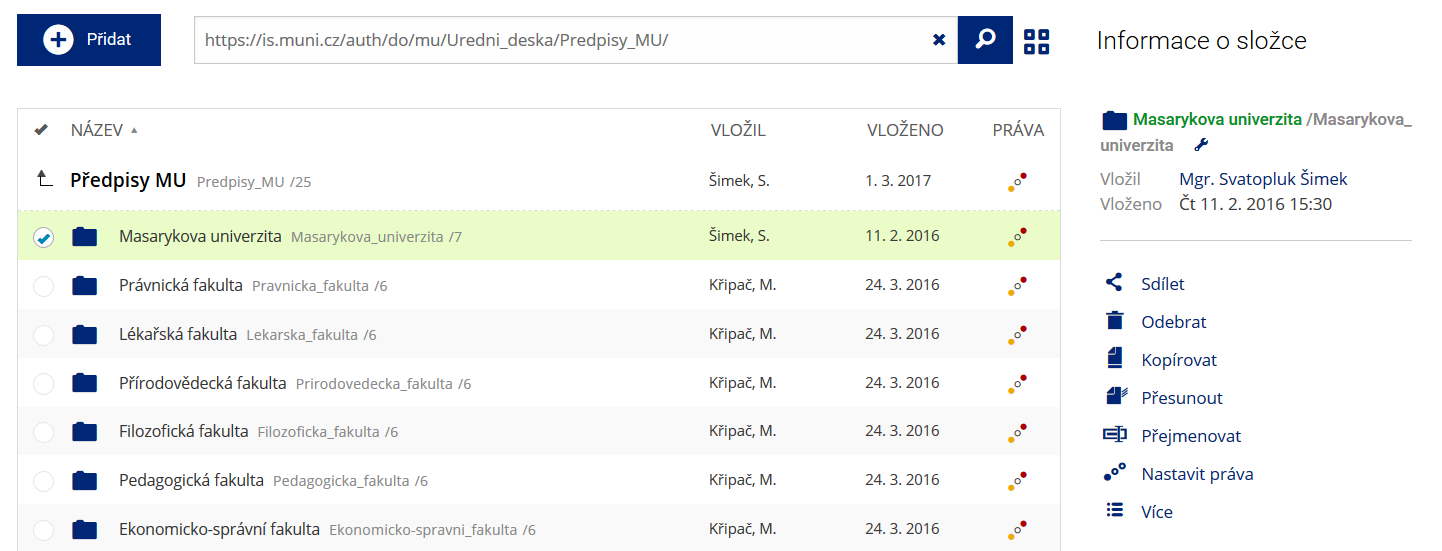 Podrobnosti lze zjistit označením příslušného řádku.
 -
Pohled pro experty
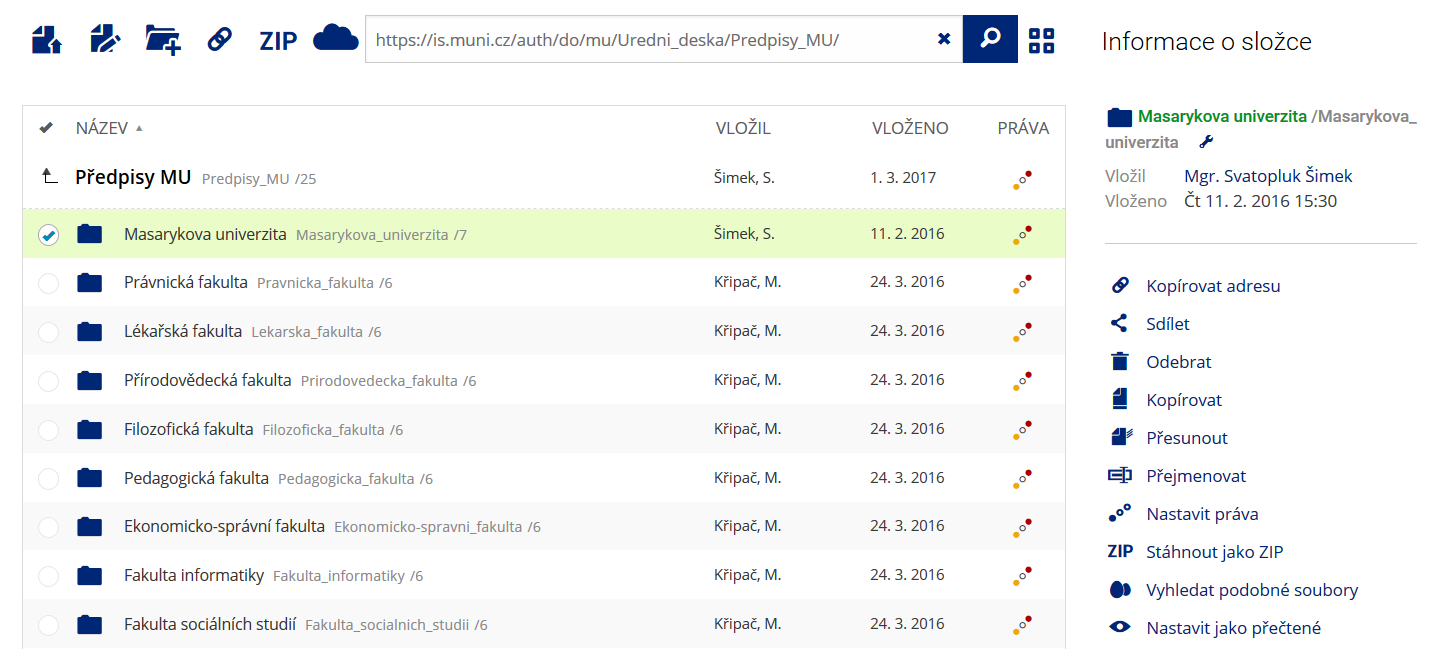 Pro častou práci je možné zvolit režim Více možností.
 -
Vyhledávání souborů
 Vyhledávaný výraz můžete zadat přímo do adresního řádku.
 -
Rychlý přístup k souborům
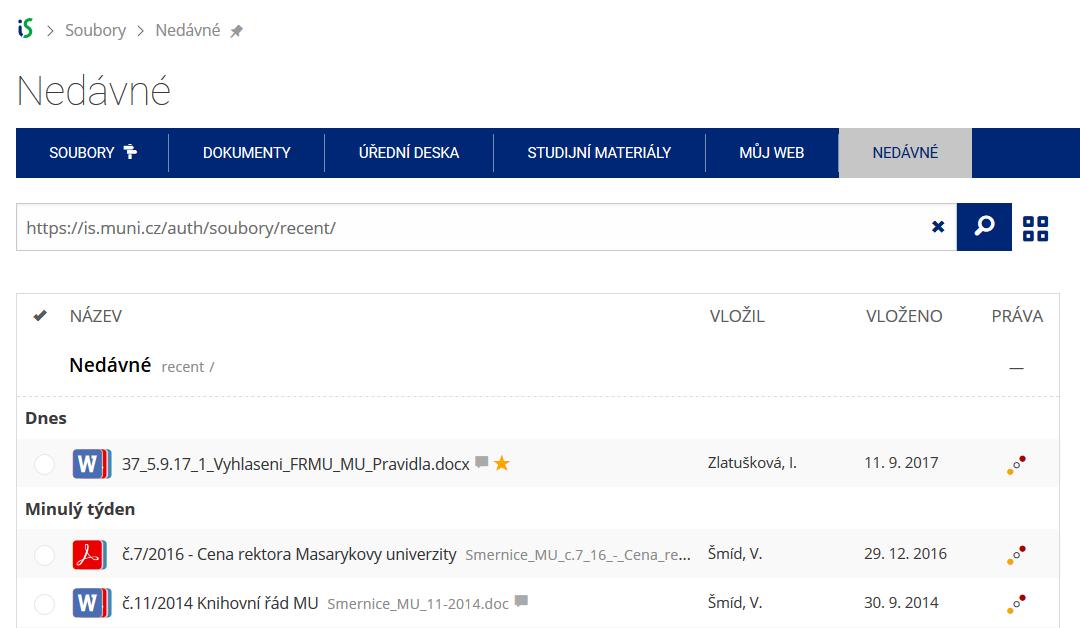 Pomocí funkce Nedávné je možné se rychle vrátit k právě prohlíženým souborům. Oblíbené soubory je také možné označit Hvězdičkou.