Závěrečná práce: Drahomír Malota: Implementation of a Deployment Method to Kubernetes for Electronic Laboratory Notebook Software
Bakalářská práce
Implementation of a Deployment Method to Kubernetes for Electronic Laboratory Notebook Software
Anotace
Cílem bakalářské práce je vyvinout moderní způsob nasazení elektronického laboratorního deníku Kadi4Mat do Kubernetes. První část zkoumá význam laboratorních deníků a jejich digitálních protějšků. Kadi4Mat je představen spolu s Docker kontejnery, Kubernetes a Helm, které jsou použity k vytvoření nové možnosti nasazení. Následující tři části popisují průběh implementace. Nejprve je aplikace Kadi4Mat …více
Abstract
The aim of the bachelor thesis is to develop a modern deployment option for the electronic laboratory notebook Kadi4Mat to Kubernetes. The first part explores the significance of laboratory notebooks and their digital counterparts. Kadi4Mat is introduced along with Docker containers, Kubernetes, and Helm, which are used to create the new deployment option. The following three parts describe the implementation …více
Zadání práce
The goal of this thesis is to develop a generic deployment method for the popular open-source electronic laboratory notebook Kadi4Mat to a production Kubernetes environment. ELNs are starting to be a crucial tool in modern scientific laboratories. They help document and organize experiments and manage produced data by attaching well-annotated metadata and preparing the data for publishing into data repositories to be shared with other scientists. This work introduces a new deployment mechanism for the Kubernetes platform and it will also make Kadi4Mat ready to be run within any container orchestrator. The work will include creating container image build manifests, developing a HELM chart for Kubernetes deployment, and testing the results. When designing the HELM package, generic usability must be considered - handling cases where the user has an existing Postgres cluster versus cases where the HELM package provides a Postgres chart dependency, as well as components like Elasticsearch and Celery task execution and Redis. Security considerations must also be taken into account when creating container images, such as using non-root containers. The HELM chart should also allow seamless updates of the running application when a new version is released, including implementing a mechanism for data migration and documenting it.
Work Plan:
-
Get used to HELM, Kubernetes, Software containerization, and Kadi4Mat.
-
Identify the Kadi4Mat components that need to be included in the HELM chart.
-
Containerize Kadi4Mat components using Docker.
-
Implement HELM charts with a focus on modularity (using dependencies).
-
Test Kadi4Mat deployment in a Kubernetes cluster.
-
Explore and Implement a data migration mechanism for application updates.
-
Prepare documentation and user guides.
19. 12. 2025 13:35, Mgr. Adrián Rošinec, učo 469240
 angličtina
Konzultant
Citace dle normy ČSN ISO 690
Práce na příbuzné téma
Seznam prací, které mají shodná klíčová slova.
-
Secure Virtual Desktop for Sensitive Research Data Processing
Ing. Glenn Fischer -
DevOps and MLOps Pipelines in a Secure Kubernetes Cluster
Ing. David Rusnák -
Application Performance Testing on AWS Cloud
Ing. Jiří Juřica -
Containers in E-Infrastructure
RNDr. Viktória Spišaková, učo 456543 -
Modular and Scalable Architecture for Automata Tutor
Bc. Artem Chornohub -
Containerization of Accelerated Remote Desktop
Mgr. Juraj Kulich -
Deployment of Automated Patrolling Strategy Calculation
Ing. David Svatý -
Automated Infrastructure Deployment on Public and Private Cloud as a Part of Continuous Integration Process
Mgr. Šimon Obetko
Složky
Soubory
-
Přidání souboru
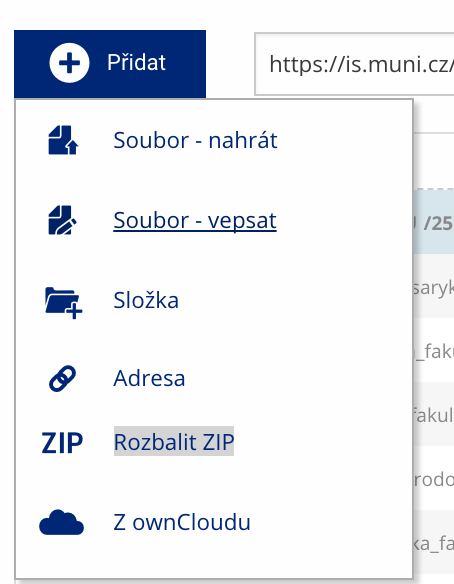 Soubor nebo složku lze nahrát pomocí tlačítka Přidat.
 -
Další operace se soubory
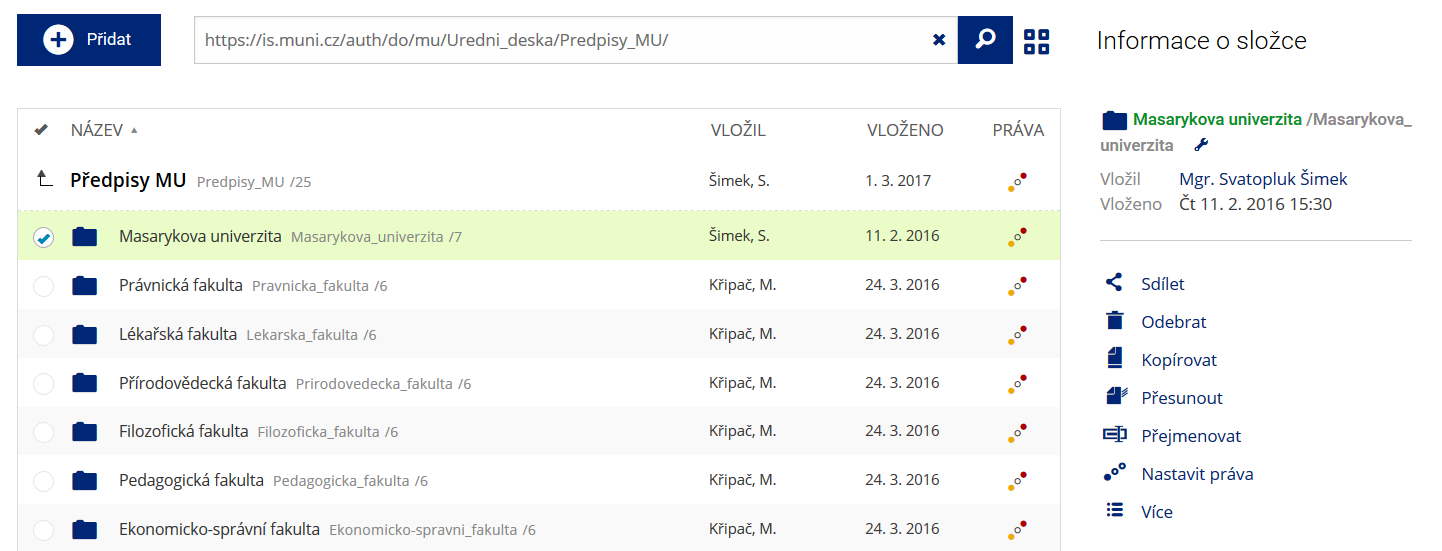 Podrobnosti lze zjistit označením příslušného řádku.
 -
Pohled pro experty
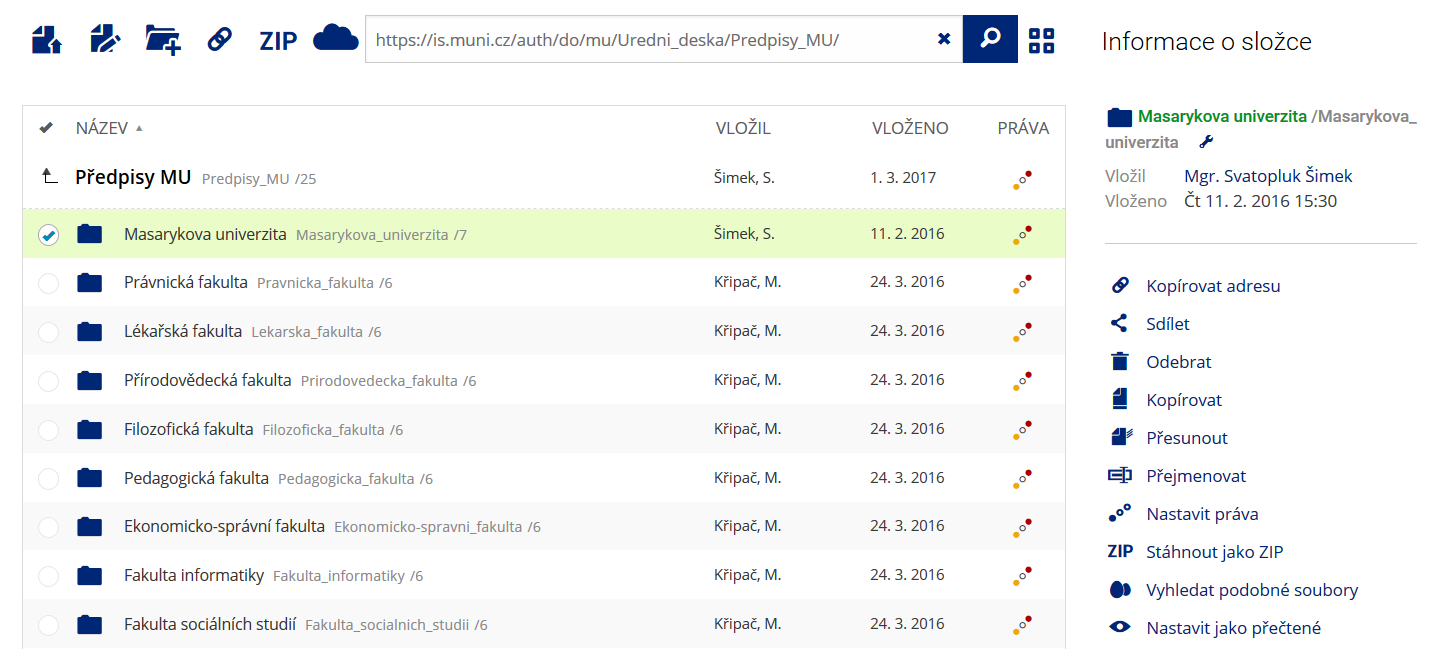 Pro častou práci je možné zvolit režim Více možností.
 -
Vyhledávání souborů
 Vyhledávaný výraz můžete zadat přímo do adresního řádku.
 -
Rychlý přístup k souborům
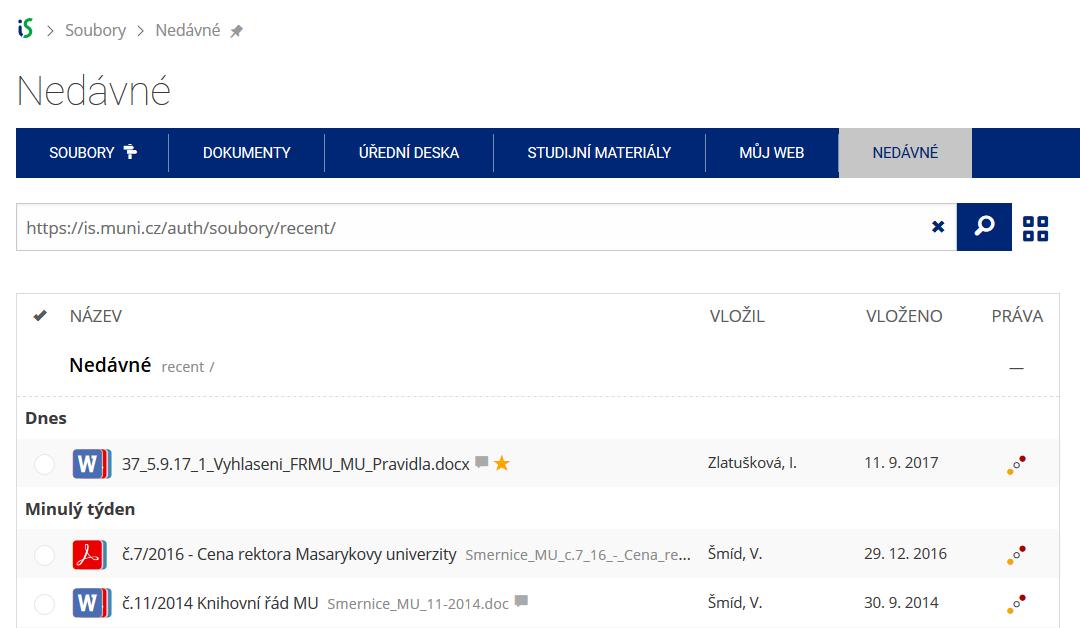 Pomocí funkce Nedávné je možné se rychle vrátit k právě prohlíženým souborům. Oblíbené soubory je také možné označit Hvězdičkou.