Závěrečná práce: Jindřich Halabala, učo 536549: Experimenting with web-page structural analysis using Deep Reinforcement Learning
Bakalářská práce
Experimenting with web-page structural analysis using Deep Reinforcement Learning
Anotace
Tato práce zkoumala možnosti využití hlubokého posilovaného učení pro detekci prvků grafického uživatelského rozhraní ve snímcích obrazovky webových aplikací. Bylo vytvořeno deset prostředí posilovaného učení s rostoucí obtížností, v nichž byli trénováni agenti s využitím různých odměňovacích funkcí, architektur sítí a hyperparametrů, dokud nebyl získán agent schopný dané prostředí úspěšně řešit. Výkonnost …více
Abstract
This thesis investigated the feasibility of using deep reinforcement learning for the detection of graphical user interface elements in web application screenshots. Ten reinforcement learning environments of increasing complexity were developed, and agents were trained in each using various reward functions, network architectures, and hyperparameters until an agent capable of solving each environment …více
Zadání práce
The visual approach has its own challenges though. The software robot needs to be reliable able to infer web page structure and semantics purely from the captured image(s). There are helper guidelines, user provided hints or metadata available. To make matters more complex, a single element that needs to be located and interacted with can exist in multiple instances in a single web page. Consider a "street address" field in an order form of a typical e-shop. This field exists both as part of the billing and shipping addresses.
The AIVA system implements computer vision how to turn the web page into hierarchical hybrid model, which combines structure and semantics. This model relies on image segmentation. The goal of this student thesis is to explore an alternative to the current segmentation approach using: deep reinforcement learning (DRL) and computer vision. For comparison, provide also an implementation using the YOLOv8 model.
Image segmentation models are usually trained on diverse datasets and mostly not optimized for web pages or graphical user interfaces in general. Student shall implement an experimental tool that segments an image into a hierarchy of sections. Considering our previous example, this experimental implementation would identify an e-mail address field within the billing address section and distinguish it from a different address field within the shipping address section.
This experimental tool is sufficient to work on simple examples only. It does not have to take text or complex raster images into account. The main objective is to evaluate segmentation within hierarchies of shapes.
The thesis should answer the following questions:
1. Which of these three approaches seems to be the most suitable approach for creating a hybrid structural/semantic model for a web page in AIVA?
2. Are there any optimization methods that can be used to further improve the reliability of this approach?
3. What data (in volume and quality) should be gathered to create a sufficiently complex data set for successful use of this approach in the AIVA system?
26. 5. 2025 07:25, RNDr. Ondřej Krajíček, učo 39489
Přílohy
 angličtina
Konzultant
Práce na příbuzné téma
Seznam prací, které mají shodná klíčová slova.
-
Mapping 2D Skeleton Sequences from Speed Climbing Videos onto a Virtual Reference Wall
Mgr. Jan Pokorný -
Enhancing Contextual E-commerce through Content-Based Image Retrieval
Ing. Petr Janík, učo 485122 -
Detecting and Extracting Information from Images on the Web
Mgr. Martin Galajda, učo 433487 -
Detekce událostí ve video datech
RNDr. Filip Nálepa, Ph.D. -
Responzivní varianty obrázků s pomocí AI v Kentico Kontent
Mgr. Viktor Lehotský -
Group Movement Detection and Visualization in Videos from Person Tracking Data
Bc. Vít Urbańczyk -
Visualization of hidden layers in convolutional neural networks
Mgr. Jakub Hruška, učo 445634 -
The Synthesis of Medical CT Data Using Generative Adversarial Networks and Diffusion Models
Mgr. Mikuláš Bankovič
Složky
Soubory
-
Přidání souboru
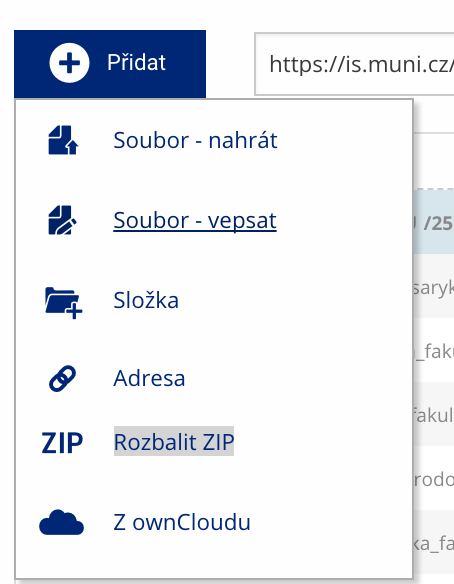 Soubor nebo složku lze nahrát pomocí tlačítka Přidat.
 -
Další operace se soubory
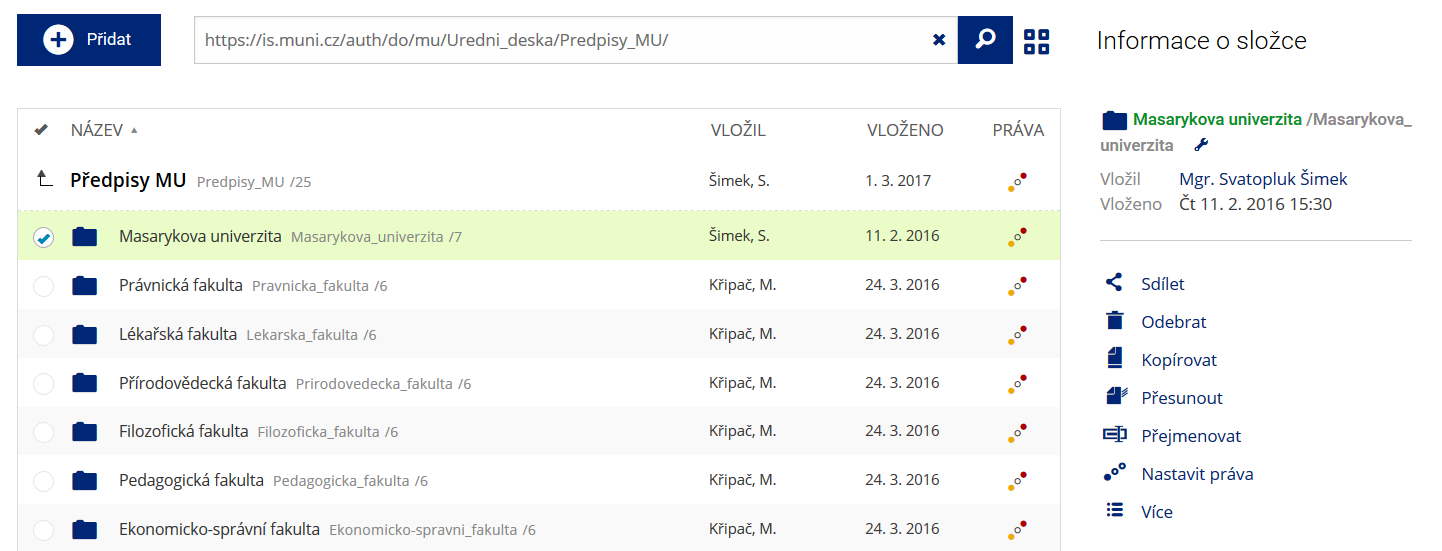 Podrobnosti lze zjistit označením příslušného řádku.
 -
Pohled pro experty
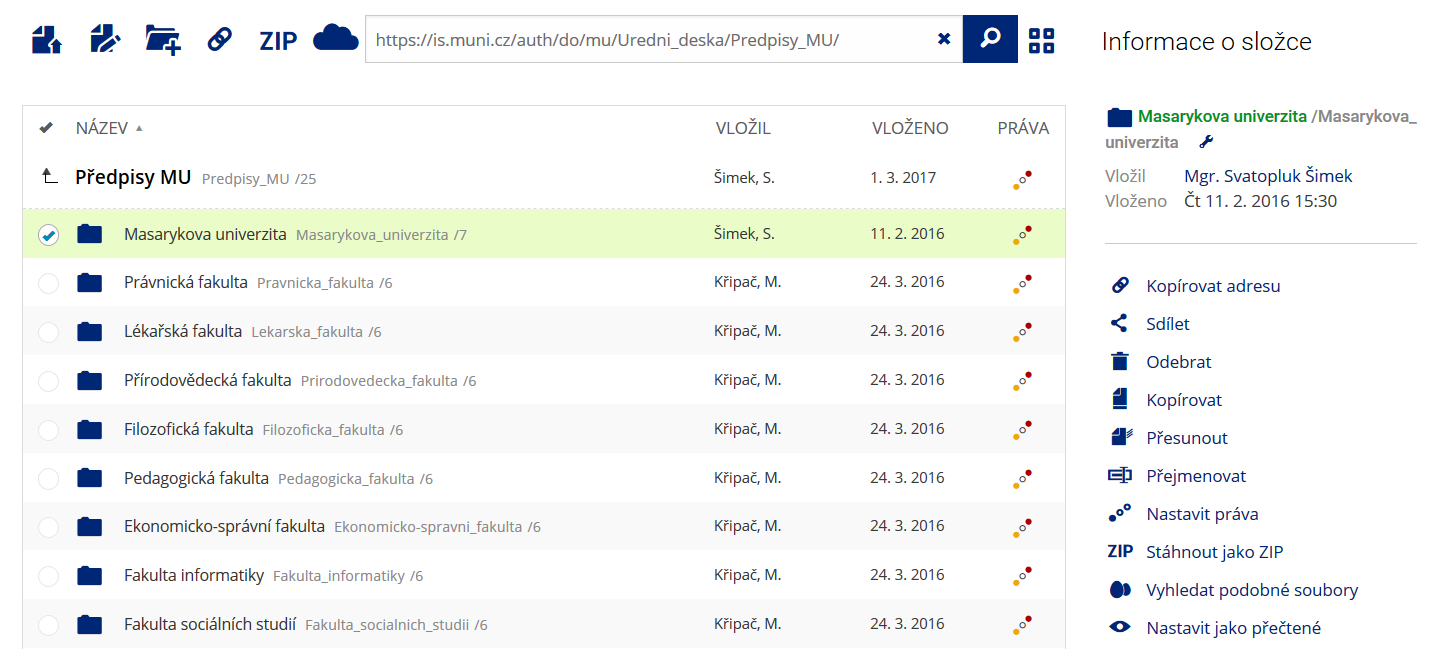 Pro častou práci je možné zvolit režim Více možností.
 -
Vyhledávání souborů
 Vyhledávaný výraz můžete zadat přímo do adresního řádku.
 -
Rychlý přístup k souborům
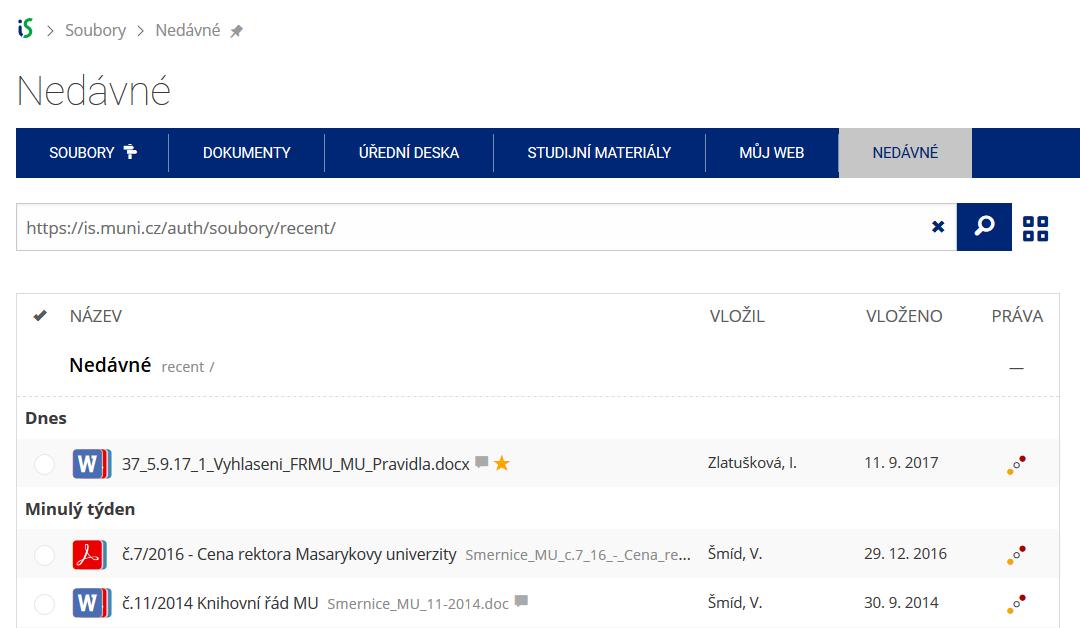 Pomocí funkce Nedávné je možné se rychle vrátit k právě prohlíženým souborům. Oblíbené soubory je také možné označit Hvězdičkou.