Závěrečná práce: Bc. Jan Pokorný: Mapping 2D Skeleton Sequences from Speed Climbing Videos onto a Virtual Reference Wall
Diplomová práce
Mapping 2D Skeleton Sequences from Speed Climbing Videos onto a Virtual Reference Wall
Anotace
Lezení na rychlost je olympijský sport s rostoucím zájmem o automatickou analýzu výkonů. Navrhujeme, implementujeme a evaluujeme proces pro výpočet transformací videí lezení na rychlost na referenční zeď. Nejdříve je natrénován object detection model pro úkol detekce chytů. Dále jsou tyto detekce sledovány pomocí optických toků, a asociovány k referenční zdi pomocí algoritmu Coherent Point Drift. Nakonec …více
Abstract
Speed climbing is an Olympic sport with a growing interest in automatic performance analysis. We design, implement and evaluate a pipeline to compute transformations of speed climbing videos to a reference wall. First, an object detection model is fine-tuned for the task of hold detection. Next, the detections are tracked using optical flow and associated to the reference wall using Coherent Point …více
Zadání práce
19. 5. 2021 09:02, RNDr. Petr Eliáš, Ph.D.
- Zadáno/změněno 25. 6. 2021 14:22, Helena Kryštofová
- Záznam založen 29. 4. 2021 13:31, Jana Zemanová, učo 9619
- Zveřejnit od 18. 5. 2021 12:09, Alena Dvořáková
- Práce převzata 18. 5. 2021 12:09, Alena Dvořáková
Přílohy
 angličtina
Literatura
- ELIÁŠ, Petr; Jan SEDMIDUBSKÝ a Pavel ZEZULA. Understanding the Limits of 2D Skeletons for Action Recognition. Multimedia Systems. 2021, roč. 27, č. 3, s. 547-561. ISSN 0942-4962. Dostupné z: https://doi.org/10.1007/s00530-021-00754-0.
Práce na příbuzné téma
Seznam prací, které mají shodná klíčová slova.
-
Detecting and Extracting Information from Images on the Web
Mgr. Martin Galajda, učo 433487 -
Metody vysvětlitelnosti chování neuronových sítí
Mgr. Vojtěch Krajňanský -
Visualization of hidden layers in convolutional neural networks
Mgr. Jakub Hruška, učo 445634 -
Umělá inteligence (AI) a muzea: možnosti použití AI v procesu katalogizace digitalizovaných muzejních sbírek
Mgr. Evgeniia Selius -
Experimenting with web-page structural analysis using Deep Reinforcement Learning
Bc. Jindřich Halabala, učo 536549 -
3D Player Pose Estimation for Semi-Automated Offside Detection in Football
Mgr. Martin Macko -
Detekce defektů elektronově-optických clonek pomocí neuronových sítí
Mgr. Štěpán Beneš -
Speeding up visual marker detection using constraints and temporal information
Mgr. Roman Dvořák
Složky
Soubory
-
Přidání souboru
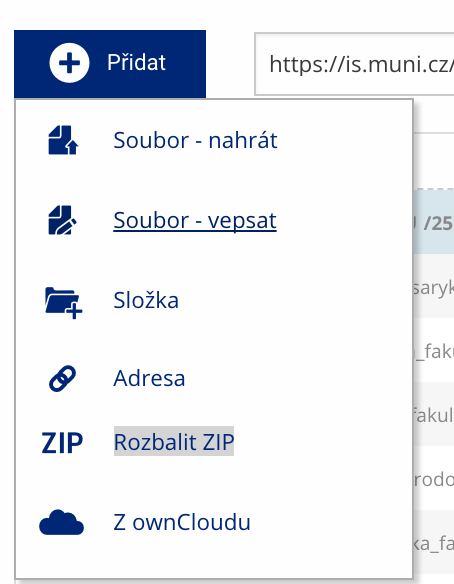 Soubor nebo složku lze nahrát pomocí tlačítka Přidat.
 -
Další operace se soubory
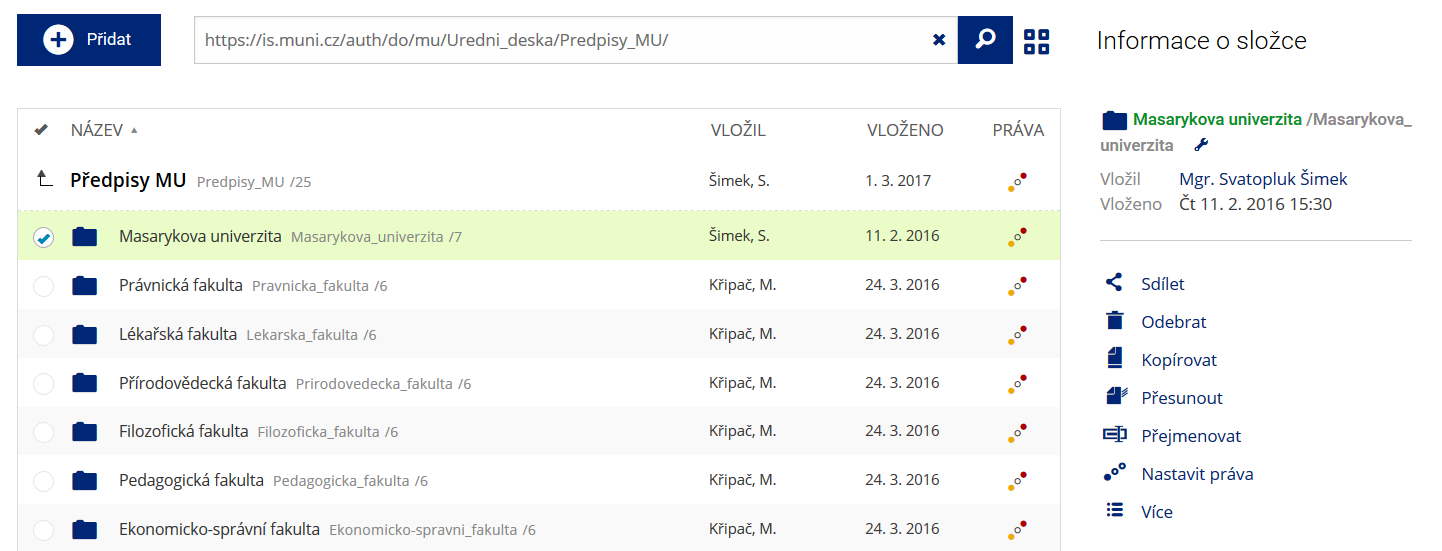 Podrobnosti lze zjistit označením příslušného řádku.
 -
Pohled pro experty
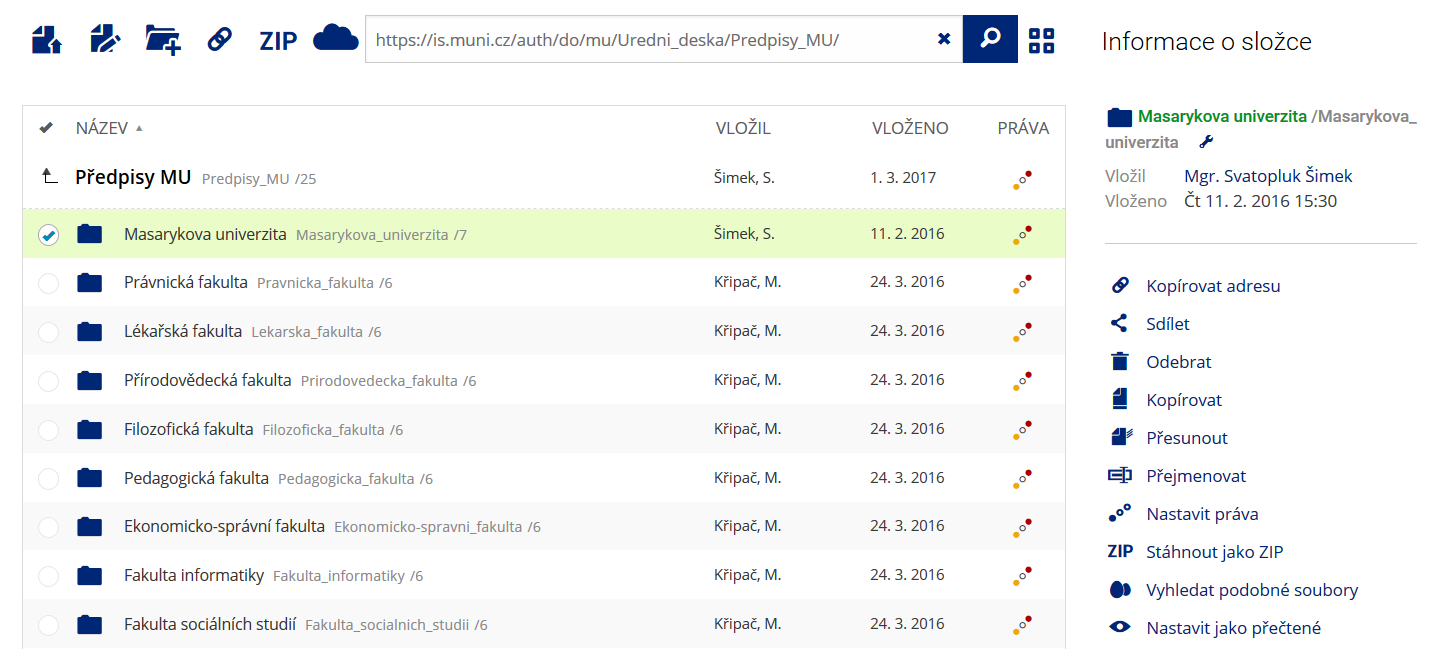 Pro častou práci je možné zvolit režim Více možností.
 -
Vyhledávání souborů
 Vyhledávaný výraz můžete zadat přímo do adresního řádku.
 -
Rychlý přístup k souborům
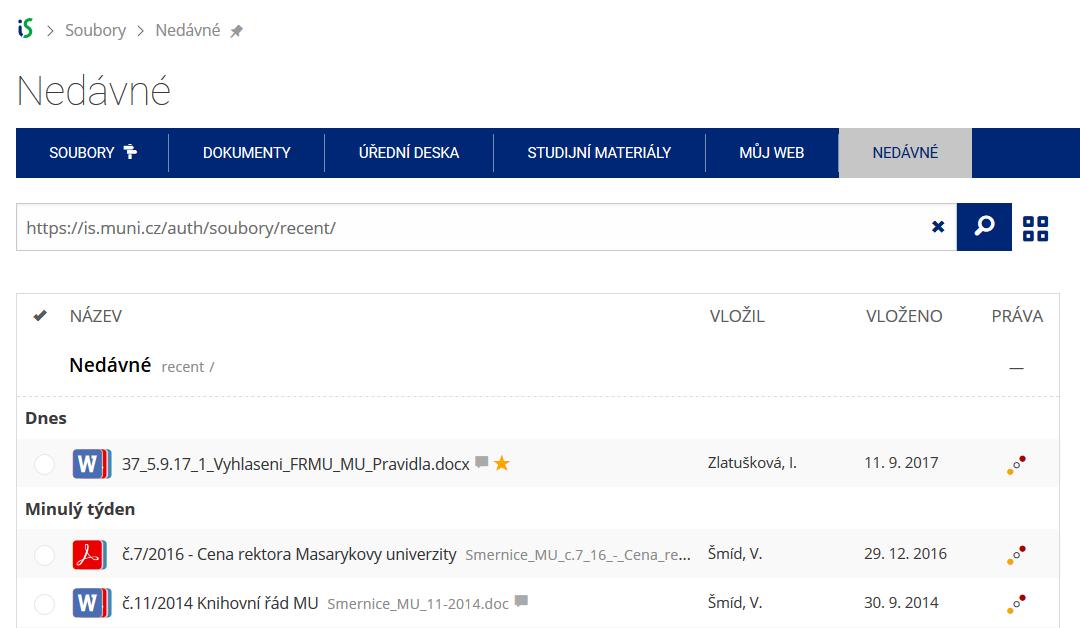 Pomocí funkce Nedávné je možné se rychle vrátit k právě prohlíženým souborům. Oblíbené soubory je také možné označit Hvězdičkou.