Závěrečná práce: Zuzana Moravčíková: Image Segmentation with Classifier-based Weak Supervision
Bakalářská práce
Image Segmentation with Classifier-based Weak Supervision
Anotace
Segmentačné modely sú v súčasnosti veľmi presné ak sú trénované na veľkom množstve anotovaných dát. Problémom však je, že anotácia veľkých segmentačných datasetov je nákladná a časovo náročná úloha. Táto práca navrhuje novú metódu, ktorá umožňuje semantickú segmentáciu sady tried, pričom len pre niektoré triedy sú dostupné anotácie na úrovni pixelov. Tento prístup redukuje potrebu drahých anotácií …více
Abstract
Semantic segmentation models today are very accurate when trained on large annotated datasets, but collecting pixel-level mask annotations is very expensive and time-consuming. To overcome this challenge, this thesis proposes a novel partially supervised approach for semantic segmentation, designed to segment a set of classes when only a subset has pixel-level annotations. This thesis contributes to …více
Zadání práce
For supervised image segmentation, annotated images are required. Labels for segmentation are typically obtained by manually annotating each pixel. Annotating a large dataset for segmentation can be a time-consuming and expensive task. On the other hand, classification convolutional neural networks are usually trained using class labels. In general, class labels for image classification are easier and cheaper to obtain than pixel-level annotated images for segmentation.
The student will use a classification neural network as an encoder and a class-agnostic model as a decoder for image segmentation. From the classification convolutional neural network (encoder), we can easily obtain so-called class activation maps. These activation maps could be understood as an approximation of segmentation, and the decoder can get them as input.
In this thesis, the student will:
- Collect datasets necessary for the thesis.
- Design a class-agnostic segmentation method.
- Train a segmentation network that takes class activation maps, obtained from an available classification network, as input.
- Train a combined method, using both an image and class activation maps as input.
- Compare segmentation results on known and unknown classes.
- Propose a method that aims at outperforming the combined segmentation method, on unknown classes.
- Write up the results in a thesis form.
22. 5. 2023 12:42, doc. Mgr. Bc. Vít Nováček, PhD, učo 4049
 angličtina
Konzultant
Práce na příbuzné téma
Seznam prací, které mají shodná klíčová slova.
-
Semantic segmentation of histopathology images
Mgr. Tomáš Jelínek -
Deep-Learning-Based Segmentation of Tunneling Nanotubes in Volumetric Bioimage Data
Mgr. Zuzana Moravčíková -
Impact of Data Quality on Deep Learning Algorithms in Computer Vision
Mgr. Vlastimil Martinek, Ph.D., učo 445261 -
Automatická detekce projekčních pláten pomocí hluboké semantické segmentace
Mgr. Mikuláš Bankovič -
Segmentation and Tracking of Organoids in Brightfield Microscopy Image Data
Mgr. Lucia Hradecká, učo 456675 -
Video object segmentation in electron microscopy
Mgr. Radek Jančík -
Recognition of Reading Disorder Based on Eye-Tracking Data
Mgr. Andrej Černek, učo 485383 -
Deep Learning Methods for Epithelium Segmentation of Breast and Colorectal Tissue
Bc. Adam Džadoň, učo 524839
Složky
Soubory
-
Přidání souboru
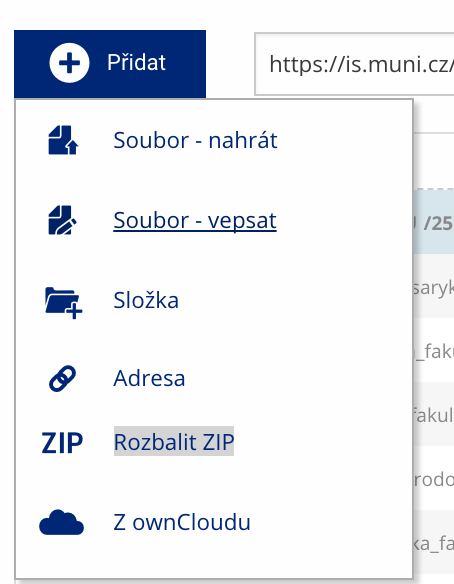 Soubor nebo složku lze nahrát pomocí tlačítka Přidat.
 -
Další operace se soubory
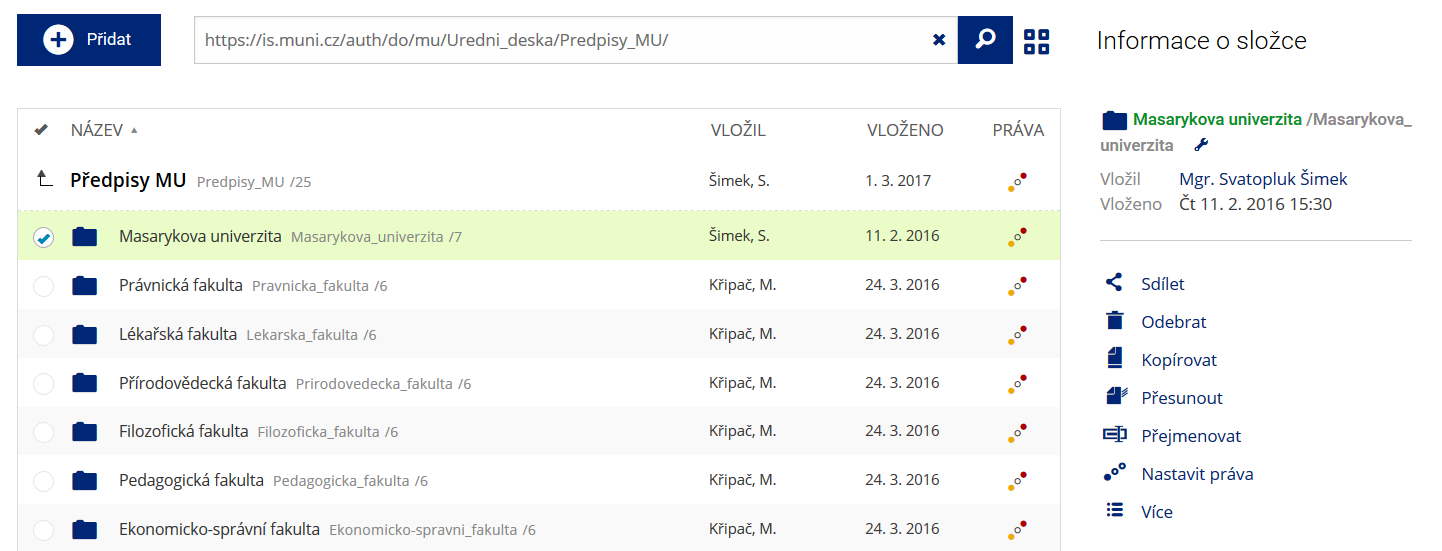 Podrobnosti lze zjistit označením příslušného řádku.
 -
Pohled pro experty
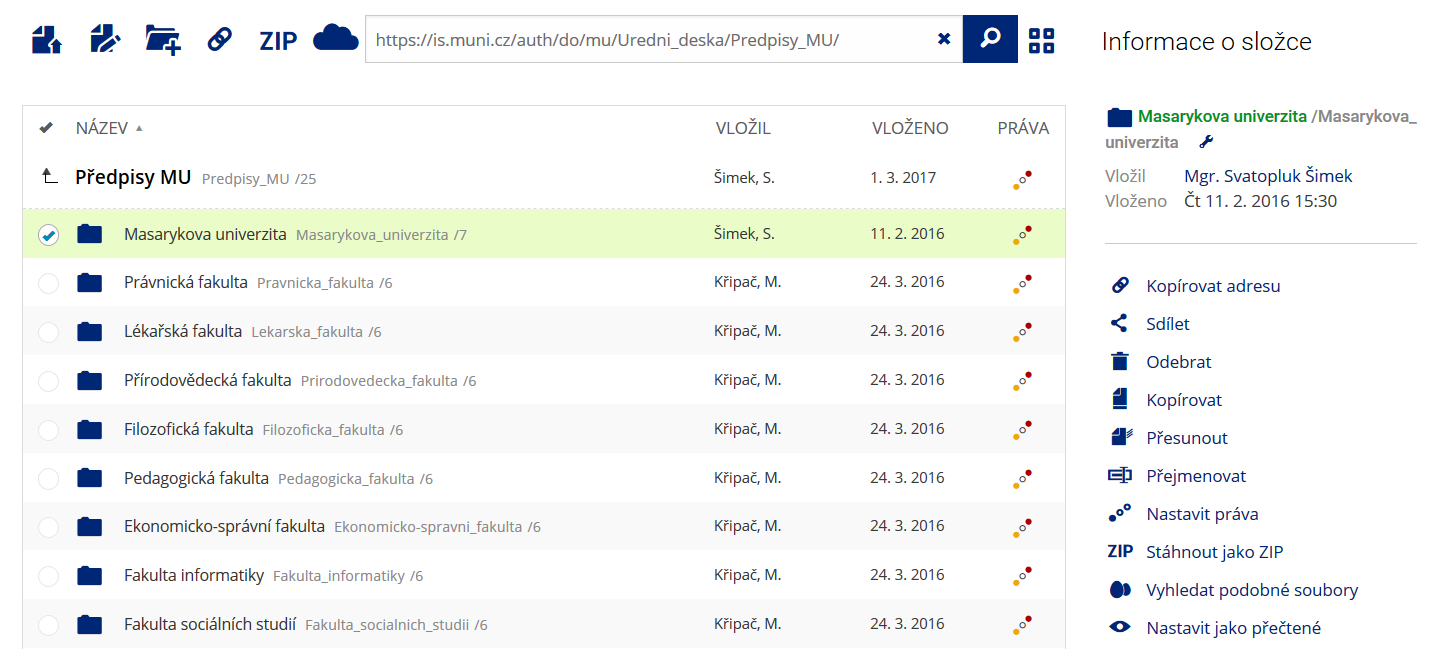 Pro častou práci je možné zvolit režim Více možností.
 -
Vyhledávání souborů
 Vyhledávaný výraz můžete zadat přímo do adresního řádku.
 -
Rychlý přístup k souborům
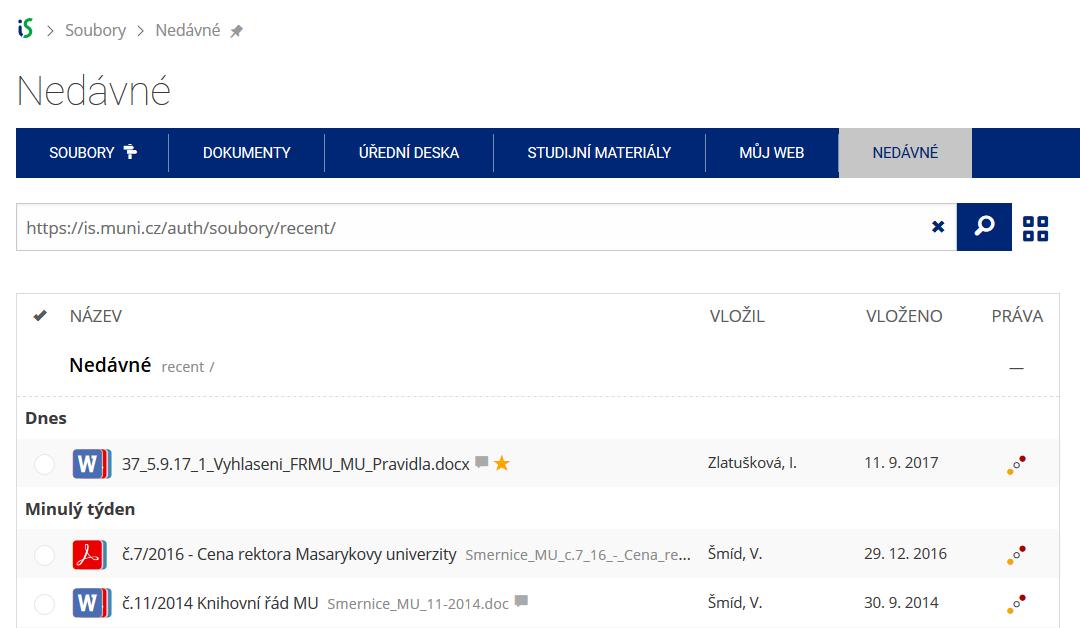 Pomocí funkce Nedávné je možné se rychle vrátit k právě prohlíženým souborům. Oblíbené soubory je také možné označit Hvězdičkou.