Závěrečná práce: Bc. Tomáš Jaroš: Practicality of fault injections on isogeny-based cryptography
Diplomová práce
Practicality of fault injections on isogeny-based cryptography
Anotace
Postkvantová kryptografia sa snaží zaručiť bezpečnosť aj proti útočníkom vybaveným kvantovými počítačmi, čo vedie k skúmaniu kryptografických schém založených na izogéniách, ako aj je CSIDH. Hoci implementácie s konštantným časom výpočtu znižujú únik informácií cez časovanie, samy osebe nezabraňujú fyzickým útokom (napr. analýze postranných kanálov alebo injektovaniu chýb), ktoré zneužívajú správanie …více
Abstract
Post-quantum cryptography aims to ensure security even against attackers equipped with quantum computers, leading to the exploration of isogeny-based cryptographic schemes, such as CSIDH. While constant-time implementations reduce timing leakage, they do not inherently prevent physical attacks (e.g., side-channel analysis or fault injection) that exploit implementation behaviour. This thesis analyzes …více
Zadání práce
In this project, the student analyzes the practicality of fault injections on one of the building blocks of isogeny-based cryptography: chains of isogenies. First, the student defines a theoretical model related to the strength of different attacker models and then analyzes the practical security of these building blocks concerning these attacker models.
The model consists of 2 categories of dummy operations:
- the first category consists of dummy operations that are only
additional operations added to make things constant-time; - the second category consists of dummy operations that cancel each
other out; - Optionally, a protected implementation may be considered.
This work reproduces and tries to potentially extend the work from "Trouble at the CSIDH: Protecting CSIDH with Dummy-Operations against Fault Injection Attacks" (see https://eprint.iacr.org/2020/1005).
The attack will be performed using ChipWhisperer Lite ARM and Husky targets:
- https://www.newae.com/products/nae-cwlite-arm
- https://rtfm.newae.com/Capture/ChipWhisperer-Husky/
17. 12. 2025 10:23, Lukasz Michal Chmielewski, PhD, učo 247858
 angličtina
Práce na příbuzné téma
Seznam prací, které mají shodná klíčová slova.
-
Kryptoanalýza supersingulárních kryptosystémů
Mgr. Zdislava Karásková -
Supersingulární isogenie a jejich využití v kryptografii
Mgr. Zdislava Karásková -
Analyzing fault injection resistance of a modern open-source crypto-wallet
Bc. Oliver Šimoník -
Implementation of quantum-safe VPN
Mgr. Keval Krishan -
Implementing Ed25519 cryptolibrary resistant to side-channel and fault injections attacks
Mgr. Lubomír Hrbáček -
Implementation of quantum-safe VPN
Mgr. Keval Krishan -
Testování pomocí Fault Injection v jazyce Java
Mgr. Jiří Sedláček, učo 139558 -
Methods for software failure-data collection and prediction
RNDr. Stanislav Chren, Ph.D., učo 255471
Složky
Soubory
-
Přidání souboru
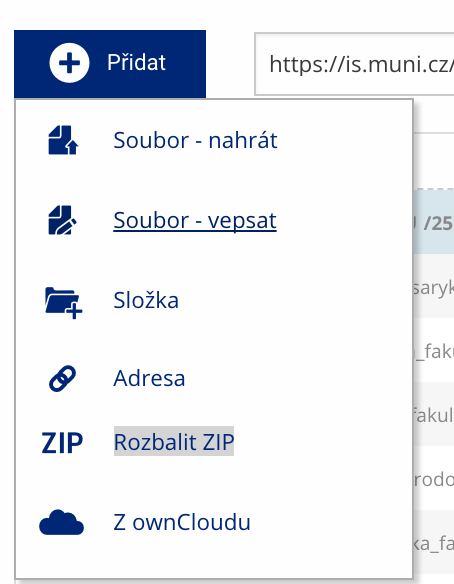 Soubor nebo složku lze nahrát pomocí tlačítka Přidat.
 -
Další operace se soubory
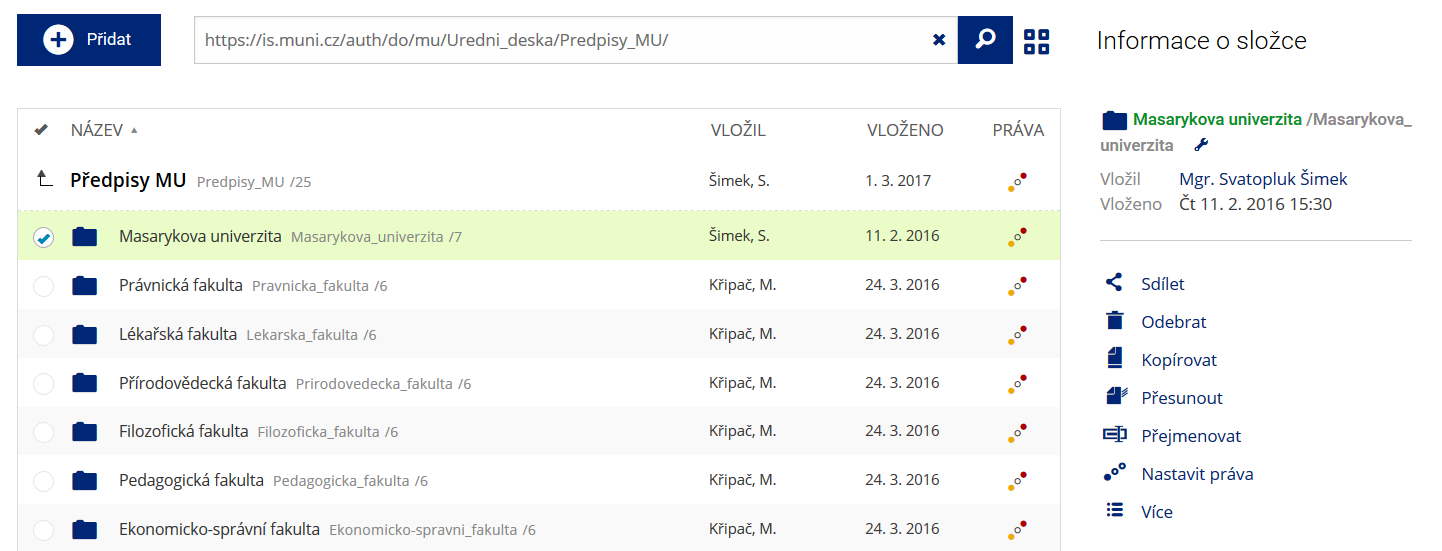 Podrobnosti lze zjistit označením příslušného řádku.
 -
Pohled pro experty
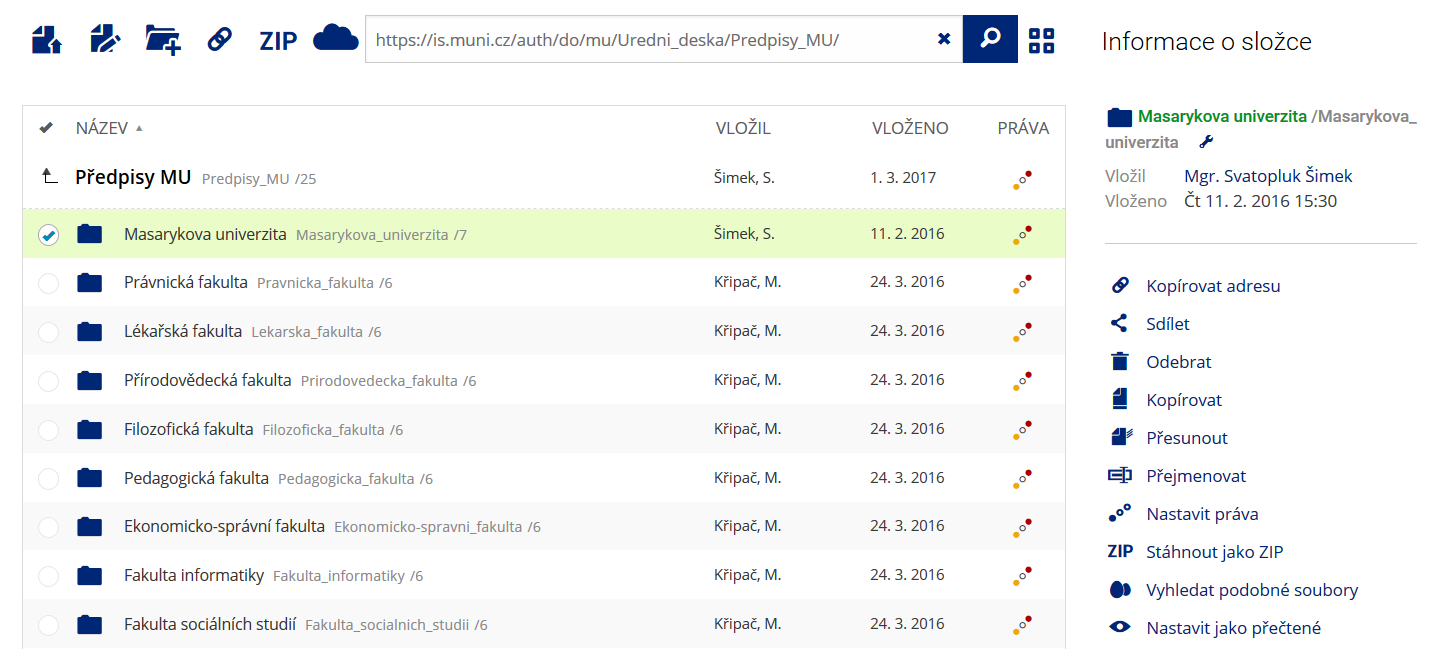 Pro častou práci je možné zvolit režim Více možností.
 -
Vyhledávání souborů
 Vyhledávaný výraz můžete zadat přímo do adresního řádku.
 -
Rychlý přístup k souborům
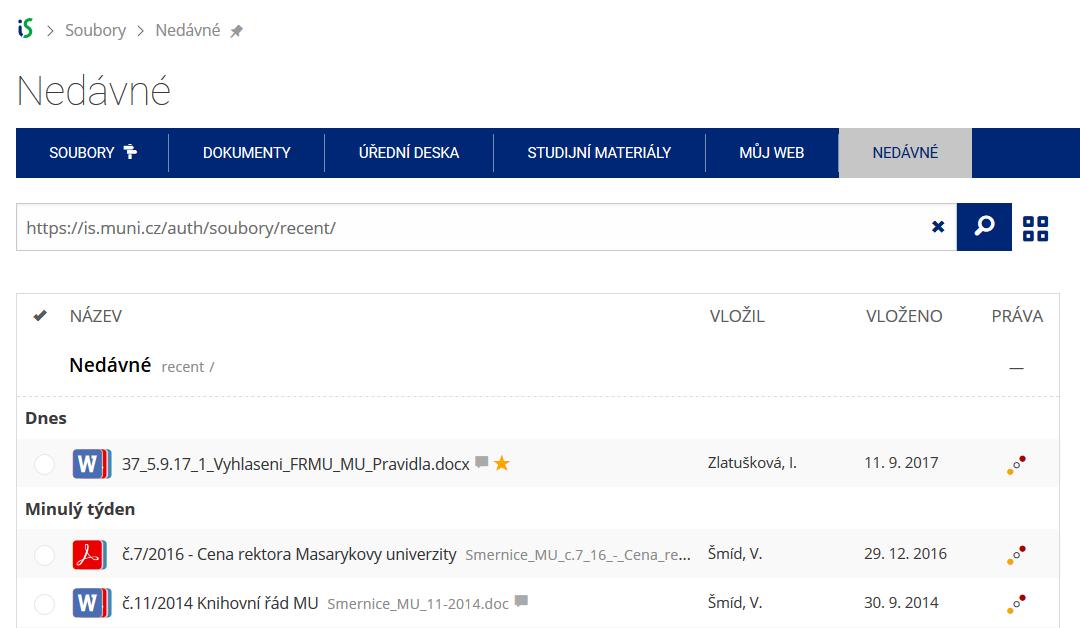 Pomocí funkce Nedávné je možné se rychle vrátit k právě prohlíženým souborům. Oblíbené soubory je také možné označit Hvězdičkou.